The Expanding Backlash: Wells Fargo, Cisco, and Arm Lead Growing Corporate Resistance Against OKX and ICE Tokenized Stock Venue

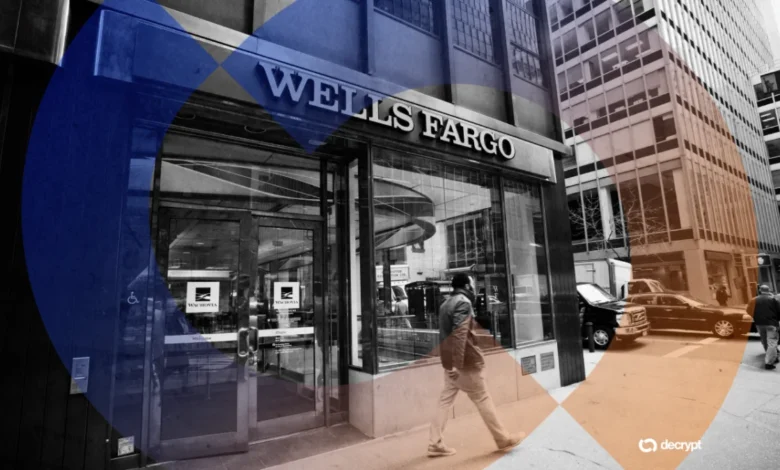
The roster of major global corporations pushing back against the digital asset ambitions of traditional finance and crypto heavyweights continues to expand at a rapid pace. According to an updated public notice released by the OKXICE Tokenized Securities Venue (TSV) dated Friday, six new corporate issuers have formally registered their objections to having their shares traded on the upcoming tokenized stock trading platform.
The newest wave of corporate pushback includes financial services giant Wells Fargo, tech heavyweights Cisco Systems and Marvell Technology, semiconductor designer Arm Holdings, biotechnology pioneer Moderna, and financial software leader Intuit. These additions elevate the total number of objecting companies to 22, up significantly from 16 objectors noted on October 19 and just nine when the venue first began tracking corporate dissent on October 15.
The growing list underscores a deepening rift between traditional corporate boardrooms and the rapidly evolving sector of blockchain-based securities. While proponents of tokenization herald the technology as a revolutionary step toward frictionless, around-the-clock capital markets, a substantial cohort of America’s most prominent public companies remains deeply skeptical—or outwardly opposed—to having their equities mirrored on distributed ledgers without direct coordination or consent.
A Timeline of Expanding Resistance
The trajectory of the OKXICE TSV initiative has been marked by a swift accumulation of corporate pushback since the platform was unveiled earlier this year as a 50-50 joint venture between Intercontinental Exchange (ICE), the parent company of the New York Stock Exchange, and OKX’s U.S. holding entity.
When the initiative first came to light in mid-October, the initial registry of objecting companies stood at nine issuers. By October 19, that figure had climbed to 16, drawing in corporate heavyweights such as Microsoft, Alphabet, Goldman Sachs, Verizon, Broadcom, and UnitedHealth Group. With Friday’s update pushing the count to 22, the pattern of resistance has broadened to encompass major players across banking, networking hardware, semiconductors, biotechnology, and enterprise software.
Notably, Wells Fargo joins Goldman Sachs as the second major Wall Street banking institution to distance itself from the venue. Meanwhile, the inclusion of Arm Holdings, Cisco Systems, and Marvell Technology compounds a heavy concentration of chipmakers and networking infrastructure giants that already featured Microsoft, Broadcom, and Qualcomm on the dissenting register.
Despite the growing volume of corporate notifications, the specific rationale behind each company’s objection remains opaque. None of the public notices issued by the platform or the objecting companies have explicitly detailed the underlying legal, operational, or strategic grievances motivating the decisions. Furthermore, the precise legal and regulatory mechanics of what an objection means for a stock’s potential listing status on the platform remain ambiguous under current regulatory frameworks.
Mechanics and Operational Framework of the OKXICE TSV
The OKXICE TSV has positioned itself as an ambitious bridge between traditional equity markets and decentralized finance (DeFi). The joint venture aims to offer approved users the ability to trade tokenized versions of U.S. equities on a 24/7 basis. According to structural plans outlined by the operators, trades would execute through automated market maker liquidity pools—specifically leveraging Uniswap v4 architecture—hosted on OKX’s proprietary layer-2 blockchain, XLayer. To facilitate seamless settlement, these tokenized assets would be paired primarily with prominent stablecoins such as USDC.
The platform is engineered to operate under the Securities and Exchange Commission’s (SEC) innovation exemption framework, a regulatory pathway that the agency rolled out in September following the legislative stalling of the Clarity Act in the U.S. Senate.
Since its October 19 public notice, the venue has clarified its sourcing mechanisms, stating that it possesses the technical capability to list shares tokenized directly by corporate issuers themselves, as well as those tokenized by authorized third-party entities. However, public filings indicate that none of the 22 objecting companies have opted to utilize either pathway.

Heightened Disclosures and Structural Risk Factors
Alongside the update regarding corporate objectors, the latest regulatory and public notices issued by OKXICE TSV provide a granular breakdown of the structural and operational risks inherent to the platform’s design. These disclosures paint a picture of a nascent market environment operating with distinct guardrails—and notable safety gaps—compared to traditional national securities exchanges.
According to the venue’s documentation, trading on the platform will pause automatically if the underlying traditional stock is halted on primary exchanges. However, the venue notably lacks standard market-wide circuit breakers. Moreover, the platform features no formal policies or built-in mitigations addressing Maximal Extractable Value (MEV)—the profit that sophisticated actors, validators, or searchers can capture by reordering, including, or excluding transactions within a blockchain block. In decentralized finance environments, unmitigated MEV can lead to front-running and value extraction detrimental to ordinary retail traders.
The disclosures also highlight open questions regarding regulatory compliance for participating intermediaries. Broker-dealers engaging with the platform face unresolved compliance inquiries concerning trade reporting obligations and best execution standards. These regulatory grey areas could potentially constrain institutional participation, resulting in thinner liquidity pools during the platform’s initial rollout phases.
Furthermore, the operational governance of the venue grants administrators the authority to execute smart contract upgrades without providing advance notice to platform users. Compounding these structural considerations, the specific smart contract governing access control—which dictates authorized participants—has reportedly undergone only internal security audits rather than comprehensive third-party forensic reviews.
Broader Industry Context and Regulatory Crosscurrents
The friction surrounding the OKXICE TSV is part of a broader, high-stakes battle for dominance in the emerging tokenized securities landscape. Rival legacy institutions are navigating the space with varying strategies. Nasdaq, for instance, which successfully secured SEC approval for its own proprietary tokenized securities pilot program, has explicitly announced its intention to opt its own corporate shares out of the broader innovation exemption framework.
Meanwhile, external economic observers are attempting to quantify the viability and health of this nascent asset class. A recent analytical report published by the International Monetary Fund (IMF) found tangible evidence of genuine market demand for tokenized stocks. The IMF study highlighted that trading activity spikes notably during off-hours, when traditional stock exchanges are physically closed for the weekend or evening hours.
However, the IMF report also issued cautionary notes, emphasizing that the tokenized stock market remains characterized by persistent volatility and relatively shallow liquidity compared to its multi-trillion-dollar conventional counterpart.
Implications for the Future of Tokenized Equities
The mounting corporate resistance poses a complex strategic hurdle for the operators of the OKXICE TSV and the broader tokenized asset ecosystem. While blockchain-based representations of real-world assets promise unprecedented settlement speed, global accessibility, and continuous trading hours, the reluctance of major blue-chip issuers to participate highlights a fundamental tension over corporate governance, brand control, and legal liability.
As the list of objecting companies climbs toward two dozen enterprises representing trillions of dollars in combined market capitalization, questions loom over how exchanges will handle unauthorized tokenization attempts if third-party issuers begin minting shares without corporate endorsement. Whether regulatory clarifications from the SEC or concerted outreach from venue operators can bridge the gap between Silicon Valley and Wall Street remains one of the defining questions for the future of digital capital markets.