Crypto Super PAC Fairshake Pledges $30 Million to Target Sherrod Brown in High-Stakes Ohio Senate Race Following Clarity Act Defeat

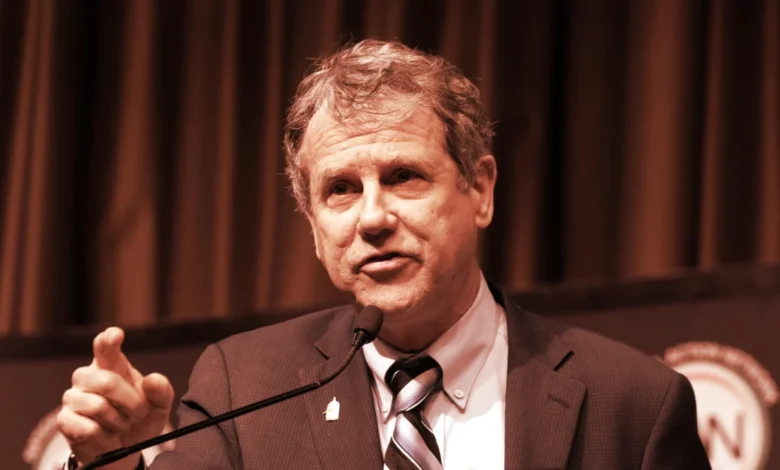
The intersection of digital asset policy and American electoral politics has reached a new boiling point as the prominent cryptocurrency super PAC Fairshake commits a staggering $30 million to block former Democratic Senator Sherrod Brown’s political comeback. This aggressive financial maneuver comes on the heels of a legislative setback in the United States Senate, where lawmakers narrowly blocked the much-anticipated Digital Asset Market Clarity Act. As the political landscape gears up for the upcoming midterm elections, the renewed clash between Silicon Valley’s digital asset heavyweights and traditional financial regulators underscores the growing influence of crypto capital in shaping congressional power dynamics.
The confrontation centers on a fierce high-stakes race in Ohio, a state rapidly transforming into a battleground for blockchain policy supremacy. Brown, a fierce critic of the cryptocurrency industry and the former powerful chairman of the Senate Banking Committee, is seeking to return to Congress by challenging Republican Senator Jon Husted. Husted, the former Ohio lieutenant governor, was appointed to the upper chamber in January 2025 to fill the seat vacated by JD Vance following Vance’s ascension to the vice presidency.
According to reports initially surfaced by Politico and confirmed by the political action committee, Fairshake intends to deploy its immense financial reserves to ensure Brown remains sidelined. This campaign marks the second consecutive election cycle that the crypto advocacy machine has targeted the veteran Ohio Democrat. During the 2024 general election cycle, Fairshake and its affiliated entities poured approximately $40 million into opposing Brown, ultimately helping Republican challenger Bernie Moreno unseat the incumbent in a race that sent shockwaves through Capitol Hill and signaled a watershed moment for digital asset lobbying power.
Legislative Roadblocks: The Collapse of the Clarity Act
The timing of Fairshake’s latest multi-million-dollar war chest announcement is far from coincidental. It directly follows the Senate’s failure to advance the Digital Asset Market Clarity Act, a comprehensive piece of legislation designed to establish definitive federal regulatory frameworks for digital asset markets. The bill aimed to delineate clear jurisdictional boundaries between the Securities and Exchange Commission (SEC) and the Commodity Futures Trading Commission (CFTC), bringing much-needed regulatory certainty to an industry that has long complained of regulation-by-enforcement.
However, the legislative effort hit a brick wall when the Senate voted 49-50 against cloture on a motion to proceed to the bill, falling short of the formidable 60-vote threshold required to overcome procedural hurdles. The roll call revealed deep partisan and institutional divides. Every Democrat present voted against advancing the measure, joined by a trio of Republican defectors: Senators Susan Collins, Josh Hawley, and Jerry Moran. Additionally, Republican Senator Thom Tillis shifted his vote to a procedural "no" at the eleventh hour, a tactical maneuver intended to preserve the option to reintroduce the legislation during a subsequent legislative window.
The narrow defeat leaves virtually no practical pathway for lawmakers to revive and pass the Clarity Act before the critical November 3 midterm elections. The failure has galvanized industry advocacy groups, who view the vote as an indicator of congressional hostility toward financial innovation. Coinbase-backed advocacy coalition Stand With Crypto was swift to respond, warning of severe electoral consequences for lawmakers who opposed the measure. The group announced intentions to integrate the senators’ votes directly into its comprehensive voter scorecards, mobilizing grassroots supporters nationwide ahead of the ballot box showdown.
A Financial Juggernaut: Fairshake’s War Chest and Strategy
Fairshake stands as the undisputed financial heavyweight of the cryptocurrency political apparatus. Backed by corporate giants and venture capital titans within the blockchain ecosystem—including Coinbase, Ripple, and Andreessen Horowitz—the super PAC has amassed unprecedented financial reserves. By January 2025, the organization had already secured $116 million for the 2026 election cycle, maintaining a robust war chest of roughly $108 million remaining at the close of August, positioning it to decisively influence multiple congressional contests nationwide.

Despite its singular focus on advancing web3 interests, Fairshake’s operational strategy has evolved to be remarkably pragmatic. While the PAC explicitly declares its mission to support candidates from both major political parties who champion innovation-friendly policies, its high-impact advertising campaigns rarely mention cryptocurrency directly. Instead, media consultants craft messaging centered on broadly resonant local and economic issues designed to appeal to independent and swing voters, a tactic deployed with surgical precision during the 2024 elections and refined during the 2026 congressional primary races.
This sophisticated messaging approach aims to neutralize counterattacks regarding outside corporate spending while effectively punishing lawmakers viewed as antagonistic to the digital asset sector. Industry defenders argue that opposing crypto regulation translates to stifling technological progress and job creation, while critics contend that heavy spending by venture capitalists represents an alarming attempt by a specialized financial sector to buy legislative outcomes.
Political Fallout and Counter-Reactions
The announcement of Fairshake’s massive expenditure has drawn sharp rebukes from Brown’s campaign apparatus, which has sought to frame the onslaught as proof that the candidate remains a steadfast defender of ordinary citizens against monied corporate interests.
"Of course the special interests are panicking, they know Sherrod will fight the rigged system they’re feasting on to stand up for working Ohioans," Patrick Eisenhauer, Brown’s campaign manager, stated in an official release. The campaign is leaning heavily into a populist narrative, positioning Brown as a working-class champion targeted by out-of-state technology billionaires attempting to buy an Ohio senate seat.
Conversely, crypto advocates maintain that Brown’s tenure at the helm of the Senate Banking Committee was characterized by obstructionism and an ideological refusal to engage constructively with a burgeoning economic sector. During his time leading the committee, Brown consistently expressed deep skepticism regarding the stability, utility, and consumer protections associated with cryptocurrencies, making him public enemy number one for digital asset proponents seeking regulatory clarity and institutional integration.
Broader Implications for the 2026 Midterms and Beyond
The unfolding battle in Ohio serves as a bellwether for the broader evolution of American campaign finance and single-issue lobbying. With control of the United States Senate hanging in the balance, the infusion of $30 million into a single state race highlights how digital asset policy has graduated from a niche technological debate to a front-burner national political issue.
As political parties grapple with the technological and financial shifts of the digital age, the outcome of the Husted-Brown matchup will likely reverberate far beyond the borders of Ohio. A victory for Husted, propelled by crypto-backed expenditures, would cement the industry’s reputation as a kingmaker capable of defeating formidable veteran politicians. Conversely, a successful defense by Brown would demonstrate the enduring power of traditional grassroots campaigning and populist rhetoric in countering corporate megadonors.
Regardless of the electoral outcome on November 3, the deep financial commitment by Fairshake ensures that the debate over the future of decentralized finance, regulatory oversight, and the boundaries of corporate political influence will remain central to American governance for years to come.
Related posts: