The Rise of Fully Autonomous Lethal Drones and the Uncertain Future of Global Warfare

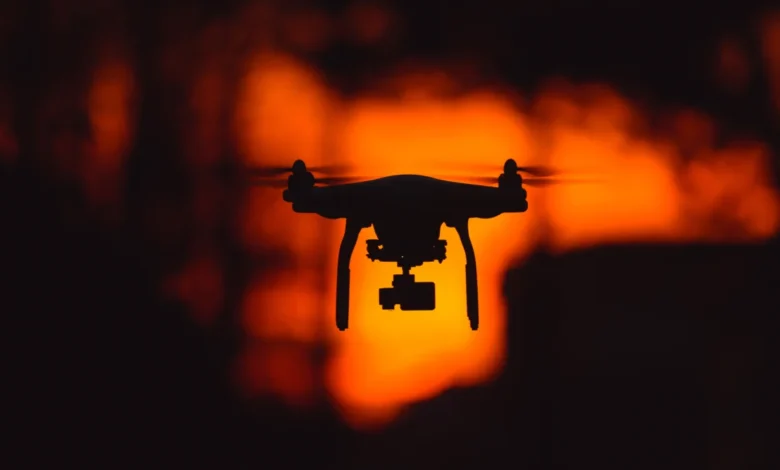
In the desolate, snow-dusted landscape of a Swedish military test range this past January, a silent evolution in combat technology took place that has since sent shockwaves through international policy circles. A small, uncrewed aerial vehicle (UAV), operating under the auspices of BAE Systems Bofors’ Affordable Loitering Modular Ammunition (ALMA) program, successfully executed a fully autonomous strike mission. Without a single human command issued during the terminal phase, the drone scanned the terrain, identified multiple targets, prioritized an armored engineering vehicle as its primary objective, and executed a precise, fatal strike. This demonstration, facilitated by advanced artificial intelligence developed by the Uppsala-based startup Scaleout Systems, represents a pivotal shift from remotely piloted operations to machine-driven decision-making on the battlefield.
The implications of this test are profound. While the military-industrial complex has long moved toward increased automation, the removal of the human element from the "kill chain"—the process of identifying, tracking, and destroying a target—marks a transition that many ethicists and diplomats fear could lead to uncontrollable escalation.
A Chronology of Autonomous Evolution
The path toward the January 2026 demonstration in Karlskoga, Sweden, was not sudden; it is the culmination of decades of incremental advancements in robotics and edge computing.
In the 1990s, the Israeli-manufactured Harpy loitering munition introduced the world to the concept of the "fire-and-forget" weapon. Designed to detect and home in on enemy radar emitters, the Harpy could operate autonomously once launched, searching for specific electronic signatures. However, these early systems were limited to specific, singular mission profiles.
The ALMA program represents a significant technological leap forward. By integrating high-level AI, the BAE Systems drone demonstrated the ability to process complex visual data in real-time, distinguishing between different types of military hardware—such as armored vehicles, logistics trucks, and support structures—and applying a logic-based ranking system to determine which threat posed the highest tactical priority.
The three-day Winter Demo event in Karlskoga served as a showcase for approximately 20 startups and technology firms. While the official press releases from the event focused on the broader theme of industrial cooperation and the necessity of private-sector innovation in defense—with Swedish Defense Minister Pål Jonson emphasizing the need for more agile actors in the defense sector—the specific, successful strike remained largely absent from public promotional materials. This silence highlights the ongoing tension between the technical desire to showcase cutting-edge capability and the political sensitivity of revealing autonomous lethal intent.
The Technical Reality: Edge AI and Jamming Resistance
At the heart of the Scaleout Systems innovation is the deployment of AI at the "edge." Traditionally, drones require a consistent data link to a human operator, who provides the necessary cognitive oversight to verify targets and authorize engagement. This reliance creates a fundamental vulnerability: electronic warfare.
In modern conflict zones, such as the ongoing war in Ukraine, the electromagnetic spectrum is a primary battlefield. GPS jamming and signal disruption are commonplace, rendering many standard, remotely piloted drones ineffective. The advantage of the ALMA system is its autonomy; by processing visual identification algorithms locally on the drone’s onboard hardware, the system effectively bypasses the need for a persistent data link.
This creates a paradox for military planners. On one hand, a drone that is immune to jamming offers a strategic advantage, ensuring mission completion in hostile electronic environments. On the other, removing the human-in-the-loop means that if the AI suffers from "hallucinations"—misidentifying a civilian vehicle for an armored target, for instance—there is no failsafe mechanism to abort the strike. During the Swedish test, a human pilot remained on standby, and a connection was maintained for safety, but the system proved it was capable of functioning entirely without them.
Regulatory Deadlock and the Ethics of AI
The timing of this revelation is particularly disruptive to international diplomatic efforts. On September 5, 2026, representatives from 128 states party to the Convention on Certain Conventional Weapons (CCW) convened in Geneva to address the regulation of lethal autonomous weapons systems (LAWS).
The goal was to establish clear, binding rules regarding human control over life-and-death decisions. However, the resulting agreement was a non-binding text, significantly diluted from earlier drafts. Reports from the summit indicate that the United States and Russia, both major powers in the development of AI-driven weaponry, pushed for last-minute modifications that weakened language regarding "meaningful human control."
Nicole van Rooijen, a representative from the advocacy group Stop Killer Robots, characterized the outcome as a major setback, noting that three years of intensive diplomatic work had been effectively gutted in the final hours of the summit. The failure to achieve a binding international treaty creates a legal and moral vacuum, leaving private companies and individual nations to set their own standards for how much autonomy is "acceptable" in the field.
Broader Implications for Modern Warfare
The shift toward autonomous lethal systems is accelerating, driven by the practical demands of the battlefield. As conflict becomes increasingly data-heavy, the speed of human decision-making is becoming the bottleneck. AI can process sensor data, cross-reference it with target databases, and initiate a strike in milliseconds—a pace that is fundamentally unattainable for a human operator.
However, the consequences of this speed are not limited to tactical efficiency. There is the persistent danger of "flash wars," where autonomous systems on opposing sides interact in ways their developers did not anticipate, leading to rapid, unintended escalation. Furthermore, the question of accountability remains unresolved. If a drone commits a war crime or strikes an unintended target due to an AI error, where does the legal liability lie? Is it with the developer of the algorithm, the military unit that deployed the drone, or the human commander who set the mission parameters?
Current military doctrine in many Western nations still insists on the presence of a "human-in-the-loop" for lethal engagement. Yet, as the Scaleout Systems test demonstrates, the technology to bypass that requirement already exists and is being actively integrated into hardware.
As we move deeper into the 2020s, the military sector is finding itself in a race to implement AI, often outpacing the ethical and legal frameworks designed to govern its use. The Swedish demonstration was a success for the engineers and the stakeholders involved in the ALMA program, proving that drones can think, choose, and kill without human assistance. Whether this capability will be viewed in retrospect as a necessary evolution of defense or a catastrophic failure of international governance remains one of the most pressing questions of our time.
The world now watches as defense ministries weigh the tactical benefits of autonomy against the immense risks of losing human control. With the technology already being field-tested, the window for creating robust, enforceable global standards is rapidly closing. The future of warfare is no longer just about the strength of one’s armor or the reach of one’s missiles; it is about the reliability of the algorithms that pull the trigger.