The Ubiquitous and Perilous Rise of AI: Navigating the Double-Edged Sword of Innovation and Disinformation

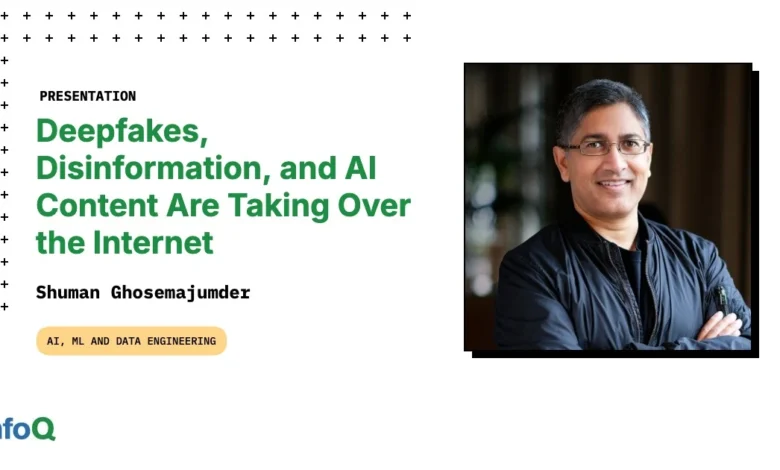
Artificial intelligence, once a niche subject discussed in academic circles, has permeated nearly every facet of modern life, transforming industries, commerce, and daily routines with unprecedented speed. This pervasive integration, however, presents a complex landscape, offering both revolutionary advancements and profound challenges, particularly in the realms of security and information integrity. As highlighted in a recent presentation at the QCon AI conference by Shuman Ghosemajumder, a prominent figure in the field, AI’s journey from theoretical concept to everyday reality has been marked by rapid evolution, leading to a ubiquitous presence often taken for granted.
Ghosemajumder recalled his early introduction to AI at age ten, noting that the foundational texts of that era made no mention of contemporary terms like machine learning, data science, or transformer models, underscoring the dramatic transformation the field has undergone. Today, the term "AI-enabled" or "AI-infused" is appended to an astonishing array of products, from sophisticated enterprise software to consumer goods like toothbrushes, reflecting a widespread, sometimes superficial, adoption of the technology. This omnipresence is further illustrated by the paradox of AI-generated content, where the very tools that create vast amounts of digital information are then employed to summarize it, highlighting both the efficiency and potential content overload AI introduces.
The scale of AI’s integration is evident in infrastructure development, with some estimates suggesting that AI infrastructure projects now rival or even surpass the planned construction of human-occupied buildings. However, this rapid expansion also raises questions about sustainability and genuine utility, with instances noted where AI usage drops significantly outside of specific, primary applications, such as student academic tasks. The overarching question of AI’s ultimate direction, as humorously framed by the Financial Times, remains a spectrum ranging from "salvation" to "destruction of civilization," with various outcomes in between.
A Legacy of Ambition and Skepticism: Tracing AI’s Intellectual Roots
The very term "Artificial Intelligence" carries a weight of ambition, a legacy traceable to pioneers like Alan Turing. His seminal 1950 paper, "Computing Machinery and Intelligence," introduced the concept now known as the Turing Test, proposing an "imitation game" to determine if a machine could exhibit intelligent behavior indistinguishable from a human. This foundational idea ignited the field, yet it also met with early skepticism. The Economist, a respected voice of the era, famously dismissed the practical necessity of creating machine intelligences akin to humans, quipping that "people are in plentiful supply" and methods for creating more were "proven and popular." This historical interplay of visionary aspiration and pragmatic doubt continues to shape perceptions of AI, often conflating its current capabilities with the speculative realm of Artificial General Intelligence (AGI), a concept more frequently informed by science fiction than technical understanding.
This conflation contributes to a cognitive bias known as the Gell-Mann Amnesia effect, where individuals critically evaluate information within their area of expertise but uncritically accept information outside it. As Ghosemajumder pointed out, people readily identify errors or "hallucinations" in AI-generated content pertaining to their own field, but are far less discerning when AI provides information on unfamiliar subjects. This bias becomes particularly dangerous when coupled with generative AI’s increasing sophistication in producing convincing, yet factually incorrect, content.
The Rise of Generative AI: From Deepfakes to "AI Slop"
The evolution of generative AI, particularly with the advent of Generative Adversarial Networks (GANs), marked a significant leap in AI’s ability to create realistic content. Initially, applications were relatively benign, such as image manipulation. However, the technology rapidly advanced, leading to highly convincing deepfakes, as exemplified by realistic Tom Cruise impersonations enhanced by AI. OpenAI’s recent launch of Sora, which enables users to generate highly realistic videos from text prompts, further democratizes this capability, raising immediate concerns.
One striking example of this democratization was Mark Cuban’s public endorsement, allowing Sora users to leverage his image and voice for video creation. This immediately led to the generation of videos featuring copyrighted characters, highlighting a critical absence of guardrails and prompting swift reactions from content owners. Disney’s multi-billion dollar deal with OpenAI, juxtaposed with its lawsuit against Google, underscores the immense value and contentious nature of copyrighted content in training advanced generative AI models. The stark difference between Midjourney’s Chewbacca (trained on copyrighted content) and Adobe Firefly’s "homemade Chewbacca" (trained without) vividly illustrates the quality gap, emphasizing that the richness and realism of AI output are directly tied to the diversity and breadth of its training data.
The impact of generative AI extends to creative industries, as seen with the uproar over "Tilly Norwood," an AI-generated actress. Critics decried the dehumanizing potential and questioned AI’s capacity for genuine creativity. Yet, as Ghosemajumder observed, much human-produced content, such as that on the Hallmark Channel, often adheres to predictable patterns that AI can readily emulate and even interpolate. This suggests a significant threat to "working actors, directors, and screenwriters" whose output falls within a quantifiable range of creative predictability, rather than just top-tier talent.
This proliferation of AI-generated content, often indistinguishable from human work, has led Merriam-Webster to declare "slop" as its word of the year, defined as low-quality AI-produced content. However, Ghosemajumder nuanced this definition, noting that "slop" is not always easily identifiable as low-quality or non-human. Millions of viewers are already consuming AI-generated videos on platforms like YouTube Shorts and TikTok, often unaware of their artificial origins. Channels dedicated to fantastical, non-existent scenarios, such as gorillas wrestling pythons, garner millions of views due to their mesmerizing visual appeal, demonstrating the ease with which AI can create compelling, yet fabricated, narratives.
The phenomenon is compounded by the fact that even authentic videos and images are increasingly processed through AI filters, blurring the lines further. AI-generated advertisements, featuring realistic likenesses of celebrities like Oprah endorsing products they have no affiliation with, are now common. The "Tiananmen Square Tank Man selfie," a viral AI-generated image, exemplifies how AI can swiftly rewrite history, making it challenging for future generations to discern fact from fabrication. Academic integrity is also at risk, with studies showing that even prestigious peer-reviewed journals, like Nature, may contain abstracts and paragraphs entirely generated by AI, raising questions about authorship, veracity, and the future of scientific discourse.
Disinformation Automation: The New Frontier of Deception
The ease and speed with which AI can generate content fundamentally transform the landscape of misinformation and fraud. Traditionally, creating convincing fakes required significant effort and specialized talent, like Hollywood special effects. Now, systems like Sora can produce high-quality videos in minutes, while tools like Grok can generate videos from a single still image in under a minute. This rapid automation, already prevalent in text generation for low-quality, ad-revenue-driven websites, extends to audio and video, bringing us to a stage where a single individual or entity can produce vast amounts of persuasive content.
The subtlety of AI-driven misinformation is particularly insidious. Ghosemajumder demonstrated how even advanced models like ChatGPT can confidently provide incorrect answers to simple counting questions, illustrating that AI simulates intelligence rather than performing genuine computation. This extends to more complex tasks, where AI-generated diagrams, while initially impressive, may contain fundamental misunderstandings. The implications are severe, especially in critical fields like medicine, where "vibe surgery" based on AI inaccuracies could have disastrous real-world consequences.
A significant concern is the reliance of generative AI models on potentially unreliable sources. While platforms like Wikipedia offer valuable information, they also host long-standing hoaxes. Reddit, despite its reputation for user-generated content, is a primary training source for many AI models and is rife with misinformation. Ghosemajumder presented an example of his own Inc. Magazine article being translated, slightly modified with keywords, and republished on an Argentinian website by AI, appearing as legitimate news coverage and even indexed by Google News. This "model collapse" scenario, where AI learns from other AI-generated content, leads to a self-referential ecosystem of potentially flawed or fabricated information. A venture capitalist’s misinformed understanding of Ghosemajumder’s stealth company, derived from a chatbot citing an AI-generated website, perfectly illustrates how rapidly and convincingly misinformation can propagate within this new paradigm.
Generative AI: The Ultimate Cybercriminal Tool
From a cybersecurity perspective, generative AI represents the "ultimate cybercriminal tool" due to its unparalleled automation capabilities. The evolution of voice cloning, initially simplistic, has advanced to sophisticated real-time deepfakes, as tragically demonstrated by the Arup case in Hong Kong. An employee transferred $25 million after participating in a deepfake Zoom call with AI-generated representations of colleagues and the CFO. This incident underscores the escalating threat of AI-powered social engineering.
Cybercrime has long relied on automation, evolving from individual hackers to highly commoditized, federated organizations. Credential stuffing attacks, where stolen usernames and passwords from one breach are automatically tested against unrelated accounts, exemplify this scale. Software like "Sentry MBA," discovered on the dark web, enables cybercriminals to orchestrate massive botnet-driven attacks, exploiting users’ tendency to reuse passwords with a typical 1-2% success rate, leading to the takeover of thousands of accounts across various industries.
Traditional security measures, like CAPTCHA (Completely Automated Public Turing Test to Tell Computers and Humans Apart), are increasingly ineffective against AI. A Google study revealed that humans solve typical distorted text CAPTCHAs only 33% of the time, while machine learning-based OCR achieves a 99.8% solve rate. Specialized cybercriminal services even exist to bypass CAPTCHAs, rendering them a mere friction point for legitimate users rather than a barrier for malicious actors.
The true danger lies in AI’s ability to automate the "last mile problem" for cybercriminals: human interaction. Historically, scams like the IRS phone scam, which affected over 400,000 Americans, required expensive and risky human call centers to convince victims. However, recent Stanford studies highlight generative AI’s profound impact on customer support productivity, especially for less experienced agents. For cybercriminals, AI’s "hallucinations" and errors become features, not bugs, enabling them to craft believable, tailored narratives to vulnerable targets at scale. This democratization of sophisticated fraud prompted Geoffrey Hinton to leave Google to warn the public, and Warren Buffett to remark that AI-enabled scams could be the "greatest growth industry" he’s ever seen.
The notion that effective AI requires billions or trillions of dollars is being challenged by developments like DeepSeek, which demonstrates that highly effective models can be created inexpensively, even by cybercriminals. The key is that "you don’t even need to have the greatest AI in the world in order to be able to fool people effectively," especially when operating at scale.
Strategies for Resilience: Fighting Bad AI with Good AI
Addressing these multifaceted challenges requires a strategic and multi-pronged approach. While conventional advice, such as creating secret family passwords for scam scenarios, offers some utility, fraudsters are adept at exploiting emotional vulnerabilities, often rendering such safeguards insufficient. Similarly, phishing and security training, while necessary, have limited efficacy against contextually targeted, AI-customized social engineering attempts. Deepfake detection, though helpful, faces dual challenges: distinguishing malicious deepfakes from benign AI-processed content (common in modern photography and videography) and the inability to detect all evolving deepfake models, making definitive operationalization difficult.
More effective strategies involve robust security fundamentals. Multi-factor authentication (MFA) remains a critical barrier. Behavioral "know-your-customer" (KYC) operations, which analyze patterns of behavior across accounts, devices, and individuals to flag anomalies, offer a powerful defense. The security industry’s embrace of "zero-trust" principles—where no entity, internal or external, is automatically trusted post-authentication—represents a crucial paradigm shift. This mindset, long adopted by the fraud industry, emphasizes continuous monitoring and verification, fostering collaboration between fraud and InfoSec teams in "cyber fusion centers" to leverage comprehensive data for abuse detection.
AI impacts three core organizational cybersecurity areas:
- Infrastructure Security: AI enables cybercriminals to discover and exploit vulnerabilities at scale by rapidly analyzing vast datasets, providing more complete attack vectors than human analysis alone.
- Business Model and Trust & Safety: AI automates user actions, leading to account abuse and challenges for websites and mobile applications. The emergence of AI-enabled browsers, which Gartner advises organizations to block, exemplifies the risk of widespread automation.
- Communication Channels: Regardless of infrastructure and business model security, communication channels remain open. AI allows cybercriminals to socially engineer employees, customers, executives, and supply chain partners at an unprecedented scale and sophistication, making traditional defenses inadequate.
The scale of AI-enabled cybercrime defies conventional intuition. Unlike a single robber targeting one house, AI allows cybercriminals to attack every potential victim simultaneously. The "last mile" problem, once a limiting factor, is now overcome by generative AI’s ability to produce realistic human-like interactions, demanding a fundamental rethinking of communication channel protection.
Ultimately, the most promising long-term solution lies in leveraging "good AI to fight bad AI." Research, such as MIT Professor Tom Malone’s work on co-intelligence, suggests that human-AI collaboration consistently outperforms humans working alone. This "human augmentation," where AI acts as a brainstorming partner or thought refiner, rather than a complete replacement for human intellect, represents a powerful direction. It signifies a future where intentional choices are made to integrate AI into decision-making processes, enhancing human capabilities rather than outsourcing them entirely.
Conclusion: The Future is Already Here
As William Gibson famously stated, "The future is already here – it’s just not evenly distributed." This adage profoundly applies to AI. The most dangerous applications of AI are already in existence, though their full societal impact has not yet been universally felt. This uneven distribution presents a critical window of opportunity: to identify emerging risks, cultivate beneficial AI applications within security and other operations, and strategically scale these solutions across organizations and society.
The imperative is not to adopt AI simply because it is novel or trendy, but to integrate it where it genuinely improves lives, processes, or products. The current cutting edge of AI, as showcased at conferences like QCon AI, offers a glimpse into both the immense potential and the profound responsibilities inherent in this transformative technology. The challenge for leaders and innovators is to proactively discern and seize these opportunities, leveraging AI to build more secure, efficient, and ultimately, better futures, while simultaneously mitigating its inherent risks before they become insurmountable.