The Space Economy Faces a Critical Gridlock as Satellite Demand Outpaces Launch Variety and Orbital Choice

The global space industry is currently experiencing a historic paradox. Even as aerospace companies shatter previous records for the sheer volume of rockets sent into orbit, a quiet crisis is destabilizing the commercial satellite market: there are still not enough rides to go around. While raw launch numbers climb steeply, driven by aggressive national space agendas and burgeoning private sector ambitions, satellite operators are discovering that availability does not equal accessibility. The bottleneck has evolved past a mere shortage of physical rockets; instead, the industry is grappling with a severe deficit in orbital destination diversity, scheduling flexibility, and vehicle variety.
This growing mismatch between supply and demand is transforming how aerospace brokers, launch providers, and satellite manufacturers view the future of the orbital economy. Market analysts, industry executives, and regulatory bodies are being forced to reevaluate the foundational infrastructure of space transportation. As the global space economy marches toward trillion-dollar valuations, the inability to place specific payloads into precise orbital slots at the exact moment they are needed threatens to stifle innovation, delay critical scientific and commercial deployments, and introduce unprecedented financial risks for satellite operators who find themselves stranded on Earth for months or even years.
The Evolution of the Launch Boom and the FAA Data Surge
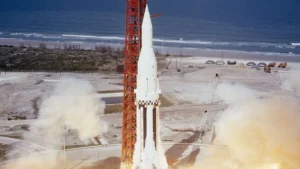
To understand the current capacity crunch, one must examine the staggering trajectory of launch activity over the past decade. According to historical and contemporary data from the Federal Aviation Administration (FAA), the United States commercial space sector has undergone a meteoric rise. In fiscal year 2016, the FAA licensed fewer than 100 launches. By fiscal year 2026, that figure surged to 187 licensed launches, representing an unprecedented era of high-frequency spaceflight.
Government ambitions are accelerating this trend even further. The United States government, under aggressive administrative policy directives, has called for national spaceports to dramatically scale their capabilities. The stated goal aims to support more than 1,000 annual launches and reentries by the year 2030. This exponential upward curve has been supercharged by the proliferation of mega-constellations, Earth-observation networks, defense payloads, and technological miniaturization that has made satellites cheaper and more numerous than ever before.
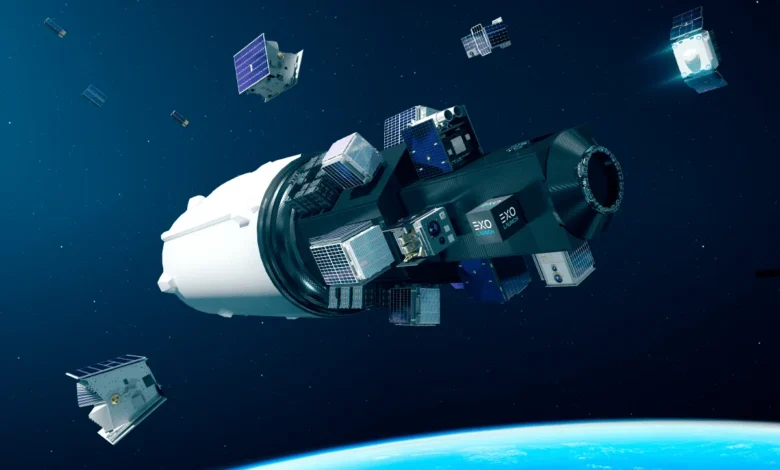
However, industry experts caution that raw launch statistics can obscure a more nuanced and troublesome reality. A rocket launching to the wrong orbital plane at the wrong time offers little utility to a satellite operator whose business model depends on a specific coverage footprint or inclination. As Robert Sproles, chief executive officer of Exolaunch, aptly notes, the demand curve has outpaced the supply curve by a dramatic margin. Berlin-based Exolaunch, a prominent global launch services broker that has successfully facilitated the deployment of 912 satellites across 51 separate launch events, sits directly at the intersection of this logistical bottleneck. For firms like Exolaunch, the challenge is no longer merely finding an empty slot on a rocket; it is finding the right rocket heading to the right destination with an acceptable timeline.

A Trillion-Dollar Market and the Shrinking Spectrum of Launch Choices
The gravity of this supply-demand mismatch becomes even more pronounced when viewed against the broader economic landscape of the commercial space sector. Market research firm Novaspace reported that the global space economy reached a staggering valuation of $626 billion in 2025. Citing industry-wide consolidation, improved technological integration, and closer institutional alignment around national security, operational resilience, and commercial performance, Novaspace has forecast a steady annual growth rate of 5.5% through 2034. By the end of that forecast window, the global space economy is projected to surpass the $1 trillion milestone.
A market of that magnitude and complexity is inherently non-monolithic. It requires a robust, diversified ecosystem of launch providers operating regular schedules across a wide array of orbital regimes—from Low Earth Orbit (LEO) to Medium Earth Orbit (MEO), Geostationary Earth Orbit (GEO), and deep-space trajectories. Yet, industry veterans point out a counterintuitive trend: the market actually featured greater launch diversity a decade ago than it does today.
Reflecting on the state of the industry around 2016, Sproles points out that while overall capacity was significantly lower back then, customers enjoyed access to a much wider variety of reliable vehicles. Over the intervening years, a combination of rapid technological shifts, escalating geopolitical tensions, fragile post-pandemic supply chains, and sweeping industry consolidation has concentrated the lion’s share of launch capacity into the hands of a very small number of hyper-active providers. While this consolidation has driven down per-kilogram launch costs and increased launch cadences for dominant players, it has inadvertently narrowed the strategic choices available to specialized satellite operators.
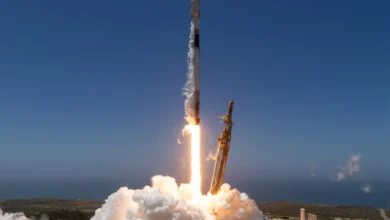
Today’s launch landscape is heavily dominated by two primary pillars of contrasting utility. On one end of the spectrum sits SpaceX, whose workhorse Falcon 9 rocket is exceptionally optimized for massive commercial constellations, human spaceflight missions, and heavy commercial rideshares. On the other end stands Rocket Lab, whose Electron vehicle caters specifically to small satellites and CubeSats requiring highly customized orbital planes and dedicated trajectories.
The vast performance and operational chasm between these two industry leaders underscores a fundamental truth of the modern space age: the market is just as hungry for customized choice as it is for raw weight capacity. When satellite operators cannot find a vehicle that matches their specific mission parameters, they are forced to compromise, leading to compromised science, delayed revenue streams, and operational inefficiencies.
The Limitations of Rideshare and the Need for Strategic Diversification
In the contemporary launch ecosystem, rideshare missions have become the foundational bedrock for smallsat deployment. By grouping dozens of independent payloads onto a single massive rocket, brokers and primary operators can dramatically lower the barrier to entry for universities, startups, and established commercial entities alike.

Nevertheless, industry leaders emphasize that rideshare is not a universal panacea. Sproles characterizes rideshare services as an ideal solution only under specific operational conditions: when a company’s deployment schedule is flexible enough to absorb launch delays, and when the satellite’s mission profile permits it to go wherever the heavy traffic of the rideshare is already heading. In essence, rideshare works well when mission constraints are flexible and loose.
As commercial and institutional space missions grow increasingly complex, bespoke, and mission-critical, a rigid, one-size-fits-all approach no longer suffices. The aerospace sector is finding an urgent need to expand beyond traditional secondary-payload rideshares into two more sophisticated categories of launch procurement:
- Shared Launches: Missions that are intentionally conceptualized from the initial design phase to accommodate multiple distinct customers, ensuring that all participating payloads share mutually beneficial orbital trajectories rather than forcing smaller satellites to piggyback haphazardly onto a primary mission designed for an entirely different destination.
- Dedicated Launches: Bespoke arrangements where a single customer procures an entire rocket, tailoring every variable—including the exact launch schedule, precise orbital inclination, altitude, and payload deployment sequence—to their unique operational requirements.
The tangible benefits of maintaining a diversified portfolio of launch options are clearly visible in execution. For instance, Exolaunch successfully executed its first eight major launch missions of the current year across four distinct launch vehicles originating from three separate continents. By securing capacity across a varied matrix of vehicle performance profiles, orbital inclinations, and global spaceports, the company provides its clients with predictable, reliable access to space while preserving critical flexibility regarding financial cost, scheduling timelines, and ultimate destination geography.
Broader Implications and the Path Forward for Launch Providers
The ultimate vision for the commercial space transportation sector is one of frictionless maturity. Industry leaders aspire to a future where manufacturing a satellite no longer requires agonizing over complex launch vehicle availability, multi-year waitlists, or rigid orbital geometries. In an ideal economic model, space transportation should mirror terrestrial logistics—much like a manufacturer shipping goods globally with the confident assurance that a container ship, freight train, or long-haul truck will always be available to move products to market precisely when production concludes.
Achieving this idealized state, however, is entirely contingent upon the execution capabilities of the world’s launch providers. While numerous aerospace companies have successfully demonstrated the ability to build and launch rockets into orbit, the industry now faces the rigorous challenge of sustained operational execution.
The mandate from the market is clear. Satellite operators, brokers, and institutional stakeholders do not merely need companies that can occasionally push a rocket off a pad; they require a reliable, high-cadence operational rhythm across a diverse fleet of vehicles servicing multiple orbits concurrently. The technology exists, and the soaring demand of a trillion-dollar space economy provides all the economic incentive required. As the aerospace sector looks toward the end of the decade and its ambitious target of a thousand annual U.S. launches, the ultimate burden of proof rests on the launch providers to step up, diversify their offerings, and execute.