The Evolution of BMW Engine Engineering: From the Twin-Turbo N54 to the Twin-Scroll N55 Revolution

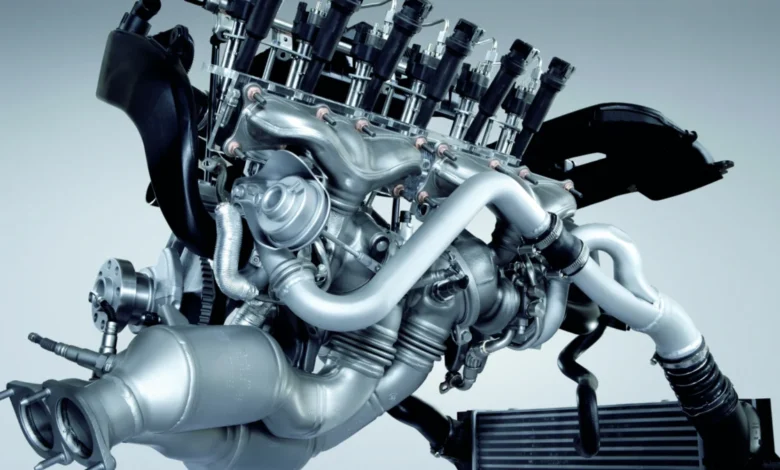
When BMW debuted its twin-turbocharged N54 inline-six engine in 2006, auto enthusiasts were excited to see forced induction return to the Beemer paddock, marking a significant pivot for a manufacturer historically defined by the naturally aspirated straight-six. The N54 was a technical tour de force, delivering performance metrics that challenged V8-powered competitors while maintaining the signature smoothness of the BMW inline-six configuration. However, as the automotive industry shifted toward stringent emissions regulations and a heightened focus on fuel efficiency, BMW’s engineering priorities underwent a fundamental transformation. By 2009, the manufacturer began phasing out the complex parallel twin-turbo architecture of the N54 in favor of the more efficient, single twin-scroll turbocharged N55 engine, a move that would ultimately redefine the brand’s powertrain philosophy for the next decade.
The Rise and Complexity of the N54 Era
The N54 engine arrived at a pivotal moment in BMW’s history. Before its introduction in the 335i, the brand was synonymous with high-revving, naturally aspirated powerplants. The decision to embrace forced induction was driven by a need for torque density. By utilizing two small, low-inertia turbochargers, BMW engineers successfully mitigated the traditional "turbo lag" that plagued earlier forced-induction vehicles. The twin-turbo setup provided a broad, linear power band that felt remarkably similar to a large-displacement engine, yet delivered 300 horsepower and 300 lb-ft of torque from a compact 3.0-liter displacement.
However, the N54 was an engineering compromise in terms of manufacturing complexity. The dual-turbo system required a dense array of oil and coolant lines, two separate wastegate actuators, and an intricate exhaust manifold arrangement. These components occupied significant space in the engine bay and created substantial thermal management challenges. Over time, owners reported issues related to the excessive under-hood temperatures, which accelerated the degradation of rubber seals, gaskets, and plastic components. Furthermore, the dual wastegate system became notorious for the "wastegate rattle," a mechanical shortcoming that forced BMW to issue service bulletins and eventually rethink the hardware entirely.
The 2009 Pivot: The Technical Superiority of the Twin-Scroll
In 2009, BMW introduced the N55 engine, which signaled a departure from parallel twin-turbos. The core innovation of the N55 was the implementation of a single twin-scroll turbocharger. Unlike a standard single turbo, a twin-scroll unit utilizes a divided turbine housing. In an inline-six configuration, the exhaust pulses from cylinders 1-2-3 are routed through one scroll, while cylinders 4-5-6 are routed through the other.
This design is critical for efficiency. By isolating the exhaust pulses, the turbine wheel is hit with more consistent energy, preventing the pulses from interfering with one another. This allows the turbocharger to reach its peak rotational speed—or "spool"—much faster than a conventional single turbo. The result was a reduction in turbo lag that effectively mimicked the responsiveness of the N54’s twin-turbo setup, but with a drastically simplified mechanical footprint.
The performance statistics of the N55 were compelling. It maintained the 300 horsepower output of its predecessor but improved the torque curve, delivering 300 lb-ft at just 1,200 RPM. This was 200 RPM lower than the N54, resulting in a more immediate "punch" from a standstill. Simultaneously, the N55 improved fuel consumption by approximately 15%, a figure that became increasingly vital as global fuel economy mandates tightened.
Manufacturing and Maintenance Implications
The transition to the N55 was as much about logistics as it was about physics. By consolidating the turbocharging system into a single housing, BMW was able to streamline its assembly line processes. The reduction in plumbing—halving the number of oil feed and return lines—minimized the potential points of failure within the engine’s lubrication system.
Additionally, the single-turbo architecture offered significant thermal advantages. Dual turbos act as massive heat sinks, which historically delayed the time required for the catalytic converters to reach their optimal operating temperature during a cold start. Because the N55’s single-turbo exhaust manifold is more compact and retains heat more effectively, the catalytic converter warms up significantly faster. This improvement was essential for meeting increasingly strict cold-start emissions standards in both the European and North American markets.
From a technician’s perspective, the N55 also solved the long-standing "wastegate rattle" issue. While the N54 suffered from mechanical wear on the dual wastegate linkages, the N55 used a more robust, integrated wastegate design that improved longevity. Furthermore, the engine bay of an N55-equipped vehicle offered more physical space for maintenance, leading to reduced labor times for common repairs compared to the cramped confines of the N54.
The "TwinPower" Marketing Conundrum
Perhaps the most controversial aspect of the transition was the branding. When BMW began marketing its single-turbo engines as "TwinPower Turbo," it sparked significant confusion among enthusiasts. Many consumers assumed the term referred to the physical number of turbochargers, leading to a common misconception that the new engines were still "twin-turbo" units.
In reality, "TwinPower" was a marketing umbrella term used by BMW to describe the combination of twin-scroll turbocharging and their proprietary Valvetronic variable valve lift and VANOS variable camshaft timing systems. While the terminology was arguably opaque, it highlighted the engineering shift from "more hardware" (two turbos) to "smarter hardware" (one turbo with advanced valve control). Valvetronic, in particular, allowed the engine to regulate air intake through the valves rather than a traditional throttle plate, significantly reducing pumping losses and improving throttle response during transient driving conditions.
Legacy and Downsizing: The N20 and Beyond
The success of the single twin-scroll turbo formula served as the template for BMW’s broader "EfficientDynamics" strategy. Once the engineers proved that a single turbo could match the performance of a larger engine, the brand began downsizing its portfolio with confidence. This led to the development of the N20 four-cylinder engine, which replaced the naturally aspirated six-cylinders in many mid-range models.
The N20, utilizing the same twin-scroll technology, produced 240 horsepower and offered a 15% increase in fuel efficiency over the older 3.0-liter naturally aspirated engines. By scaling this technology, BMW was able to maintain the brand’s reputation for power while meeting the economic and environmental demands of the 2010s. This lineage eventually paved the way for the B58 engine, the current gold standard of BMW’s inline-six powerplants, which continues to rely on the twin-scroll principle as its foundational architecture.
Conclusion: A Strategic Shift
The transition from the N54 to the N55 remains one of the most consequential chapters in BMW’s modern powertrain history. It marked the moment the manufacturer stopped chasing performance through raw hardware complexity and instead turned toward intelligent, system-integrated engineering.
While the N54 is still revered by enthusiasts for its tuning potential and status as the "first" modern forced-induction BMW six, the N55 proved to be the superior industrial product. It offered a more reliable, efficient, and cost-effective solution that allowed the company to survive and thrive during an era of rapid regulatory change. The move away from the dual-turbo setup was not a step backward in performance, but a strategic leap forward in engineering maturity, establishing a modular design philosophy that continues to influence every internal combustion engine BMW produces today. Through the lens of history, the N55 stands as the quiet architect of the modern BMW driving experience, proving that efficiency and performance need not be mutually exclusive goals.
Related posts: