The Enduring Wisdom of Andy Grove: How "Only the Paranoid Survive" Continues to Guide Intel and the Tech Industry

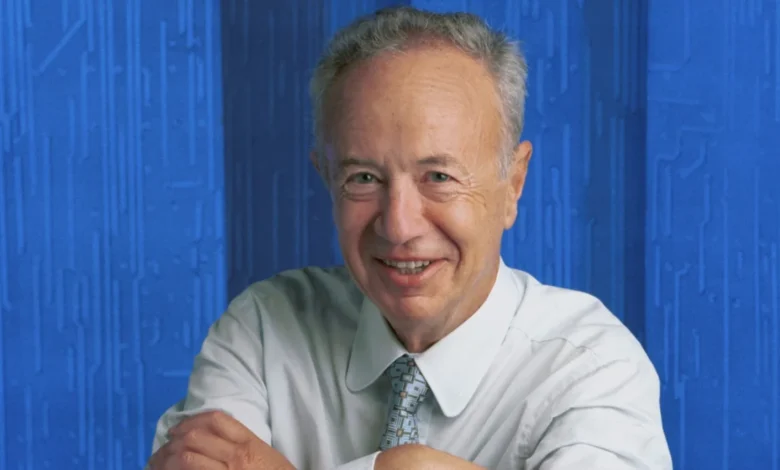
Intel stands as a colossus in the global technology landscape, its processors having powered countless personal computers for generations. The company’s enduring success, however, owes a significant debt to the foundational philosophy of Andy Grove, its transformative former CEO. Grove, who was instrumental from Intel’s inception and helmed the company from 1987 to 1998, championed a unique management principle articulated in his seminal book, "Only the Paranoid Survive." This philosophy, rooted in a constant awareness of potential threats and a proactive approach to change, remains remarkably relevant today, offering crucial insights into Intel’s past triumphs, its recent challenges, and its ongoing efforts to adapt and thrive in an ever-evolving technological epoch.
The Genesis of "Only the Paranoid Survive"
Andy Grove’s tenure at Intel was marked by an unwavering focus on execution and a keen understanding of the dynamic nature of the semiconductor industry. As he approached the end of his leadership, he distilled his decades of experience into "Only the Paranoid Survive," a management manifesto that served as both a retrospective analysis of Intel’s journey and a forward-looking guide for navigating the inherent uncertainties of business. The core tenet of his philosophy was not to foster an atmosphere of debilitating fear, but rather a healthy, strategic paranoia. This meant cultivating a culture where potential risks – from the emergence of new, disruptive competitors to unforeseen macroeconomic shifts – were not only acknowledged but actively anticipated and prepared for.
Grove argued that the greatest threat to any established company is not incremental competition, but rather what he termed "strategic inflection points." These are seismic shifts in the fundamental dynamics of an industry, moments where the rules of engagement are rewritten, and established advantages can rapidly become liabilities. At such junctures, companies face a stark choice: either adapt with remarkable agility, potentially leading to unprecedented growth, or succumb to obsolescence, experiencing a decline of monumental proportions. The history of the technology sector is replete with examples of companies that either mastered these inflection points or were swept away by them.
Intel’s Golden Age and the Seeds of Complacency
Under Grove’s leadership, Intel experienced a period of extraordinary growth and dominance. The company became synonymous with the central processing unit (CPU), establishing a near-monopoly in the PC market through its relentless pursuit of performance improvements and its strategic manufacturing prowess. This era, spanning the late 20th century and extending into the early 2000s, cemented Intel’s position as a technological powerhouse.
However, as Grove himself likely foresaw, sustained success can inadvertently breed a form of complacency. The very dominance that Intel achieved created an environment where the urgency of constant adaptation might have begun to wane. While the company continued to innovate, the pace of change in the broader technology landscape accelerated, particularly with the rise of new computing paradigms and the emergence of formidable rivals.
The Shifting Landscape: Nvidia, AMD, and the Rise of AI
In recent years, Intel has undeniably faced significant headwinds. Rival chipmakers, most notably Nvidia and AMD, have made substantial inroads, not only catching up to Intel in certain areas but also surpassing it in others, thereby eroding Intel’s once-unassailable market share. Nvidia, in particular, has become a dominant force in the burgeoning field of artificial intelligence (AI), its GPUs proving exceptionally well-suited for the parallel processing demands of AI workloads. AMD, after a period of resurgence, has also presented a potent challenge across various market segments, from CPUs to graphics cards.
From an external perspective, it appeared that Intel, the very company that had been a cautionary tale against complacency, might have fallen victim to it. The company’s struggles with manufacturing advancements, particularly its delayed transition to newer, more efficient process nodes, proved to be a critical vulnerability. This allowed competitors to gain a significant technological edge, further exacerbating Intel’s market share erosion. The "sliding doors" moment, as described by Grove, seemed to be upon Intel, presenting a critical juncture that demanded a profound strategic reevaluation.
A New Era of "Paranoia" Under Lip-Bu Tan
The narrative, however, is far from over. Intel is currently navigating a critical phase of transformation under the leadership of its new CEO, Lip-Bu Tan. Tan has embarked on an ambitious strategy to revitalize the company, a move that appears to be drawing inspiration from the very principles Grove espoused. This includes a renewed focus on manufacturing innovation, a strategic push into new growth areas like AI, and a concerted effort to regain market confidence.
Under Tan’s stewardship, Intel has initiated a significant restructuring and investment program aimed at modernizing its foundries and reclaiming its position as a leader in chip manufacturing technology. This includes the development of its own chip manufacturing services for external clients, a move designed to diversify revenue streams and leverage its considerable manufacturing expertise. Furthermore, Intel is aggressively pursuing opportunities within the AI ecosystem, developing specialized hardware and software solutions to support the rapid expansion of AI technologies across various industries.
The early signs of this turnaround have been encouraging. Intel’s stock price has seen a notable surge, reflecting improved investor sentiment and a growing belief in the company’s strategic direction. This resurgence underscores the potential for established giants to reinvent themselves when faced with existential challenges, provided they embrace the spirit of adaptation and proactive risk management. The company’s renewed commitment to AI, a field that represents one of the most significant "strategic inflection points" of the current era, is a testament to its understanding of the need to pivot and lead rather than simply react.
The Broader Implications: Grove’s Legacy in the Digital Age
Andy Grove’s philosophy extends far beyond the walls of Intel. "Only the Paranoid Survive" has become a cornerstone text for business leaders across industries, offering timeless insights into the dynamics of competition, innovation, and survival in rapidly changing markets. In an era characterized by unprecedented technological disruption, the constant emergence of new business models, and the accelerating pace of innovation, Grove’s emphasis on vigilance and adaptability is more crucial than ever.
The challenges faced by Intel serve as a powerful case study for other established companies. The temptation to rest on past successes is ever-present, but the history of the tech industry demonstrates that market leadership is never guaranteed. Companies must cultivate a culture that encourages foresight, embraces change, and views potential threats not as an insurmountable doom but as an impetus for reinvention.
The ongoing efforts at Intel to leverage its manufacturing capabilities, reassert its competitive edge, and aggressively pursue new growth opportunities, particularly in the AI space, are a direct reflection of Grove’s enduring legacy. His philosophy of "strategic paranoia" is not about succumbing to fear, but about harnessing it as a powerful motivator for innovation and resilience. As the technology landscape continues its relentless evolution, the wisdom of Andy Grove, articulated so forcefully in "Only the Paranoid Survive," remains an indispensable guide for any organization aspiring to not only survive but to thrive amidst the perpetual flux of the digital age. The company’s journey from its past glories to its present struggles and its ongoing revitalization serves as a potent reminder that in the fast-paced world of technology, the only constant is change, and only the prepared, the vigilant, and yes, the strategically paranoid, will endure.