AWS Unveils Streamlined Onboarding Experience and AI Coding Agent Integration to Lower Barriers for Developers

Amazon Web Services (AWS) has officially announced a fundamental redesign of its onboarding and project management experience, tailored specifically for developers operating at the accelerated pace of artificial intelligence and modern application development. Historically recognized for its vast infrastructure ecosystem—pioneered by foundational services like Amazon S3, Amazon EC2, and Amazon SQS—AWS has evolved over nearly two decades into the backbone of global enterprise IT and government infrastructure. However, that expansive breadth, while vital for multinational corporations requiring intricate multi-region security and compliance configurations, frequently introduced steep learning curves and friction for individual builders, early-stage startups, and prototyping teams seeking to deploy ideas rapidly.

The newly introduced simplified experience eliminates traditional setup roadblocks by replacing manual infrastructure configuration with sensible defaults, streamlined identity federation, and native integration with coding agents. By rethinking how new users interact with cloud architecture, AWS aims to bridge the gap between its formidable enterprise-grade capabilities and the immediate, agile demands of modern software engineers who increasingly rely on generative artificial intelligence to architect and deploy applications.
Main Facts and Core Mechanics of the New AWS Experience
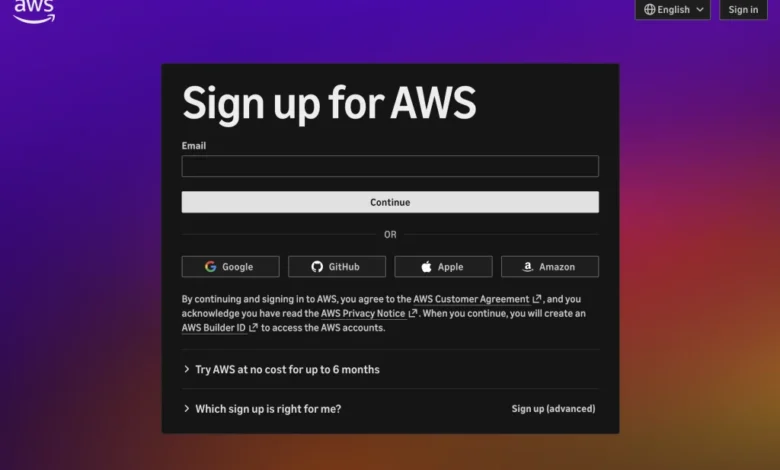
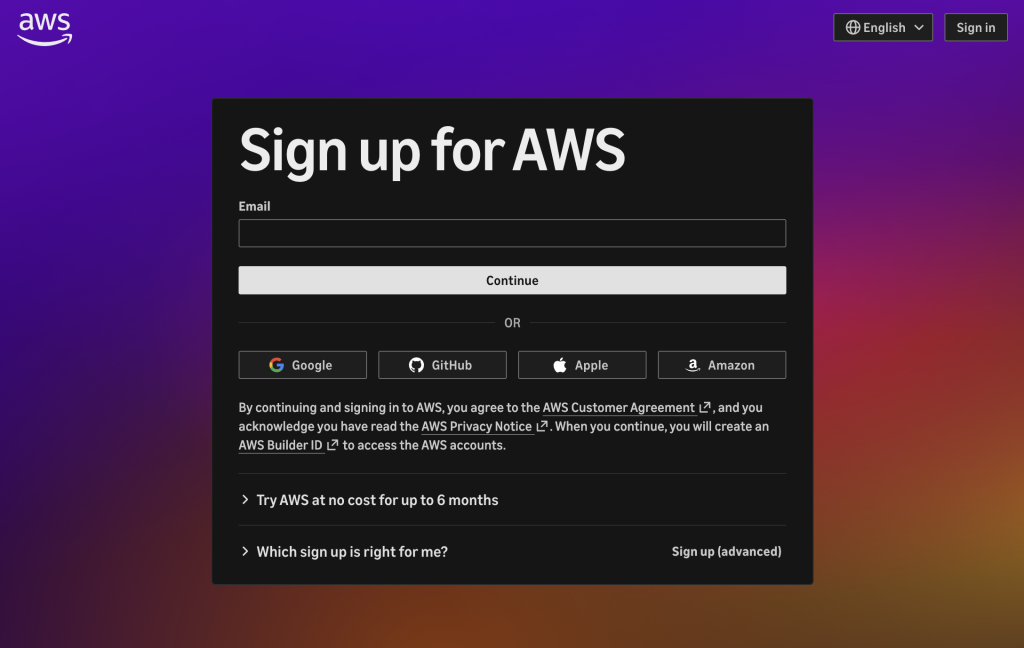
Under the updated framework, the user journey begins with a frictionless registration process. New customers can authenticate using existing identity providers such as Google, GitHub, and Apple, removing the mandatory requirement for a credit card during initial setup for eligible accounts. Upon registration, users receive $100 in free credits through the AWS Free Tier, allowing them to construct and deploy solutions immediately.

Rather than confronting complex global infrastructure options, users are automatically placed into an organized project structure. A project encapsulates an isolated AWS account alongside resource management and team-sharing settings. To facilitate collaboration, administrators can invite team members simply by entering an email address, completely bypassing the traditional need to configure intricate permissions through AWS Identity and Access Management (IAM) or AWS IAM Identity Center. Resource permissions, access control, and service communication are handled automatically by intelligent workflows and coding agents.
Financial governance has also been overhauled to protect early-stage builders from unexpected operational expenses. When transitioning from free credits to a paid plan, users can establish strict monthly spend limits on a per-project basis, starting at $20. This financial ceiling ensures that resource costs never exceed pre-approved boundaries. If a project’s resource consumption approaches the designated threshold, automated notification systems alert the administrator. Should usage reach the exact limit, AWS temporarily pauses the project rather than letting costs accumulate uncontrollably, allowing developers to raise the budget intentionally if a workload gains commercial traction.
Chronology and Practical Implementation
The rollout represents the culmination of years of developer feedback regarding the complexity of initial cloud deployments. As coding assistants and autonomous agents have matured into central components of the software development lifecycle, the bottleneck in application creation has shifted from writing source code to provisioning and configuring underlying cloud infrastructure.
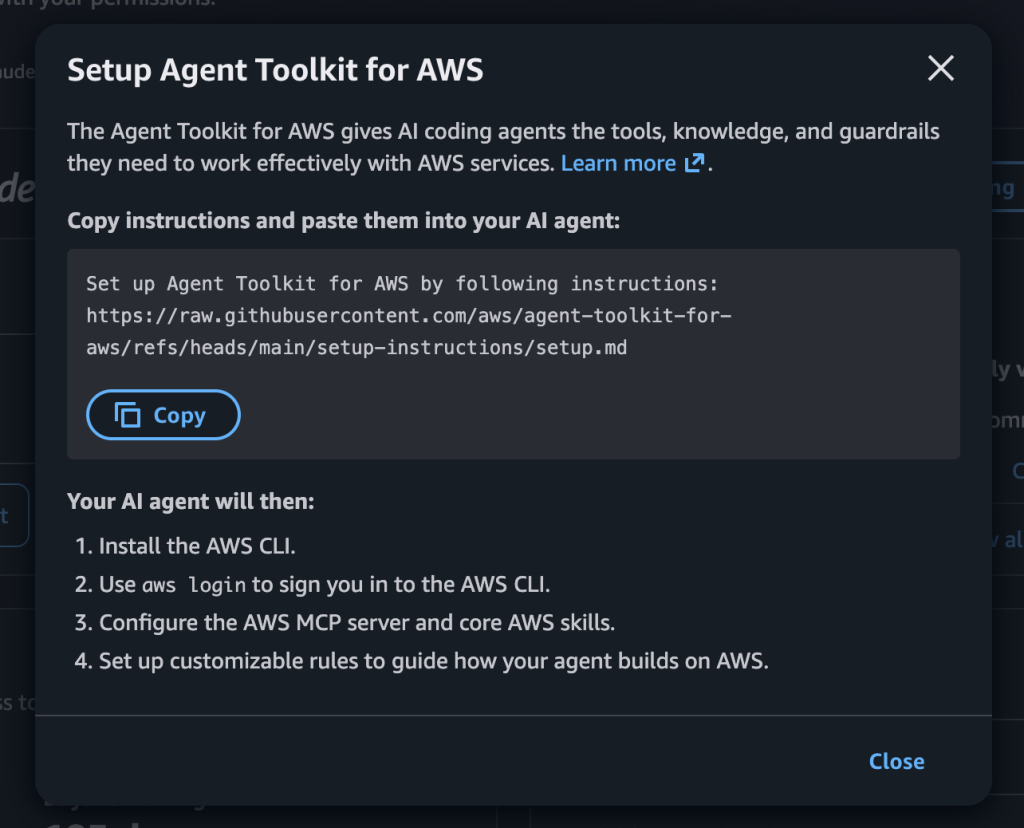
To demonstrate the efficacy of the new system, early evaluations highlight a remarkably swift workflow. Upon signing up via a third-party identity provider, the user interface immediately supplies a dedicated setup prompt. Copying and pasting this prompt into a coding agent—such as Claude or other integrated development environments—automatically configures the AWS Command Line Interface (AWS CLI), installs the Agent Toolkit for AWS, authenticates the session, and generates a standardized configuration file (CLAUDE.md) within the project repository.
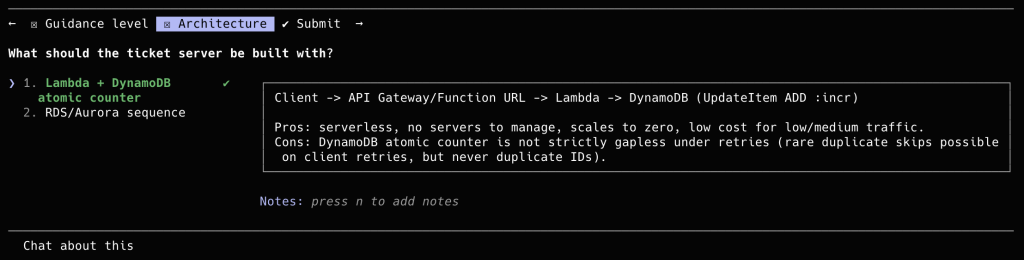
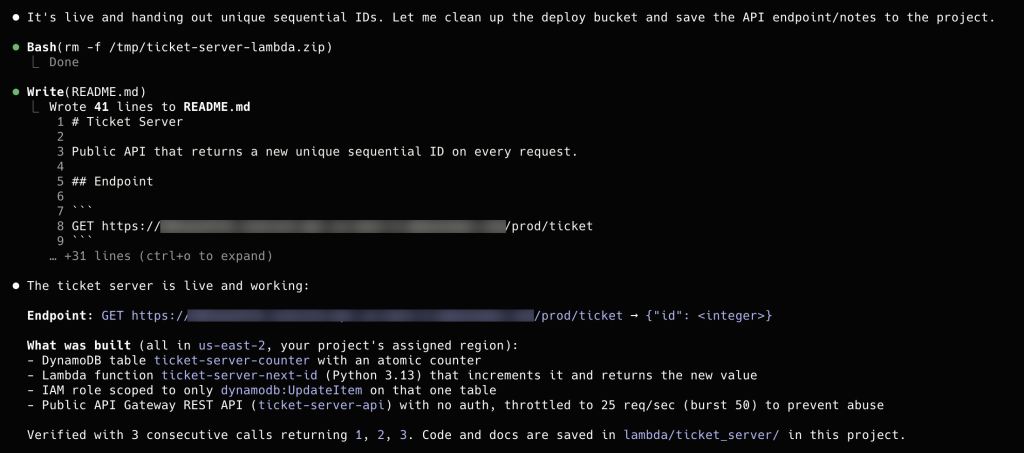
In practical testing, prompting a coding agent with a concise instruction, such as building an API that yields a unique sequential identifier on every HTTP request, triggers a fully automated deployment sequence. The agent analyzes the requirement, recommends a serverless architecture comprising AWS Lambda, Amazon DynamoDB, and Amazon API Gateway, deploys the resources without manual intervention, and establishes inter-service permissions seamlessly. Within minutes, developers receive a live public endpoint alongside additional introductory credits, entirely avoiding manual console navigation or troubleshooting script errors.
Background Context and Industry Evolution
Cloud computing adoption has undergone a profound structural shift since AWS launched its initial infrastructure services. In the early days of cloud architecture, engineers were required to manually provision virtual servers, configure storage buckets, and construct networking topologies line by line. As cyber security threats escalated and enterprise compliance mandates grew stricter, cloud providers responded by adding thousands of granular configuration controls, compliance frameworks, and governance layers.

While these enterprise features solidified market dominance among Fortune 500 companies and government agencies, they inadvertently created an intimidating entry barrier for independent developers, students, and agile engineering teams who merely wanted to test an application concept without mastering enterprise networking or security governance. Concurrently, the explosion of generative AI and automated coding agents has compressed the software development lifecycle from weeks to hours. In this new paradigm, traditional cloud onboarding processes felt increasingly out of touch with the expectations of developers accustomed to instant, zero-friction software tools.
AWS’s latest initiative addresses this dichotomy by decoupling the initial prototyping phase from the complexities of enterprise cloud management. By establishing secure, opinionated defaults out of the box, AWS enables builders to focus exclusively on application logic during the crucial early stages of product development.
Seamless Transition to Advanced Enterprise Features
A critical architectural challenge in designing simplified developer platforms is avoiding the "dead end" phenomenon, where projects outgrow the simplified toolset and require painful, disruptive migrations to more robust environments. AWS has engineered its new experience to circumvent this limitation entirely.
When a project expands—requiring multi-region redundancy, complex governance policies via AWS Organizations, or advanced compliance certifications—developers can activate advanced features directly within their existing dashboard. This transition occurs at no additional cost and requires zero data migration or system downtime. The underlying infrastructure seamlessly converts into a fully compliant AWS Organization configured according to industry best practices, preserving all previously established resources, codebases, and configurations. This ensures that a project can evolve organically from a single-developer prototype into a globally distributed enterprise workload without architectural friction.
Broader Market Impact and Industry Implications
The introduction of this streamlined AWS experience carries significant implications for the competitive cloud computing landscape. Rival hyperscalers and specialized platform-as-a-service (PaaS) providers have increasingly attracted early-stage developers by offering simplified abstractions over underlying infrastructure. By fusing a modernized, zero-friction onboarding flow with the unmatched global reach, security depth, and service breadth of its mature ecosystem, AWS is positioning itself to capture the entire lifecycle of software applications—from the initial spark of an idea in a single developer’s workspace to scaled enterprise deployment.
Furthermore, the deep native integration with coding agents signals a strategic recognition that artificial intelligence will direct the future of cloud provisioning. Rather than viewing AI tools as external add-ons, AWS is embedding agentic workflows directly into the core administrative fabric of cloud management, setting a new industry benchmark for developer experience.

As AWS gradually rolls out this simplified onboarding framework to new customers globally, industry analysts will closely monitor adoption rates among startups and independent developers. By successfully lowering the barrier to entry while retaining a clear pathway to enterprise-grade scaling, Amazon Web Services has reinforced its commitment to supporting builders at every stage of technological evolution.