Hilary Mason Addresses AI’s "Moment of Chaos," Emphasizing Product Design, Ethical Challenges, and Evolving Engineering Roles at QCon AI

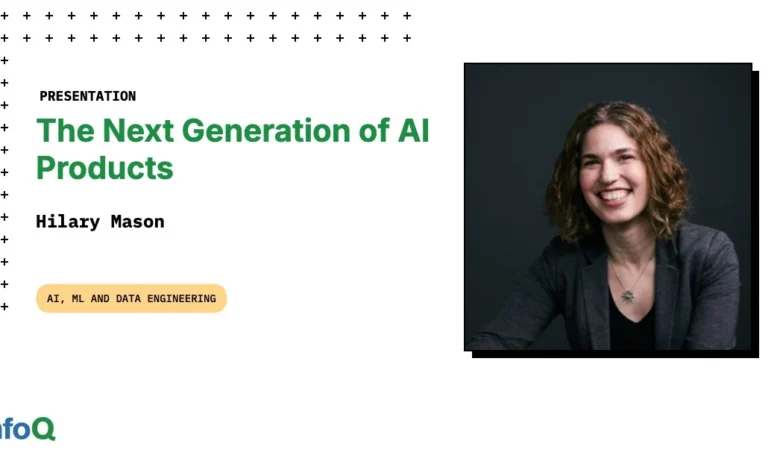
Addressing a gathering of senior engineers and architects at QCon AI, technology veteran Hilary Mason delivered a candid assessment of the current artificial intelligence landscape, which she characterized as a "moment of chaos." Mason, known for her pioneering work in machine learning and data science, underscored the critical need for clarity in AI discourse, robust product design, and a re-evaluation of the engineering profession amidst rapid technological shifts. Her presentation drew on a rich career spanning academia, startups, and large enterprises, offering a pragmatic perspective on navigating the complexities of building meaningful AI products.
Mason’s journey into the heart of AI began long before its mainstream ascent. She pursued graduate studies in machine learning at a time when the field was far from fashionable, humorously recalling an instance where mentioning her work led a party acquaintance to walk away. This early immersion in the foundational mathematics and algorithms of machine learning shaped her unique ability to bridge the gap between technical understanding and practical application. After leaving academia, she served as Chief Scientist at bit.ly, a prominent social media link-shortening service in the late 2000s, where she gained early insights into data at scale. Her subsequent ventures included founding Fast Forward Labs in 2014, a "machine intelligence company" deliberately avoiding the then-marketing-heavy term "AI." This company focused on helping businesses understand emerging technologies, developing tools like a natural language generation system that predated transformer models, used to analyze and generate real estate ad copy.
Decoding AI: Beyond the Hype Cycle
A central theme of Mason’s address was the pervasive misunderstanding and misuse of AI terminology. She highlighted how the term "AI" itself has historically functioned as a marketing catch-all for "the shiny thing over there." This ambiguity, she argued, leads to a disconnect between public perception, executive expectations, and the technical realities of what AI systems can actually achieve. Mason revisited a slide she created in 2014, illustrating the progression from "big data" to "analytics," "data science," "machine learning," and finally, a blue question mark labeled "AI," symbolizing its nebulous definition even then. Today, while "generative AI" has taken center stage, she stressed that the underlying mathematical principles, code, and data hygiene remain fundamentally unchanged and more critical than ever.
She offered a memorable metaphor for Large Language Models (LLMs), describing them as "an engine for producing generally mid content" – systems designed to generate text that aligns with the most common patterns in their vast training data. While capable of impressive feats like passing the LSATs, these systems struggle with simple tasks a child could perform, such as counting specific characters in a word. This dichotomy creates a significant challenge for mental model formation, leading to flawed decisions and vulnerability to marketing hype. Mason emphasized that unlike the "cold logic" artificial intelligence promised by science fiction, current AI often behaves more like a "drunk pair programmer" – capable and helpful, but unpredictable and prone to errors. This requires technologists to continually question assumptions and ensure a shared understanding of what AI truly means in any given context.
The Intricate Challenges of AI Product Development
Building effective AI products, Mason contended, is exceptionally difficult because it demands a holistic understanding across the entire technological and business stack. Most individuals operate within a single layer—be it data models, algorithms, APIs, user experience, distribution, or high-level business strategy. However, AI’s transformative nature impacts all these layers simultaneously, making comprehensive integration and foresight rare.
One of the most pressing challenges is the phenomenon of AI hallucination, where models generate factually incorrect yet plausible outputs. Mason reframed this, stating that "all outputs are essentially equal" to the model, which "does not know if it is lying to you." She cited the widely reported case of Air Canada being compelled to honor a refund policy hallucinated by its customer support chatbot, underscoring the real-world legal and financial implications. Similarly, AI bias, inherent in the training data, leads to outputs that reflect and often amplify existing societal prejudices or simply gravitate towards mediocrity. Mason demonstrated this with an example from Midjourney, where a prompt for "an engineer" consistently generated images of men named "Matt" with short hair and glasses, highlighting a lack of diversity and "taste" in the generated content.
Beyond these inherent model limitations, Mason critically assessed the current state of user experience (UX) in AI products. She argued that chat, despite the explosive success of ChatGPT, is a "terrible interface for software" and often suboptimal even for interpersonal communication. The default reliance on chat for AI interactions, she believes, leads to user anxiety (e.g., "writer’s block" in open-ended input fields) and can even negatively impact psychological well-being by fostering single-player, non-social experiences. Mason advocated for designing AI products that are "pro-social," encouraging human connection and interaction.
The concept of "agents" also requires careful disambiguation. For investors, "agent" often signifies an economic opportunity to automate labor, translating to dollar signs. For engineers, it refers to complex systems involving numerous LLM calls, context management, and process orchestration. Understanding where human judgment fits into these agentic systems and how to manage their context effectively is paramount.
Operationalizing AI: Cost, Quality, and Guardrails
Moving beyond prototypes to production-grade AI systems introduces a host of operational challenges. Mason emphasized the need for robust evaluation metrics beyond traditional machine learning measures like precision and recall, or product analytics like daily active users. For instance, in an educational context, directional accuracy might be more valuable than absolute factual correctness if it sparks curiosity, as illustrated by her son’s interaction with ChatGPT about hieroglyphics.
Cost management is another critical consideration. Prototypes often rely on expensive large models, leading to unsustainable operational costs. Mason advised exploring architectural paths that optimize cost without sacrificing utility, such as converting "generation problems into ranking problems." This involves pre-generating content and then using embeddings to rank and retrieve the most relevant pieces, significantly reducing expensive LLM calls.
Guardrails are indispensable for preventing undesirable or inappropriate outputs. Mason shared an example from her current venture, Hidden Door, where a multi-stage process involving a metadata-rich database of 40,000 English words and phrases, coupled with a quick PG-13 translation check, effectively manages user input and ensures content appropriateness across diverse fictional worlds. This approach, while "boring" and simple, proved highly effective and yielded an unplanned benefit: supporting players using non-English languages through automatic translation.
The Evolving Role of the Technologist in 2025 and Beyond
Perhaps one of the most profound implications of AI’s rapid advancement, according to Mason, is its impact on the engineering profession itself. She identified a "collective existential career crisis" among engineers, as traditional measures of expertise, such as memorizing syntax or optimizing code, are being democratized by AI tools like Codex. The ability to write code is becoming less critical than the ability to frame the right questions, understand what "good" looks like in an answer, and coordinate complex systems.
Mason asserted that senior technologists are more important than ever, not for their coding prowess, but for their judgment, systems thinking, and leadership in navigating uncertainty. Leadership, she noted, involves absorbing possibility space and creating clarity for teams. In an AI-driven world, where past experience and pattern matching may no longer apply, leaders must update their "risk function" and develop robust mental models.
The future engineer, she argued, will be defined by a strong product focus – the ability to consider software within the broader context of the business, the team, and the end-user experience. Resilience, flexibility, and a willingness to continuously learn and adapt will be key traits for success. This shift necessitates a re-evaluation of hiring processes and career development paths, moving away from box-ticking exercises towards fostering holistic problem-solvers. Mason highlighted a research paper showing that engineers who enthusiastically adopted GenAI programming tools, exhibiting realistic expectations and persistence, tended to outperform those who did not.
Rethinking Business Models: Opportunities for Innovation
Despite the challenges, Mason painted an optimistic picture of the opportunities AI presents for innovation and new business models. She encouraged technologists to "lean in" to the transformative potential, rather than the exploitative side of AI. The changing cost functions and unexplored surface area offer fertile ground for creating personalized experiences, single-use software, and context-aware applications that respond dynamically to user needs and environmental cues.
As an example, Mason shared the vision behind Hidden Door, her current venture. The company aims to create a new platform for "role-play meets fanfiction" style games within licensed fictional worlds. By working with authors and filmmakers, Hidden Door leverages AI and machine learning to dynamically generate story moments, allowing players to embody characters and interact with rich narratives. This model not only offers novel entertainment experiences but also provides a new revenue stream for creators, paying them royalties as players engage with their worlds. Hidden Door’s approach emphasizes curated art by human artists, dynamically assembled by algorithms, and a component-based architecture that maintains flexibility and the option to swap out LLMs if needed.
Mason concluded by reiterating that while there are more questions than answers in this nascent phase of AI, it is an incredibly exciting time to be an engineer. The imperative is to foster trust and autonomy within teams, rigorously manage AI systems, and relentlessly pursue the creation of meaningful, user-centric products that redefine what’s possible. The journey demands adaptability, critical thinking, and a commitment to building a future where technology serves humanity effectively and ethically.
Related posts: