5 Professional-Grade Ryobi Tools That Are Challenging the Industry Status Quo

For decades, the professional tool landscape has been dominated by a select few legacy brands, with names like Milwaukee, Makita, and DeWalt serving as the industry standard for contractors, master plumbers, and automotive technicians. Ryobi, meanwhile, carved out a massive niche as the quintessential brand for the weekend warrior and the budget-conscious DIY enthusiast. However, the traditional hierarchy of the tool shed is undergoing a visible transformation. As Ryobi continues to iterate on its 18V One+ HP (High Performance) brushless technology, the brand’s signature neon-green aesthetic is increasingly visible on high-stakes job sites. This shift is not merely a trend of aesthetic preference but a calculated response to the brand’s evolution in engineering, power output, and durability.
The rise of Ryobi within professional circles is a testament to the democratization of high-performance battery platforms. While legacy brands often command a significant price premium for their flagship lines, Ryobi has successfully positioned its HP-series tools as a bridge between consumer-grade utility and professional-grade performance. By leveraging the same 18V battery ecosystem across hundreds of devices, the company has created an interoperability that is difficult for even the most expensive brands to match. As professional trade publications and veteran contractors begin to put these tools through rigorous, real-world stress tests, a distinct subset of the Ryobi catalog has emerged as being capable of standing toe-to-toe with more expensive alternatives.
The Evolution of the Ryobi Brand Identity
The history of Ryobi, owned by Techtronic Industries (TTI), is characterized by its consistency. Since the early 2000s, the brand has maintained backward compatibility for its 18V battery system, a move that created an incredibly high barrier for users to switch to competing brands. Over the last five years, however, the strategy shifted from "just enough power" to "pro-grade performance." The introduction of the Brushless HP line marked a turning point in the brand’s chronology. By integrating intelligent electronics that communicate with high-output lithium batteries, Ryobi enabled its tools to draw more current and maintain higher RPMs under load, finally satisfying the demanding requirements of professional contractors.
1. 18V One+ HP 7-1/4-inch Circular Saw (PBLCS302B)
Circular saws are the heartbeat of framing and carpentry, and for a long time, Ryobi’s offerings were considered too underpowered for daily, heavy-duty use. The release of the second-generation 18V One+ HP 7-1/4-inch Circular Saw effectively ended that stigma. Featuring an all-metal bevel adjustment system and robust depth-of-cut capacity (2-9/16 inches), the tool delivers a performance profile that rivals traditional corded saws.
Industry analysts point to the saw’s integration with the "Edge" battery series as the catalyst for its professional acceptance. The saw utilizes the battery’s enhanced cells to deliver up to 5,000 RPM, allowing for rapid, clean cuts through dimensional lumber and engineered materials. For professionals, the value proposition is clear: the tool offers the precision of a high-end saw at a fraction of the cost, making it an ideal choice for contractors who want to avoid the "theft anxiety" often associated with carrying $400+ saws on public job sites.
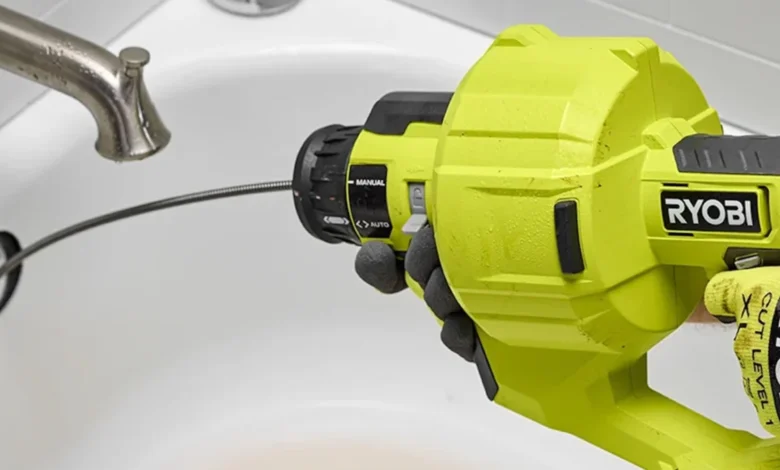
2. 18V One+ 25-foot Drain Auger (PCL456B)
The plumbing industry has historically been the most resistant to non-specialized tool brands, yet the 18V One+ 25-foot Drain Auger has disrupted this sector. Professional plumbers typically rely on specialized, heavy-duty equipment for drain maintenance. However, the complexity of clearing small-diameter lines (two inches or less) in sinks and showers often makes heavy equipment overkill.
The Ryobi auger simplifies the process through its automated feed-and-retract mechanism. This device eliminates the physical labor associated with traditional manual snakes and the bulk of industrial-grade machinery. By including an integrated LED work light—a feature often overlooked in industrial plumbing tools—Ryobi has provided a level of visibility that is highly valued in cramped under-sink environments. The consensus among plumbing influencers and trade professionals is that while it may not replace a main-line sewer machine, it serves as a highly efficient "first-line-of-defense" tool that reduces the duration of service calls.
3. 18V One+ 1/4-inch HP Extended Reach Ratchet (PBLRC01B)
In the automotive sector, speed and access are the primary currencies. The 18V One+ 1/4-inch HP Extended Reach Ratchet has been recognized by industry testers as a near-equal to professional-tier pneumatic tools. Delivering 40 ft-lbs of torque and 260 RPM, this tool provides the necessary force for common engine bay fasteners.
What elevates this tool into the professional category is its design ergonomics. The slim, 4-position rotating head allows mechanics to access fasteners in the incredibly tight confines of modern, cramped engine compartments. The shift from pneumatic (air-powered) tools to cordless electric tools is a broader trend in the automotive industry, as it allows for greater portability and eliminates the need for bulky air hoses. The Ryobi model’s ability to perform in a daily-use environment has led even skeptical veteran mechanics to acknowledge its utility in a professional shop setting.
4. 18V One+ HP Compact Cut-Off Tool (PSBCS02B)
Versatility is the defining characteristic of the 18V One+ HP Compact Cut-Off Tool. In construction and renovation, the ability to switch between materials—metal, tile, plastic, and thin wood—without changing tools is a massive time-saver. The integration of a forward/reverse switch is a subtle but critical design choice; it allows the user to redirect sparks and debris away from themselves, a feature that highlights Ryobi’s move toward human-centric design.
With a brushless motor capable of hitting 19,500 RPM, this tool is essentially a miniaturized angle grinder with a focus on precision rather than brute force. Its light weight of 1.14 pounds makes it ideal for overhead work or detailed metal-trim tasks. By incorporating onboard storage for cutting wheels, Ryobi has addressed the "lost accessory" issue that often plagues job sites, further cementing its place in a professional’s daily carry.
5. 18V One+ HP 6-1/2-inch Track Saw (PTS01B)
The introduction of a track saw into the Ryobi lineup was a significant signal to the woodworking and cabinet-making industry. Track saws are specialized tools designed for perfectly straight, splinter-free cuts. Historically, professionals would only invest in high-end German or Japanese-made track saws. Ryobi’s entry into this market segment, priced aggressively, has opened the door for many tradespeople to incorporate track-saw precision into their workflows without the standard $600+ investment.
While it lacks some of the extreme-duty dust extraction efficiency of premium brands, the performance-to-price ratio is statistically significant. The ability to make 260 linear feet of cuts on a single charge is sufficient for a full day of interior trim work or deck installation. It serves as an example of "niche accessibility," where the tool’s primary value is in enabling a professional to execute a task more accurately and safely than they could with a standard circular saw.
Market Implications and Professional Consensus
The shift toward these "prosumer" tools has broader implications for the tool manufacturing sector. As Ryobi continues to capture market share, legacy brands are forced to innovate faster or lower their pricing to remain competitive. This competition ultimately benefits the consumer and the professional alike.
Data from industry reviews suggests that professional trust in Ryobi is no longer based on brand prestige, but on empirical performance. The criteria for these selections remain strict: the tools must demonstrate high build quality, sufficient torque and RPM, and the ability to withstand the wear and tear of a non-residential environment. When a tool like the Ryobi 18V track saw or extended reach ratchet is reviewed by a professional, the evaluation criteria shift from "is it good for the home?" to "will it save me time and money on the clock?"
For the modern contractor, the "all-yellow" or "all-red" tool kit is becoming less of a religious dogma and more of a practical decision. As Ryobi continues to bridge the gap between affordability and industrial capability, the professional toolkit is becoming increasingly diverse, signaling a new era where performance is prioritized over the legacy of the manufacturer’s name. This evolution suggests that the future of the construction and trade industry will be defined by tools that provide the best efficiency-to-cost ratio, regardless of the color of the plastic casing.