Noise Secures $5.5M Seed Funding to Democratize Brand Marketing Through Everyday Content Creators

The creator economy is undergoing a massive structural shift as traditional influencer marketing models face rising costs, diminishing returns, and widespread audience fatigue. Enter Noise, an innovative marketing platform designed to bridge the gap between brands and everyday consumers. By bypassing traditional high-priced influencers and standard digital ad placements, Noise enables businesses to deploy thousands of everyday users as micro-advocates across major social media channels, including TikTok, Instagram, Facebook, and YouTube.
On Wednesday, Noise announced a significant $5.5 million seed funding round led by Capital Midwest, M25, and Girshin Robotics, bringing the startup’s total capital raised to $7.2 million. The financing also saw participation from CapitalizeVC and prominent industry operators, including representatives from tech giant DoorDash. This fresh capital infusion will allow the company to scale its operational infrastructure, accelerate hiring, and expand its core product capabilities as it seeks to capture a larger share of the multi-billion-dollar creator economy.
A New Paradigm in Creator Marketing
Unlike traditional influencer agencies that negotiate lucrative, flat-rate contracts with established social media personalities boasting hundreds of thousands of followers, Noise operates on a performance-driven, high-volume model. The platform is open to anyone with a smartphone, regardless of their current follower count.
Brands interact with the platform by submitting their content briefs and marketing budgets. Noise then matches these campaigns with its vast roster of everyday creators, who produce promotional content for their personal social media channels. Rather than receiving a steep upfront fee, creators are compensated based on viewership metrics. This unique payment structure allows brands to scale their marketing operations simultaneously across thousands of individual accounts without the traditional administrative headaches of manual creator sourcing, individual contract negotiations, and fragmented payment processing.
According to Noise CEO and co-founder Diego Kafie, the platform’s top-performing creators are already generating more than six figures annually through the app. Noise generates revenue by taking a commission from the total budget paid out by brands once verified views are successfully delivered.
"Our top brands work with several thousand creators on autopilot," Kafie said. At present, the platform’s primary customer base consists of mobile applications and early-stage startups operating on constrained marketing budgets. These companies often find traditional influencer marketing prohibitively expensive. However, Noise’s long-term vision is to onboard enterprises and businesses of all sizes looking to diversify their marketing playbooks.
Chronology and Origins: The Evolution from Playbite to Noise
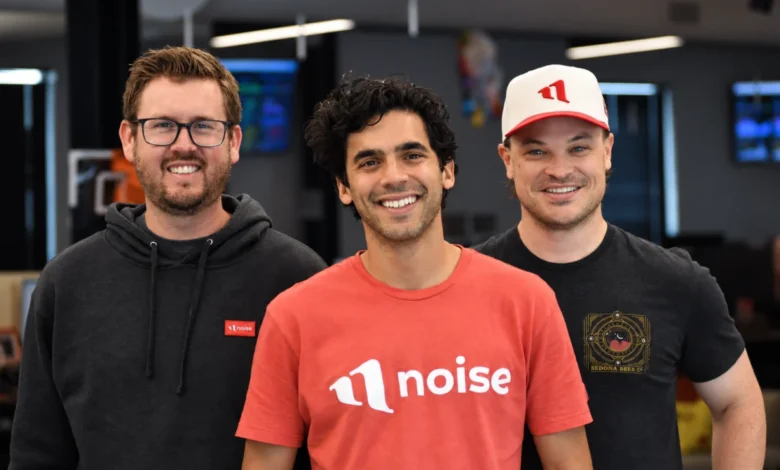
The foundation of Noise was not built overnight; it is the direct result of practical experimentation by its founding team. Diego Kafie, Stu Feldt, and Nic Weber officially launched Noise in 2025, but the concept was forged during the two preceding years while the trio was building and scaling a mobile gaming app called Playbite.
While attempting to acquire users for Playbite on a startup budget, the founders encountered the steep financial barriers associated with traditional marketing channels. Hiring established social media influencers with large followings quickly proved to be financially unsustainable for a scrappy startup. In response, the team pivoted to a grassroots experimentation strategy.
They began recruiting a small cohort of their own platform’s gamers, teaching them how to produce engaging, organic social media content that promoted the mobile app. The initial test group started small, with just five participants, which quickly grew to 10, then 25, and eventually 100 active creators.
Before long, Playbite’s app install metrics began skyrocketing. This small, grassroots army of everyday users was posting daily content about mobile games and the Playbite app across platforms like TikTok, generating massive organic reach. Crucially, this growth was achieved at a fraction of the cost of traditional marketing playbooks because the founders were training regular individuals to become content creators from scratch. Recognizing the broader commercial potential of this operational model, the trio decided to spin the strategy into a standalone platform, giving birth to Noise.
Market Context: Tapping Into the Gen Z Influencer Boom
Noise enters the market at a time when the desire to participate in the creator economy has reached unprecedented heights. Recent industry data underscores this shift: more than 57% of Generation Z and just over 40% of U.S. adults overall express a desire to become influencers. However, the reality of breaking into the space independently is fraught with financial risk, algorithmic unpredictability, and severe time constraints.
Noise addresses this friction by offering structured onboarding and educational resources. When a user first downloads the application, they complete mandatory Noise creator training modules designed to teach the fundamentals of producing brand-compliant content. New creators begin by accessing entry-level campaigns. As they complete assignments and demonstrate reliability, they unlock higher-paying opportunities within the ecosystem.
By lowering the barrier to entry, Noise positions itself alongside other emerging creator infrastructure companies such as Billo and JoinBrands. However, Noise differentiates itself by focusing heavily on performance-based compensation and large-scale automation, effectively transforming everyday consumers into active brand advocates.
"By democratizing ‘becoming a creator’ to literally anyone with a smartphone, we’re bringing costs down for brands, but enabling millions of people to make their first dollar on the internet," Kafie noted.
Expansion of Product Offerings: The Organic-to-Ads Program
In tandem with its seed funding announcement, Noise has rolled out a new product feature aimed at maximizing ROI for enterprise clients: the Organic-to-Ads program.
While creators continue to publish promotional content organically to their personal social media profiles, this new program allows brands to take those user-generated videos and repurpose them as paid advertisements across Meta and TikTok ecosystems. By putting dedicated advertising spend behind high-performing organic creative assets, brands can significantly amplify their reach and target specific demographic segments with proven content.
"The creators still post to platforms," Kafie explained. "But in addition, the brands can now put paid ad spend behind those creatives to reach more people."
This hybrid approach addresses a common challenge in digital marketing: bridging the gap between authentic, organic social proof and targeted paid acquisition. For startups and mobile app developers striving to stretch every marketing dollar, the ability to crowdsource authentic creative assets and instantly convert them into scalable paid ads offers a powerful competitive advantage.
Addressing Industry Concerns and Future Outlook
As the creator economy continues to mature, labor practices and fair compensation for digital creators remain subjects of intense industry scrutiny. When asked whether platforms like Noise risk underpaying creators compared to what they might earn through direct, bilateral brand deals, leadership pushed back firmly.
Kafie emphasized that the platform operates on a transparent, consent-based model where brands establish their campaign rates, and creators retain the full autonomy to accept or decline offers. Furthermore, because Noise specializes in identifying and training everyday people rather than poaching established influencers, the platform creates entirely new income streams for individuals who might otherwise never monetize their digital presence.
The broader implications of platforms like Noise point toward a fundamental decentralization of marketing budgets. As consumer trust in heavily polished, traditional celebrity endorsements continues to decline, audiences increasingly favor authentic recommendations from peers and everyday users. By harnessing this consumer behavior and pairing it with automated campaign management tools, Noise provides a compelling alternative to traditional marketing playbooks.
With $7.2 million in total funding secured, a rapidly expanding user base that already boasts 1.5 million creators, and newly launched advertising capabilities, Noise is well-positioned to scale its operations. As the startup looks toward the future, its ultimate objective remains clear: to dismantle the operational and financial barriers of digital marketing, enabling companies of all sizes to recruit a dedicated army of everyday advocates while empowering millions of individuals to earn an income through the digital creator economy.
Related posts: