Deep Freeze from the Deep Cosmos: Interstellar Comet 3I/ATLAS Yields Unprecedented Chemical Secrets

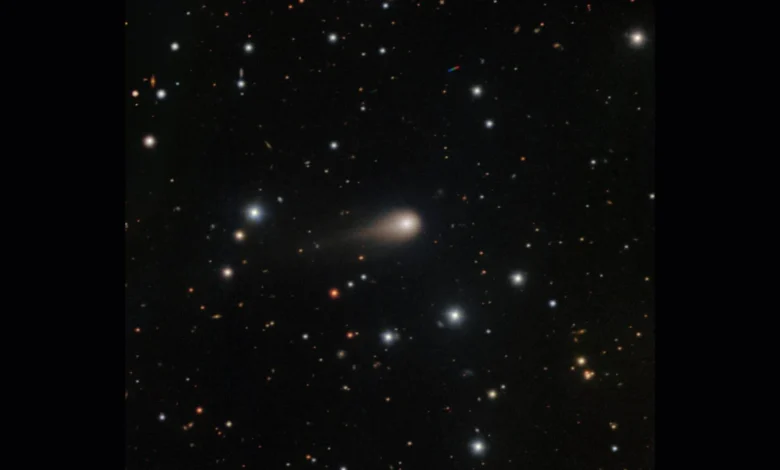
Over a year has passed since the cosmic interloper designated 3I/ATLAS first captured the attention of astronomers worldwide as only the third confirmed interstellar object to traverse our solar system. Following months of meticulous observation and data analysis, scientists have now unlocked unprecedented insights regarding the object’s elusive origins. For the very first time, researchers have successfully studied charged particles within the tail of an interstellar comet. This breakthrough has revealed that 3I/ATLAS contains significantly higher concentrations of nitrogen than typical comets originating within our own solar system, offering a tantalizing window into the extreme environments where distant planetary systems take shape.
The findings, detailed in a peer-reviewed study published in the Monthly Notices of the Royal Astronomical Society, mark a monumental milestone in observational astronomy. By peering into the ion tail of this interstellar visitor, scientists are no longer limited to speculating about its composition based solely on reflected sunlight or gas evaporating from its nucleus. Instead, they are reading the chemical signature of a world born around a completely different star.
Main Facts and the Breakthrough Discovery
The breakthrough centers on the chemical makeup of 3I/ATLAS and the cutting-edge technology used to decode it. Led by Lea Ferellec, a research fellow at Northumbria University, a team of astronomers utilized the William Herschel Telescope (WHT), situated at the Roque de los Muchachos Observatory on La Palma in Spain’s Canary Islands. Specifically, the researchers harnessed the power of WEAVE (WHT Enhanced Area Velocity Explorer), a state-of-the-art, wide-field spectroscopic instrument featuring a massive fiber-optic weave.
Spectroscopy functions by splitting incoming starlight or reflected light into its component spectrum. Because different chemical elements and ions absorb and emit distinct wavelengths of light, they leave unmistakable spectral fingerprints. While previous studies of interstellar objects—such as the 2019 visitor 2I/Borisov—managed to detect faint traces of ions in their tails, telescopes of that era lacked the sensitivity to definitively identify the specific chemical species present.
WEAVE changed that paradigm. When Ferellec and her colleagues trained the instrument on 3I/ATLAS, its high-resolution sensitivity allowed them to accurately count and isolate ions of nitrogen, carbon monoxide, and carbon dioxide streaming within the comet’s plasma tail. The analysis revealed a remarkably high ratio of nitrogen to carbon monoxide, vastly exceeding the levels typically recorded in native solar system comets.
"Finding that it’s so rich in nitrogen tells us it likely formed in extremely cold conditions, far from its home star," Ferellec stated in a release accompanying the publication.
Chronology of an Interstellar Visitor
The journey of understanding 3I/ATLAS spans a carefully tracked timeline of discovery, technological deployment, and data synthesis:
- Late 2024: The celestial object 3I/ATLAS is officially detected, quickly identified by trajectories and velocity measurements as the third known interstellar object to cross into our cosmic neighborhood, following ‘Oumuamua in 2017 and 2D/Borisov in 2019.
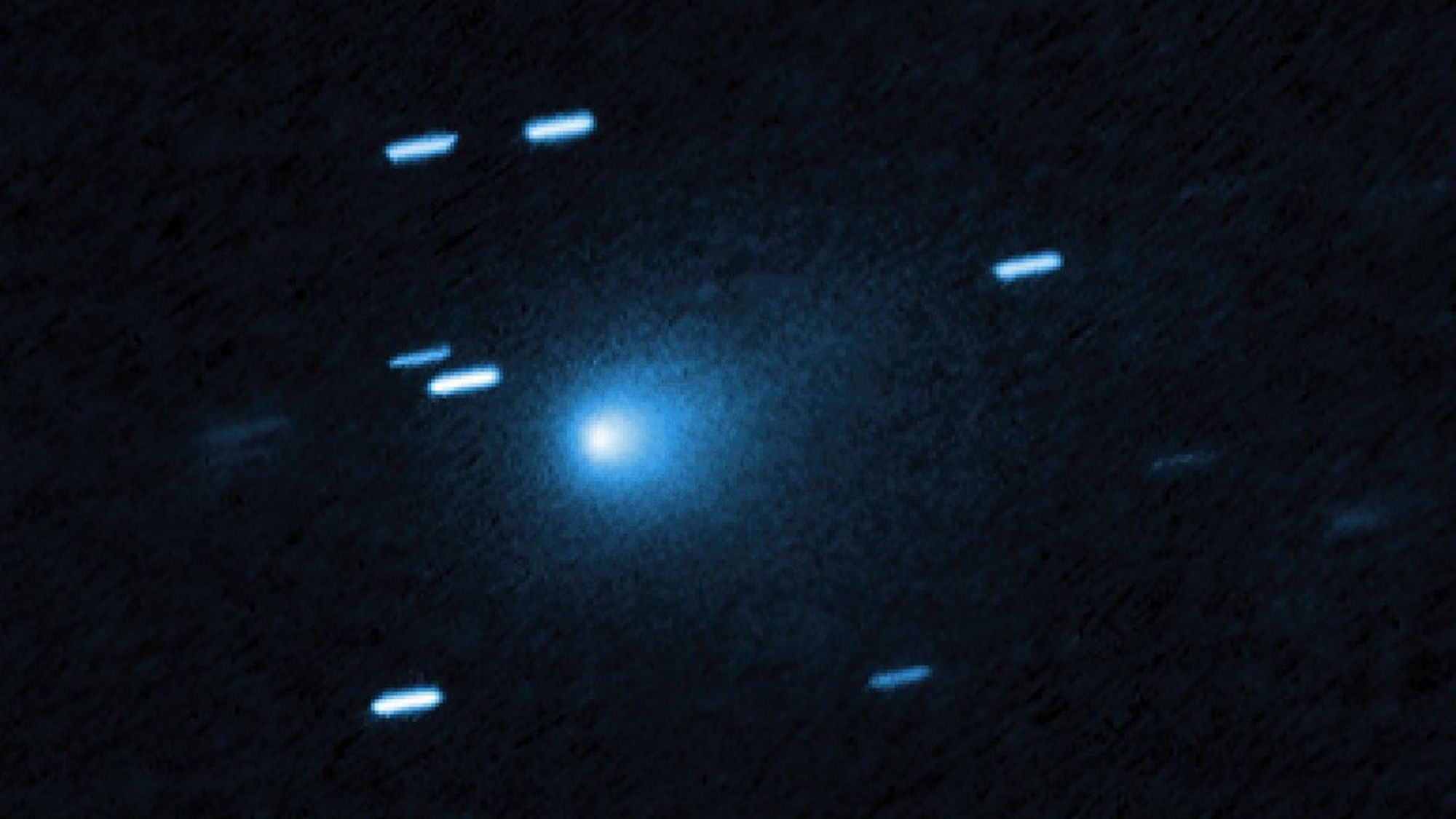
- July 2025: The Hubble Space Telescope captures sharp imagery of 3I/ATLAS when the comet is approximately 277 million miles from Earth. The observations reveal a distinct teardrop-shaped cocoon of dust billowing outward from its solid, icy nucleus.
- Late 2025: As the comet continues its journey through the inner solar system, encountering the relentless pressure of the sun’s solar wind, Ferellec’s research team utilizes the newly operational WEAVE instrument on the William Herschel Telescope to target the comet’s ion tail.
- September 7, 2025: The findings are officially published in the Monthly Notices of the Royal Astronomical Society, detailing the high nitrogen content and extreme formation temperatures of the comet.
Supporting Data and Comparative Analysis
To understand why a high nitrogen-to-carbon-monoxide ratio is so revealing, astrophysicists look to the physics of volatile ices in deep space. Volatiles like carbon monoxide, carbon dioxide, and nitrogen freeze at vastly different temperatures. Carbon monoxide remains gaseous or easily vaporizes at relatively warm temperatures compared to nitrogen, which requires an extreme deep-freeze to condense into solid ice.
By calculating the relative abundances of these chemical constituents, planetary scientists can effectively act as cosmic archeologists, reconstructing the thermometer of the protoplanetary disk where the object was born. Ferellec and her team estimate that 3I/ATLAS condensed at temperatures plummeting below -240 degrees Celsius.
In practical terms, this indicates that 3I/ATLAS did not form in the warm, inner regions of its parent star system. Instead, it must have coalesced in the distant, icy outer reaches—a realm comparable to our own Kuiper Belt or Oort Cloud, where starlight is dim, ambient heat is virtually non-existent, and volatile elements can remain trapped in solid form for billions of years before a gravitational disturbance flings the body into the interstellar void.
Official Responses and Scientific Context
The astronomical community has widely praised the study for expanding the observational toolkit available for transient interstellar bodies. Historically, scientists relied on observations of the coma—the fuzzy envelope of gas and dust generated when solar heat sublimates surface ices. However, the coma only tells part of the story.
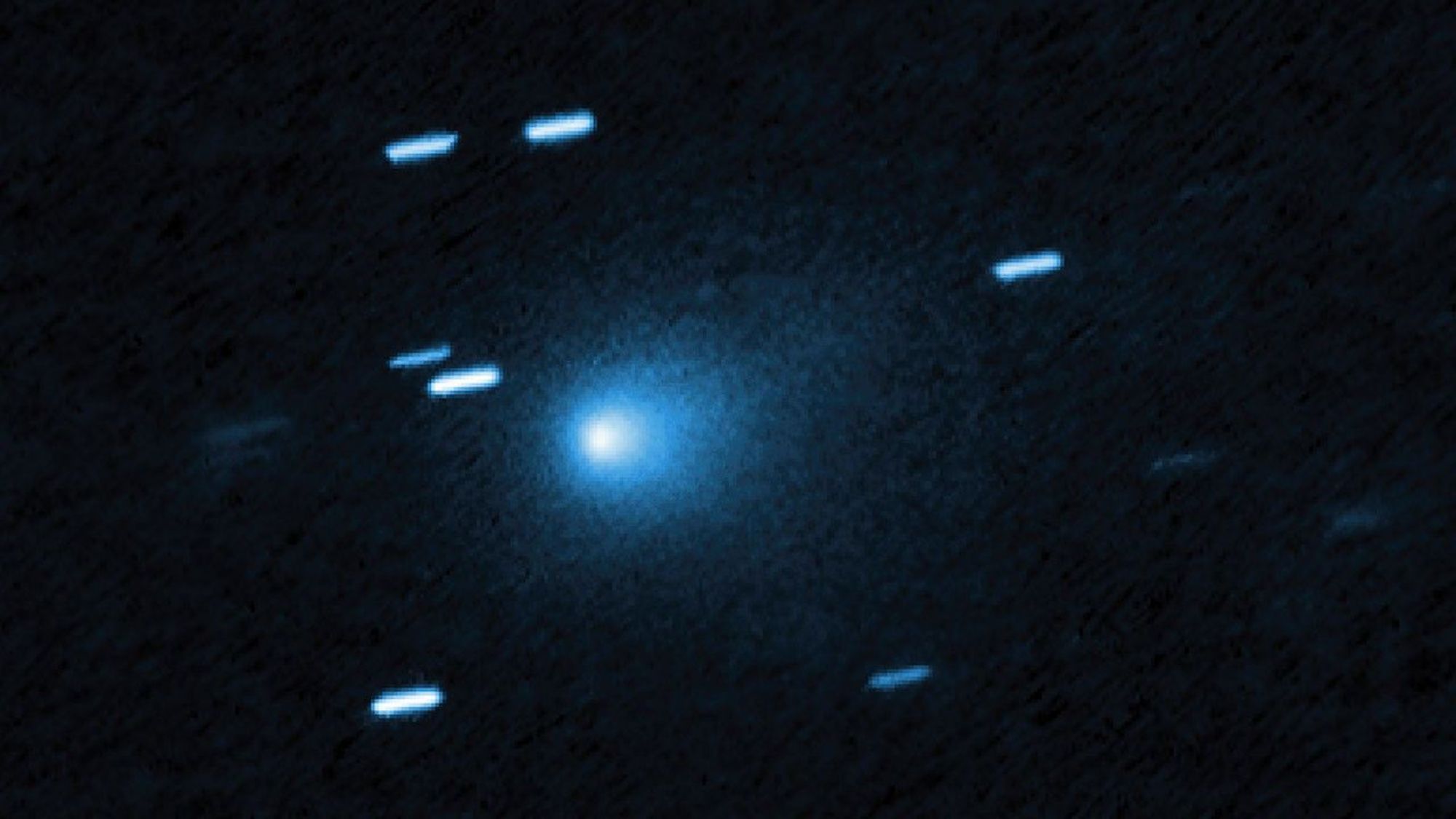
As a comet plunges closer to the sun, it encounters the solar wind—a high-energy stream of charged particles flowing outward from the solar corona. This relentless wind strips away vaporized material, ionizing the molecules and sweeping them backward into a straight, glowing plasma tail. Analyzing this tail provides a direct sampling of the comet’s interior composition that is otherwise shielded from view.
"This object gives us a rare chance to study material that formed somewhere completely different to our own solar system," Ferellec emphasized. "Every one of these objects we study helps us understand a little more about how planets form around other stars."
The success of the WEAVE observations also validates years of engineering investments in massively multiplexed spectroscopic surveys. Instruments capable of capturing hundreds of spectra simultaneously are proving indispensable for catching transient cosmic events that offer only a brief window of visibility before vanishing back into the dark expanses of interstellar space.
Broader Impact and Implications for Planetary Science
The confirmation that 3I/ATLAS was forged in an ultra-cold, nitrogen-rich environment carries profound implications for our understanding of galactic chemistry. For decades, astronomers debated whether the chemical building blocks of planetary systems—such as water, carbon compounds, and nitrogen—are relatively uniform across the Milky Way or if stellar neighborhoods possess distinct chemical signatures shaped by their local galactic environments.
By capturing physical samples of material from an alien star system, scientists can begin to test models of chemical distribution throughout the galaxy. If interstellar comets consistently show diverse chemical ratios, it suggests that protoplanetary disks vary wildly in composition, influencing the potential habitability and atmospheric makeups of exoplanets born within them.
Furthermore, the methodologies established during the observation of 3I/ATLAS lay vital groundwork for future astronomical facilities. Upcoming observatories, such as the Vera C. Rubin Observatory in Chile, are expected to discover many more interstellar objects in the coming years as survey sensitivity increases. With instruments like WEAVE already demonstrating the ability to dissect ion tails, astronomers will be far better prepared to decode the chemical heritage of future cosmic visitors the moment they arrive.