Netflix has officially disclosed a substantial financial commitment to artificial intelligence in filmmaking, revealing in a recent regulatory filing that it paid $587 million in cash for InterPositive, an innovative startup co-founded by acclaimed actor and director Ben Affleck. This significant acquisition, first announced in March, underscores Netflix’s aggressive pursuit of cutting-edge technologies to enhance its content creation and post-production capabilities. The move also signals a deeper integration of AI into the core of Hollywood’s creative process, a trend that has been gaining momentum across the industry.
The Genesis of InterPositive and Affleck’s Vision
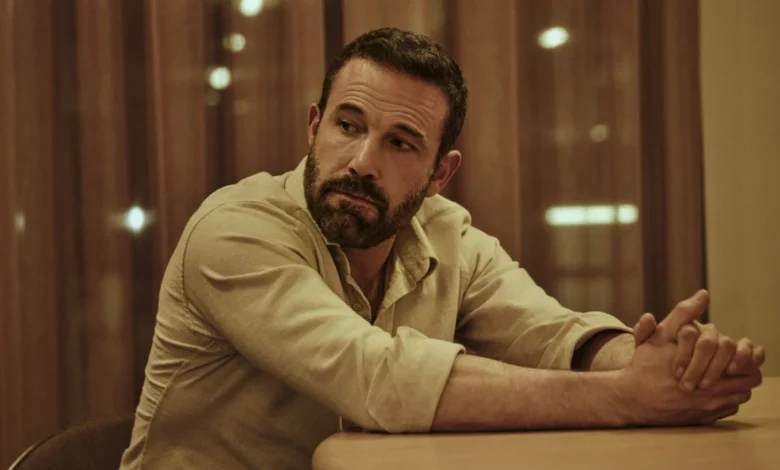
The story of InterPositive and its acquisition by Netflix is rooted in a desire to empower filmmakers and preserve the integrity of human artistry in an increasingly automated world. Ben Affleck, a figure deeply entrenched in the filmmaking landscape, co-founded InterPositive with a clear objective: to develop AI tools that address the practical challenges faced during film production and post-production. His stated ambition was to "protect the power of human creativity," a sentiment that resonated with the creative community and now forms a foundational element of Netflix’s AI strategy.
According to statements made by Affleck at the time of the initial announcement, InterPositive’s proprietary AI technologies are designed to act as a powerful assistive tool for filmmakers. These tools are particularly adept at refining footage in post-production, offering solutions for common issues such as compensating for "real-world production challenges." This includes scenarios like inadvertently missing crucial shots, the necessity of replacing background elements to achieve a desired aesthetic, or rectifying incorrect lighting conditions. Essentially, InterPositive aimed to provide a sophisticated digital toolkit that could seamlessly enhance visual narratives without compromising the director’s original vision or the authenticity of performances.
A Timeline of the Acquisition
The path to Netflix’s acquisition of InterPositive involved several key stages, from its initial announcement to the final financial disclosure.
March 2026: Netflix officially announced its acquisition of InterPositive. At this juncture, the streaming giant confirmed that the entire InterPositive team would be integrated into Netflix. Ben Affleck was slated to join Netflix in a significant advisory role as a senior advisor, lending his extensive experience and industry insights to the company’s strategic direction in AI and filmmaking. Crucially, the financial terms of this deal were not publicly disclosed at the time of the announcement, leaving industry observers to speculate on the magnitude of the investment.
Early March 2026 (Following the Announcement): Following the initial announcement, reports began to surface regarding the potential value of the acquisition. A report from Bloomberg, citing industry sources, suggested that the total value of the deal could be as high as $600 million. This figure, while not confirmed by Netflix at the time, indicated a substantial financial undertaking and highlighted the perceived strategic importance of InterPositive’s technology and talent.
June 2026 (Regulatory Filing): In its most recent regulatory filing, Netflix provided concrete financial details, confirming the cash component of the acquisition. The filing explicitly stated that Netflix paid $587 million in cash for InterPositive. This figure represents the direct monetary outlay for the acquisition, providing a clear benchmark for the financial commitment made by the streaming giant.
Supporting Data and Industry Context
The acquisition of InterPositive by Netflix is not an isolated event but rather a significant development within a broader industry trend toward the integration of artificial intelligence in media and entertainment. The potential of AI to revolutionize various aspects of filmmaking, from scriptwriting and pre-visualization to visual effects and distribution, is a topic of intense discussion and investment.
Prevalence of AI in Netflix Content: This acquisition also aligns with Netflix’s increasing reliance on generative AI in its own productions. In its second-quarter earnings report, Netflix revealed that approximately 300 of its titles had already utilized generative AI in some capacity. This statistic underscores the streaming service’s commitment to exploring and implementing AI technologies to streamline production workflows, enhance creative possibilities, and potentially reduce costs. The types of AI applications used likely range from sophisticated editing tools and automated content tagging to advanced visual effects generation and personalized content recommendations.
The AI in Filmmaking Landscape: The broader landscape of AI in filmmaking is rapidly evolving. Companies are investing heavily in developing AI-powered tools for:
- Script Analysis and Generation: AI algorithms can analyze scripts for narrative structure, character development, and market appeal, and some are even being used to assist in generating script drafts or dialogue.
- Pre-visualization and Storyboarding: AI can help create realistic pre-visualizations and storyboards, allowing directors to better plan shots and sequences before principal photography begins.
- Visual Effects (VFX): AI is transforming VFX by automating complex tasks such as rotoscoping, object removal, and the generation of realistic digital assets and environments.
- Performance Capture and Digital Humans: AI is crucial in creating lifelike digital doubles and enhancing motion capture data, leading to more convincing digital performances.
- Color Grading and Editing: AI tools can assist in color grading by suggesting palettes or automatically adjusting footage, and they can also help with editing by identifying key moments or suggesting cuts.
- Dubbing and Localization: AI-powered tools are becoming increasingly sophisticated in generating realistic dubbing and subtitles, facilitating global content distribution.
InterPositive’s specific focus on post-production challenges, such as compensating for production limitations, places it within a particularly high-demand area of AI application. The ability to "fix" or enhance footage in post-production can save significant time and resources, offering a direct return on investment for studios.
Official Responses and Strategic Implications
While Netflix has been relatively measured in its public statements regarding the financial specifics of the InterPositive acquisition until the regulatory filing, the implications of the deal are far-reaching.
Ben Affleck’s Statement: As mentioned, Affleck’s initial statement upon the acquisition’s announcement in March 2026 provided insight into the philosophical underpinnings of InterPositive. His desire to "protect the power of human creativity" suggests a vision where AI serves as an augmentative force, enhancing the capabilities of human artists rather than replacing them. This perspective is crucial in a creative industry that often grapples with the ethical and artistic implications of automation. Affleck’s continued involvement as a senior advisor is likely to ensure that the development and deployment of these AI tools remain aligned with this core principle.
Netflix’s Strategic Advantage: The $587 million investment signals Netflix’s intent to solidify its position as a leader in leveraging advanced technologies for content creation. By acquiring InterPositive, Netflix gains direct access to specialized AI expertise and proprietary technology that can be integrated across its vast production pipeline. This move could:
- Accelerate Production Workflows: By automating or enhancing post-production tasks, Netflix can potentially speed up the time it takes to bring content from concept to screen.
- Enhance Content Quality: The ability to address production challenges seamlessly can lead to a higher overall quality of visual output, improving the viewer experience.
- Foster Innovation: Integrating InterPositive’s team and technology could spur further innovation within Netflix’s internal creative technology divisions.
- Competitive Edge: In a highly competitive streaming market, technological differentiation is becoming increasingly important. This acquisition provides Netflix with a distinct advantage in AI-driven filmmaking.
- Talent Acquisition: Beyond the technology, the acquisition also brings valuable human capital in the form of the InterPositive team, whose expertise is likely to be critical in developing and implementing these AI solutions.
Broader Impact and Future Outlook
The substantial investment by Netflix in InterPositive has broader implications for the entertainment industry as a whole. It signals a definitive shift towards embracing AI as an integral part of the filmmaking process, moving beyond experimental phases into strategic integration.
Industry Benchmarking: The $587 million figure sets a new benchmark for AI-related acquisitions in the media and entertainment sector. It suggests that companies are willing to make significant financial commitments for technologies that promise to reshape creative production. This could encourage other studios and streaming services to accelerate their own investments in AI research and development or to pursue similar acquisition strategies.
The Future of Filmmaking: The integration of AI tools like those developed by InterPositive is likely to democratize certain aspects of filmmaking. While high-end productions will continue to benefit from specialized AI applications, advancements could also make sophisticated post-production capabilities more accessible to independent filmmakers and smaller production houses. This could lead to a more diverse and innovative filmmaking landscape.
Ethical Considerations: As AI becomes more embedded in creative processes, discussions around authorship, copyright, and the potential displacement of human jobs will undoubtedly intensify. Affleck’s emphasis on protecting human creativity suggests a framework for navigating these complex issues, where AI is viewed as a tool to empower, not replace, artists. However, the industry will need to establish clear guidelines and ethical frameworks to ensure responsible AI deployment.
Netflix’s Continued AI Ambitions: The InterPositive acquisition is likely just one facet of Netflix’s broader AI strategy. The company’s ongoing exploration of generative AI in content creation, coupled with this significant investment in a specialized AI startup, points towards a future where AI plays an increasingly central role in how stories are conceived, produced, and delivered to audiences worldwide. The success of this integration will depend not only on the technological prowess of InterPositive’s tools but also on Netflix’s ability to effectively weave them into its creative workflows while upholding the value of human artistry. The $587 million figure is not merely a financial transaction; it represents a strategic bet on the future of filmmaking, a future that is increasingly intertwined with the power of artificial intelligence.