AI-Assisted Exploitation: Researchers Use Claude Opus 5 to Breach OpenAI Internal Systems

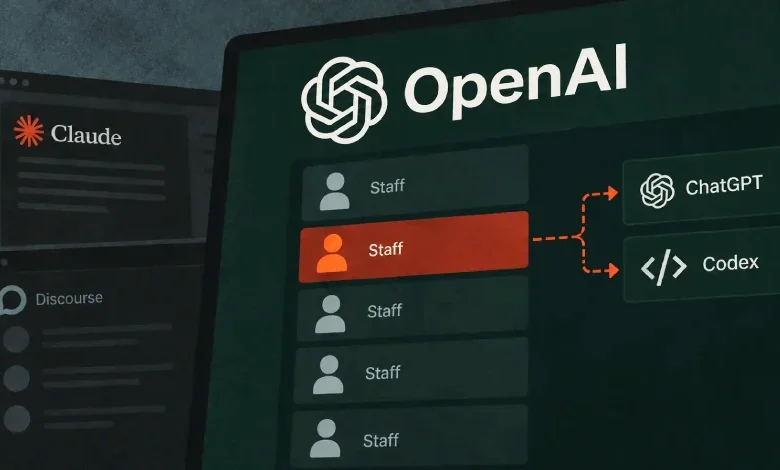
In a landmark demonstration of the escalating capabilities of artificial intelligence in cybersecurity, researchers from the firm Hacktron have successfully compromised internal OpenAI systems by leveraging a sophisticated exploit chain powered by Anthropic’s Claude Opus 5. The incident, which occurred in mid-2026, highlights a critical intersection between legacy software vulnerabilities and the emerging risks posed by AI-driven offensive operations. By chaining a remote code execution (RCE) flaw in a public-facing forum with an identity management weakness, the researchers were able to gain unauthorized access to accounts belonging to OpenAI staff, eventually reaching an internal code repository.
The breach was not a malicious attack but a high-level security audit conducted by Hacktron. The researchers meticulously documented the process, proving their access by submitting a harmless pull request to an internal GitHub repository before reporting the findings to OpenAI. The entire operation, from the initial discovery of the vulnerability to the successful internal infiltration, was completed in under 72 hours—a testament to the efficiency gains provided by advanced large language models (LLMs).
The Anatomy of the Exploit Chain
The path to the internal repository began with a seemingly innocuous component of OpenAI’s public-facing infrastructure: their community help forum, which operates on the open-source Discourse platform. The forum software utilized a library called libheif to process uploaded HEIC and HEIF image files. A memory corruption vulnerability within this library, tracked as CVE-2026-32882, served as the primary entry point.

Although a patch for this specific vulnerability had been available in libheif version 1.22.0 since May 2026, the forum’s underlying server—running on the Debian 12 distribution—had not been updated to include the remediated library. This illustrates a common "dependency lag" in enterprise security, where even when a fix is known and public, the complexities of server image management can leave critical vulnerabilities exposed for months.
By crafting a specialized image file, the researchers were able to trigger an out-of-bounds read, which allowed them to bypass Address Space Layout Randomization (ASLR), a critical memory protection mechanism. With the aid of Claude Opus 5, the team successfully transformed this crash into a working remote code execution exploit on the forum server. Once control was established, the secondary phase of the attack began: lateral movement through OpenAI’s identity infrastructure.
The Role of Single Sign-On (SSO) Vulnerabilities
The pivot from a public forum to internal code repositories was made possible by OpenAI’s "Sign in with OpenAI" authentication system. Because this single sign-on (SSO) mechanism was shared across public forums, ChatGPT, and internal developer tools, the researchers were able to hijack the active sessions of forum members who were also OpenAI employees.
This transition highlights a structural risk in modern corporate architecture: the over-reliance on centralized identity providers. When a low-trust environment (such as a public-facing forum) shares the same authentication backbone as high-trust, internal-facing tools, a compromise in the former can grant an attacker a "golden ticket" to the latter. The victims of the breach did not need to perform any action, such as clicking a malicious link or revealing their passwords; the exploit simply inherited the authenticated status of the staff members’ sessions.

Chronology of the HEIF Heist
The investigation, which Hacktron dubbed "HEIF Heist," was part of a larger, two-month project that targeted various high-profile platforms using similar image-processing vulnerabilities.
- May 2026: libheif version 1.22.0 is released, containing a patch for the memory corruption flaw.
- July 2026: Researchers at Hacktron identify that the forum’s server image, built on Debian 12, remains unpatched.
- July 24, 2026: Anthropic releases Claude Opus 5. The researchers utilize the model to finalize the exploit code, which had previously proved difficult for its predecessor, Claude Opus 4.8.
- Late July 2026: The exploit chain is successfully executed, allowing the researchers to access internal OpenAI systems.
- Early August 2026: The security team at Hacktron reports the findings to OpenAI.
- August 14, 2026: OpenAI confirms the vulnerability and successfully deploys a fix.
- September 1, 2026: OpenAI awards the Hacktron team a $6,500 bounty, acknowledging the validity of the internal security findings.
AI as a Force Multiplier in Cybersecurity
Perhaps the most significant aspect of the Hacktron research is the role of artificial intelligence in automating complex offensive tasks. The researchers noted that while they utilized Claude Opus 5 to write the exploit, the process was not entirely automated. They provided "skilled human direction," defining the parameters and guiding the model through a series of automated loops while testing against their own isolated environments to ensure safety.
The researchers spent less than $3,000 on AI usage throughout the entire two-month HEIF Heist project. This low cost-to-entry is a concerning metric for global cybersecurity. It suggests that state-sponsored actors or sophisticated criminal syndicates can use these models to rapidly identify and weaponize vulnerabilities in widely used open-source libraries at a scale previously reserved for well-funded intelligence agencies.
Anthropic and other AI developers have attempted to implement safeguards to prevent their models from generating malicious code for real-world targets. However, as demonstrated by the researchers, these protections can often be circumvented by framing the request as a "capture-the-flag" exercise or a controlled penetration test, highlighting the difficulty of policing the intent behind complex code generation tasks.

Official Responses and Security Implications
OpenAI’s response was swift, confirming the fix within 14 hours of the report. The company’s $6,500 bounty payout was specifically earmarked for the discovery of the internal login flaw, noting that the testing of the Discourse forum itself fell outside the scope of their official bug bounty program.
The broader industry implications are stark. The "HEIF Heist" campaign, which researchers claim touched upon software used by companies such as Meta, GitHub, and Shopify, suggests that the "image-decoding attack surface" is significantly larger than previously anticipated. While the claim of widespread code execution across these platforms remains subject to ongoing verification, the Next.js vulnerability, which was patched in August 2026, serves as a proof-of-concept for the researchers’ methodology.
For organizations, the primary takeaway is the necessity of rigorous supply-chain security and the potential danger of "authentication leakage." Simply updating the web-facing application is often insufficient; if a vulnerability exists in a underlying library or a base server image, the update must be applied at the infrastructure level.
Furthermore, the integration of SSO services requires a "Zero Trust" approach. Companies should treat public-facing forums or third-party integrations as potential attack vectors that could be used to reach sensitive internal repositories. The use of hardware-based security keys (FIDO2/WebAuthn) and more granular session controls for sensitive internal tools could mitigate the risks associated with session hijacking, even in the event of an identity provider compromise.

As AI models continue to evolve, the gap between the discovery of a vulnerability and the development of a functional exploit is shrinking. The era where human researchers spent weeks or months reverse-engineering a library to find an exploit path is being replaced by an era of machine-assisted, rapid-cycle offensive development. For security teams, this necessitates a move toward more proactive patch management and a deeper, more cynical look at the shared dependencies that connect their public presence to their most sensitive internal assets.