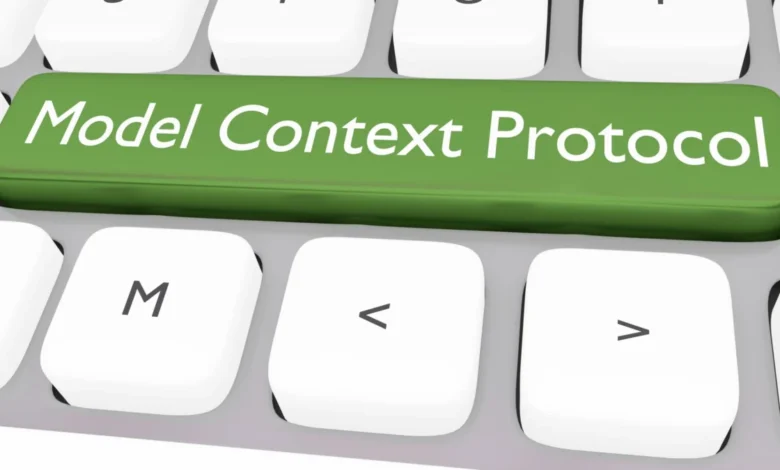
The Model Context Protocol (MCP), a foundational standard for enabling artificial intelligence models to interact with external tools and enterprise data, is poised for its most significant architectural transformation to date. The upcoming release candidate, slated for official release on July 28th, marks a pivotal shift from a session-based architecture to a stateless model. This strategic change is widely anticipated by industry experts to streamline MCP’s deployment across conventional cloud infrastructures, a crucial step as organizations transition their AI initiatives from experimental phases into full-scale production environments.
Historically, MCP’s session-based approach was well-suited for local development scenarios, where AI servers often ran as individual processes on a developer’s workstation. However, in production settings, this model presented operational challenges. "The session-based model made sense when MCP servers were local processes on a developer’s laptop. In production, it became an operational tax," explained Muskan Bandta, a cloud associate at ZopDev. This sentiment is echoed by many who have navigated the complexities of scaling MCP in enterprise-grade cloud deployments.
The scalability question has been a recurring concern for infrastructure teams. Bandta elaborated, "When your infrastructure team asks whether MCP services can scale like other cloud applications, the answer used to be ‘not quite.’ With the move to a stateless architecture, the answer is now yes." This fundamental change addresses a key bottleneck, promising greater flexibility and alignment with the dynamic nature of cloud computing.
Earlier iterations of the MCP protocol required servers to meticulously maintain state information for every client connection. This meant that a server had to actively track each session throughout an entire interaction. While this provided a robust framework for localized development, it introduced complexities when scaling across multiple servers. Requests often needed to be routed back to the same machine to preserve session continuity, thereby limiting overall scalability and making MCP a less intuitive fit for modern, distributed cloud architectures.
The new stateless design fundamentally alters this paradigm. "Under the new stateless design, every request contains the information needed for any available server to process it independently," Bandta stated. This means that applications requiring persistent context across multiple requests can still achieve this, but the responsibility for managing that state now explicitly falls on the developers, rather than being implicitly handled by the protocol itself. This explicit state management offers greater transparency and control.
This architectural pivot extends beyond mere infrastructure simplification. It represents a more profound evolution in how AI applications manage and disseminate context across various tools. Amit Jena, AI development manager at IT consulting firm Kanerika, highlighted this aspect: "This transition to a stateless design goes beyond simplifying infrastructure by fundamentally changing how AI applications manage and share context across tools."
Jena further explained that instead of obscuring application state within protocol sessions, the new design brings it to the forefront. This allows AI models to more readily access, interpret, and transfer contextual information between different tools. The outcome is enhanced developer control over how context is preserved and shared, fostering more sophisticated and integrated AI workflows. Consequently, these AI workflows are expected to become more portable, resilient, and easier to orchestrate within distributed environments, crucial for complex enterprise AI deployments.
MCP’s Evolving Feature Set
Beyond the core architectural shift to statelessness, the latest MCP release candidate introduces several other notable features designed to enhance its utility and performance in enterprise settings.
One significant addition is the Multi Round-Trip Requests (MRTR) mechanism. This innovation redefines how AI agents request supplementary information necessary to complete a given task. Previously, tasks might have required a persistent connection between the client and server for the duration of the interaction. With MRTR, the server can now solicit additional input through a standard request-response exchange before proceeding with the task. This more granular approach can improve efficiency and reduce the potential for timeouts in complex workflows.
Another key enhancement is the introduction of Routable Transport Headers. This feature empowers API gateways and other networking infrastructure components to intelligently identify and route MCP requests without the need to inspect the request’s payload. This capability offers substantial performance benefits, including reduced processing overhead and lower latency. Furthermore, it allows enterprise IT teams to enforce routing, rate-limiting, and security policies more effectively by leveraging existing API management infrastructure, a significant advantage for organizations already invested in such systems.

The MCP protocol is also undergoing upgrades in its authorization framework, transitioning to standards built around OAuth 2.1 and OpenID Connect. This move towards industry-standard authentication and authorization protocols enhances security and interoperability. Additionally, the introduction of interactive MCP Apps aims to improve the user experience for interacting with MCP-enabled AI agents.
To further optimize performance and cost-efficiency, particularly for Large Language Models (LLMs), MCP is implementing deterministic caching of tool and resource listings. This feature is designed to improve LLM prompt-cache hit rates, which can lead to significant savings on token costs by reducing the need for repeated API calls to retrieve common information.
Rebuilding the Trust Boundary: Deprecations and Their Implications
As MCP evolves, the release steering committee has also made the strategic decision to deprecate certain legacy features. These include Roots, Sampling, Logging, the older HTTP+SSE transport, and Dynamic Client Registration. It is important to note that these features will continue to function in the current release and any other versions released within the next year, providing a crucial transition period for developers.
The deprecation of the Sampling feature is anticipated to have the most significant impact. This is because it alters the responsibility for interacting with foundation models. "Sampling let MCP servers invoke the LLM through the client, which meant the server had a callback path into the model without owning that connection. Deprecating it means rebuilding that trust boundary," explained Jena.
He elaborated on the architectural shift this entails: "Your server now calls the model provider directly. That changes your network architecture, your auth model, and depending on how you’ve built cost attribution, your billing flow." This necessitates a re-evaluation of how AI models are accessed, authenticated, and how associated costs are tracked and managed.
The year-long transition period is intended to provide ample time for development teams to audit their dependencies on sampling. However, Jena cautioned about potential blind spots: "The risk is that teams who haven’t implemented sampling themselves won’t know if a third-party MCP server they’re depending on uses it." This highlights the importance of thorough dependency analysis, especially when relying on external MCP services.
Updated MCP SDKs Facilitate a Smoother Transition
To support the protocol’s evolution, updated MCP Software Development Kits (SDKs) are being released for popular programming languages, including Python, TypeScript, Go, and C#. These SDKs are designed to be backward compatible, supporting both the older and newer versions of the MCP protocol. This ensures that new clients can continue to communicate with older servers, and updated servers will also support older clients, significantly mitigating the risk of immediate disruptions for existing deployments.
"That backward compatibility should make the transition largely incremental, except for enterprises that built custom infrastructure around MCP’s earlier session-based architecture," observed Bandta. While the SDKs ease the transition, organizations with deeply embedded custom solutions may face more substantial migration efforts.
Jena further warned about the potential challenges in identifying and auditing these session dependencies within complex enterprise systems. "Session management complexity tends to be hidden across multiple layers — the gateway config, the deployment scripts, the monitoring dashboards. The code change is small; finding everywhere the assumption lives is what takes time," he stated. This underscores the need for diligent architectural reviews and comprehensive auditing processes to ensure a smooth and complete migration.
The move towards a stateless architecture in MCP is a significant step forward, aligning the protocol with modern cloud-native principles. While it promises enhanced scalability, simplified deployment, and greater control over AI application context, the deprecation of certain features, particularly sampling, requires careful planning and execution by development teams to navigate the transition effectively and maintain the integrity of their AI infrastructure.