X Integrates Grok AI into Ads Manager Beta as Platform Moves Toward Full Advertising Automation

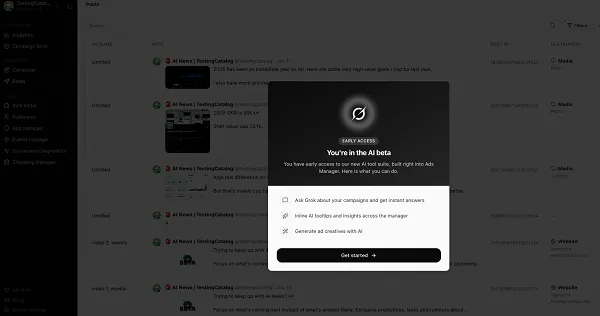
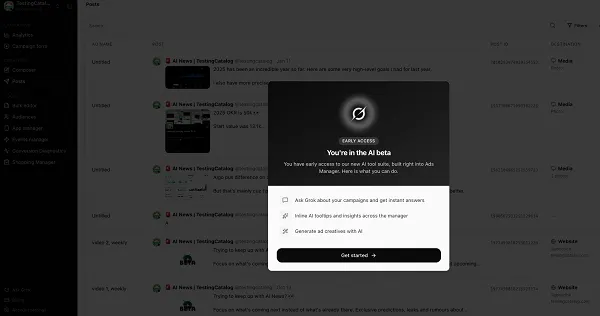
X, the social media platform formerly known as Twitter, has officially commenced beta testing for its new Grok AI integration within its Ads Manager suite. This move marks a pivotal advancement in the company’s broader strategy to leverage artificial intelligence to stabilize and expand its advertising ecosystem. By embedding the proprietary chatbot developed by xAI directly into the advertiser’s workflow, X aims to provide sophisticated, real-time guidance for promotional campaigns, potentially lowering the barrier to entry for new brands while optimizing performance for existing partners.
The beta rollout, which was first identified through notifications sent to select advertisers and subsequently highlighted by industry observers on platforms like Threads, introduces a conversational interface within the ad creation dashboard. Through this integration, advertisers can engage with Grok to seek advice on campaign strategy, refine their targeting parameters, and brainstorm creative concepts. The update is further bolstered by new tooltips and in-stream prompts designed to assist users in generating ad copy and visual assets, signaling a shift toward a more intuitive, AI-assisted user experience.
The Evolution of X’s Advertising Infrastructure
The integration of Grok is not an isolated update but rather the latest phase in a comprehensive technological overhaul of X’s advertising business. Since Elon Musk’s acquisition of the platform in late 2022, the company has faced significant challenges regarding advertiser retention and revenue stability. In response, X has pivoted toward a "tech-first" approach, prioritizing automation and machine learning to replace legacy systems.
In April 2024, X launched a completely rebuilt version of its Ad Manager platform. At the time, the company described this as the most significant update to its advertising systems in its history. The core of this rebuild was the implementation of advanced AI models designed to better understand user interests and real-time trends. By processing billions of data points—including post engagement, search history, and media consumption—the updated system sought to improve ad relevance and delivery precision.
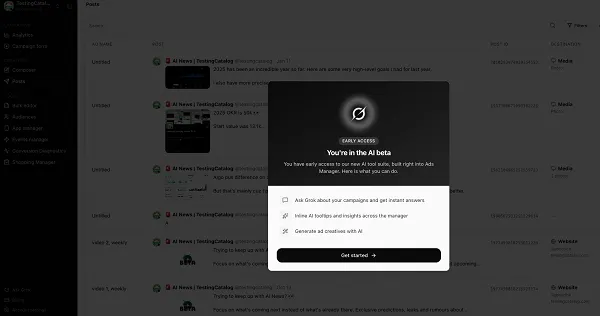
The introduction of Grok into this environment represents the transition from passive AI (where algorithms work behind the scenes) to active or "agentic" AI (where the system interacts directly with the user to execute tasks). This progression is central to the vision outlined by Elon Musk, who has frequently stated that the ultimate goal for X is a fully automated advertising system. In discussions with industry publications such as Digiday, Musk has envisioned a future where Grok manages the entire lifecycle of an advertisement, from initial concept and creative generation to placement and post-campaign analysis.
Technical Capabilities and Agentic Generation
At the heart of the Grok integration is the concept of agentic ad generation. In the context of digital marketing, an "agentic" system is one capable of making autonomous decisions based on high-level goals provided by the user. For an advertiser on X, this could mean providing a simple prompt—such as "increase sales for a new line of eco-friendly sneakers"—and allowing the AI to handle the complexities of audience segmentation, budget allocation, and creative iteration.
AI tools are uniquely suited for this level of automation due to their ability to synthesize vast quantities of unstructured data. X currently boasts a user base of over 550 million monthly active users, each generating a continuous stream of behavioral signals. Grok, powered by the large language models (LLMs) developed by xAI, can analyze these signals at scale to identify "persona matches."
For example, if a brand has a history of successful conversions among users who follow specific tech influencers and engage with content regarding sustainable energy, the AI can automatically identify other user clusters that share these subtle, often non-obvious traits. This moves beyond traditional demographic targeting (age, gender, location) and into the realm of intent-based and psychographic targeting, which is significantly more effective in driving ROI.
A Chronology of X’s AI Integration Efforts
To understand the significance of the Grok beta test, it is essential to view it within the timeline of X’s transformation under its current leadership:

- October 2022: Elon Musk completes the acquisition of Twitter, immediately signaling a shift toward engineering-led product development.
- July 2023: Musk announces the formation of xAI, an independent artificial intelligence company intended to work closely with X and Tesla.
- November 2023: Grok is officially unveiled as a conversational AI with real-time access to the X data stream, distinguishing it from competitors like ChatGPT.
- April 2024: X launches the "rebuilt" Ad Manager, introducing AI-powered algorithms for improved ad delivery and relevance.
- August 2024: Reports emerge of Musk’s vision for 2025, focusing on "full advertising automation," including automated brand safety checks and content matching.
- Late 2024: The current beta testing of Grok within Ads Manager begins, providing the first hands-on look at how conversational AI will assist advertisers.
Addressing Brand Safety and Advertiser Concerns
One of the most persistent hurdles for X has been the issue of brand safety—ensuring that advertisements do not appear alongside controversial or harmful content. This concern led to several high-profile advertiser pauses in 2023 and early 2024. The integration of Grok is partly aimed at resolving these tensions through technology.
Musk has indicated that Grok will eventually play a lead role in content matching and safety protocols. By using AI to analyze the context of both the advertisement and the surrounding posts in real-time, the platform can theoretically provide a much more nuanced safety net than traditional keyword-based filters. For instance, Grok can distinguish between a news report about a sensitive topic and a post that promotes hate speech, allowing advertisers to remain present in informative contexts while avoiding truly problematic environments.
Furthermore, the automation of these checks reduces the reliance on manual oversight, which has been a point of contention following the significant staff reductions at X. If the AI can prove its efficacy in maintaining brand safety, it may provide the necessary assurance for major blue-chip brands to return to the platform in full capacity.
Competitive Landscape and Industry Impact
X’s move toward AI-driven advertising mirrors broader trends across the social media landscape. Meta (formerly Facebook) has seen considerable success with its "Advantage+" suite, which automates the creative and targeting process for advertisers. Similarly, Google’s "Performance Max" campaigns use AI to determine the best placement for ads across YouTube, Search, and Gmail.
However, X’s integration of Grok offers a unique competitive advantage: real-time data. Because Grok is trained on the live firehose of X’s conversational data, it can offer insights into trending topics and cultural shifts as they happen. For advertisers, this means the ability to launch "moment-marketing" campaigns with unprecedented speed. An advertiser could theoretically ask Grok, "What are people saying about the Super Bowl right now, and how can I align my brand with the most positive sentiments?" and receive actionable creative and targeting advice within seconds.
Market Reaction and Future Outlook
While the beta test is currently limited to a subset of users, the broader implications for the digital advertising market are significant. Analysts suggest that if X can successfully transition to an agentic ad model, it could significantly reduce the "cost of effort" for small and medium-sized businesses (SMBs). These businesses often lack the resources to hire dedicated social media managers or agencies; an AI assistant that can build and manage campaigns effectively could make X a much more attractive platform for this demographic.
From a financial perspective, the success of Grok-led advertising is crucial for X’s valuation. As the company looks to diversify its revenue streams beyond subscriptions and data licensing, a robust, high-performing ad platform remains its most viable path to long-term profitability.
As the beta progresses, the industry will be watching for several key performance indicators:
- Conversion Rates: Whether AI-generated creative and targeting actually outperform manual setups.
- User Sentiment: How X users respond to ads that are more deeply integrated into their personalized feeds via AI.
- Ad Adoption: Whether the ease of use provided by Grok attracts a new wave of advertisers to the platform.
The integration of Grok into X’s Ads Manager is more than just a feature update; it is a manifesto for the future of the platform. By betting heavily on xAI’s capabilities, X is attempting to leapfrog its competitors and define a new era of "agentic" commerce, where the distance between a brand’s idea and a live, optimized campaign is narrowed to a single conversation with an AI. Whether this technological gamble will pay off in the form of restored advertiser trust and increased revenue remains to be seen, but it undoubtedly marks the beginning of a new chapter in the evolution of social media marketing.
Related posts: