Mastering Structured Content: Architecture and Strategy Behind Enterprise Sanity CMS Implementations

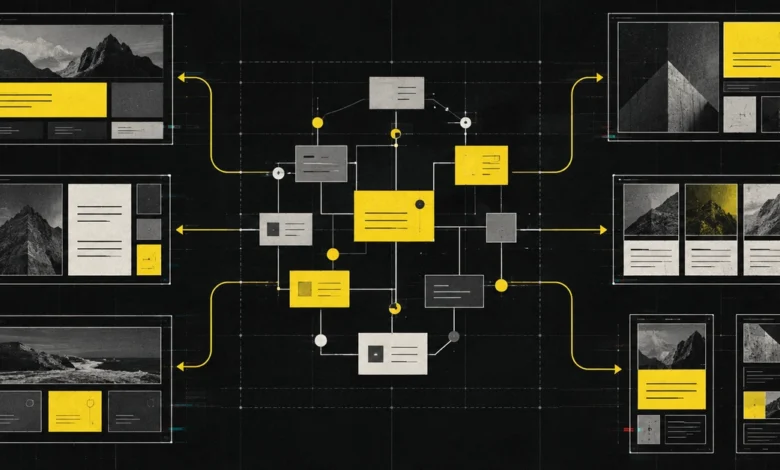
In the modern landscape of digital publishing and enterprise web development, the foundational approach to content management systems (CMS) has undergone a profound paradigm shift. For years, development teams approached web architecture by mapping out page templates first, treating content merely as a passive payload designed to fill predefined visual slots. However, extensive cross-project deployments across high-growth technology companies and enterprise giants—including Kasada, Orb, Contextual AI, Zenity, Hy-Vee, Newfront, and proprietary infrastructures like M8—have revealed a more sustainable technical decision: defining content architecture before conceptualizing pages.
This methodology hinges on the strategic utilization of Sanity, a headless CMS platform that decouples content storage from presentation layers. Rather than designing around rigid layouts, modern engineering teams are discovering that the longevity, scalability, and multi-channel versatility of a digital platform are entirely determined by its underlying content schema. When executed correctly, a robust content model dictates whether information can be seamlessly filtered, cross-linked, migrated, previewed, and rendered across an ever-expanding array of digital touchpoints without requiring exhaustive structural overhauls.
The Shift from Page-Shaped Records to Abstract Entity Modeling
Historically, traditional content management architectures forced developers to mirror physical URLs and visual layouts directly within database schemas. Under this legacy paradigm, a case study schema was inextricably linked to the specific web page it inhabited. If a redesign altered the visual hierarchy or relocated the case study from a grid card to a hero banner, the underlying database schema frequently required manual restructuring.
Modern enterprise implementations reject this coupling by prioritizing entity-based modeling. Instead of treating text and media as isolated, repetitive strings, platform architects define stable, standalone entities—such as authors, clients, underlying technologies, and industry sectors—as independent documents. These entities are then dynamically referenced across the system.

This abstraction yields immediate technical dividends. Filtering, cross-linking, and automated content resurfacing become native capabilities rather than arduous manual interventions. Editors retain granular editorial control, but that control is purposefully bounded by a strict system of design blocks. Rather than utilizing arbitrary WYSIWYG editors that frequently break responsive grids, content creators dictate sequence and emphasis. Meanwhile, the underlying application framework maintains strict governance over spatial metrics, color theory, and responsive rendering behaviors.
Engineering teams employing this approach acknowledge an intentional tradeoff: while editors are restricted from constructing arbitrary, unvetted layouts directly within the studio environment, the resulting digital properties consistently adhere to rigorous design system standards. On projects such as the M8 web platform, modular sections can be infinitely reordered and recombined while safeguarding the integrity of the underlying CSS grid and typographic hierarchy.
Strategic Methodologies for Legacy CMS Migrations
Transitioning from a legacy content management system to a modern headless architecture is frequently fraught with technical debt. Organizations often attempt to expedite the process by executing direct data exports, inadvertently importing years of accumulated structural inefficiencies into their new environments.
Industry veterans argue that a CMS migration is fundamentally a mapping problem rather than a simple data transfer exercise. Best practices dictate a strict sequence of operations: conducting a comprehensive content audit of the legacy archive to categorize assets for retention, revision, or archival retirement, and then codifying those decisions directly into the target content model before executing any data migration scripts.
For instance, during the architectural overhaul for Contextual AI, engineering teams intentionally left the legacy system intact while simultaneously designing a forward-compatible schema. This ensured that historical archives were preserved without binding the new platform to the technical constraints of obsolete data structures. Conversely, starting a migration with an automated export script frequently pressures teams to replicate legacy page-shaped records, redundant string fields, and custom metadata originally engineered to satisfy outdated templates.

A robust migration plan mandates precise documentation of every field mapping: defining what a legacy data point represented and identifying which modern document, reference, or structured field will inherit that semantic meaning. Consequently, migration scripts serve exclusively to populate an already established, rigorously tested model rather than functioning as an improvised workshop for schema design.
Leveraging GROQ Query Complexity as an Architectural Diagnostic
The adoption of query languages specifically tailored for structured content—such as Sanity’s Graph-Relational Object Queries (GROQ)—provides developers with immense transformative power. GROQ is expressive enough to compensate for poorly structured schemas, but industry practitioners warn that this flexibility can inadvertently mask underlying architectural flaws.
A reliable heuristic utilized across complex enterprise deployments is to monitor query complexity as a diagnostic metric. If rendering a simple user interface component, such as a content card, requires multiple nested joins and complex data aggregations, developers are advised to inspect the schema before attempting to optimize the query. High query complexity frequently indicates that data elements consumed together are stored too far apart in the database, or that presentation logic has leaked into the content repository.
This principle extends directly to rich text architecture via Portable Text. Rather than storing static HTML strings, modern platforms treat rich text as structured, machine-readable JSON trees. The consuming application independently determines how this structure should render—whether as standard HTML on a responsive web page, as raw text in an RSS feed, or as structured data ingested by an artificial intelligence model or search crawler.
This capability proved critical for enterprise clients such as Kasada, where structured content, explicit entity references, and machine-readable markup simultaneously served human enterprise buyers and automated consumer agents from a single, unified source of truth. Furthermore, the integration of automated tooling like Sanity Typegen allows engineering teams to automatically generate TypeScript interfaces directly from GROQ queries, bridging the gap between content models, query responses, and application code without manual interface maintenance.

Elevating Editor Workflows to First-Class Application Status
In enterprise environments, the editorial interface is no longer viewed as a peripheral backend tool; it is treated as a dedicated frontend application designed for a highly specific user base. Consequently, the information architecture, input components, automated previews, and validation rules of the Sanity Studio demand the same engineering rigor as the public-facing website.
Consider the Hy-Vee KidsFit implementation, where editorial friction was systematically reduced through third-party API integrations. Rather than requiring content creators to manually copy and paste disparate metadata fields, editors simply input a standard YouTube URL. The custom studio integration programmatically queries the YouTube API to fetch and populate video titles, descriptions, and high-resolution thumbnails automatically. This not only accelerates publishing velocity but guarantees a predictable, uniform content shape across the public interface.
Similarly, deployments for Zenity empowered non-technical marketing teams to autonomously generate landing pages and update campaign collateral without developer bottlenecks, supported by Sanity’s native real-time collaborative editing features. Live preview environments provide immediate visual feedback, allowing creators to inspect modifications across multiple viewports prior to publication.
When editorial workflows remain cumbersome—requiring constant developer intervention to interpret obscure database fields or publish routine updates—leading engineering organizations treat these friction points as structural failures within the content model or studio design, rather than user error.
Balancing Publishing Agility with Long-Term System Maintenance
The architectural marriage of headless content management systems with modern frontend frameworks—predominantly Next.js deployed on infrastructure like Vercel—has redefined performance expectations. Server Components retrieve structured content directly from the data store, while webhook-driven on-demand revalidation ensures that editorial updates propagate instantly without necessitating full, time-consuming site rebuilds.

However, this separation of publishing from deployment introduces a distinct operational footprint. A heavily customized Sanity Studio represents a standalone software application complete with third-party dependencies, security upgrades, custom React components, and its own release lifecycle. Organizations evaluating headless CMS options must factor in the ongoing maintenance cost of the studio environment alongside the public web property.
Industry analysis suggests that headless architectures are ideally suited for projects characterized by stable, long-lived data entities, complex relationship mapping, and teams that benefit from bespoke editorial workflows supported by dedicated software maintenance. Conversely, projects requiring minimal customization and out-of-the-box hosting may find traditional monolithic alternatives more appropriate.
Ultimately, when these technical conditions are met, the most durable asset an organization can build is not a collection of transient web pages. It is an abstract, resilient content model capable of surviving future web redesigns, platform migrations, workflow evolutions, and emerging consumer technologies.