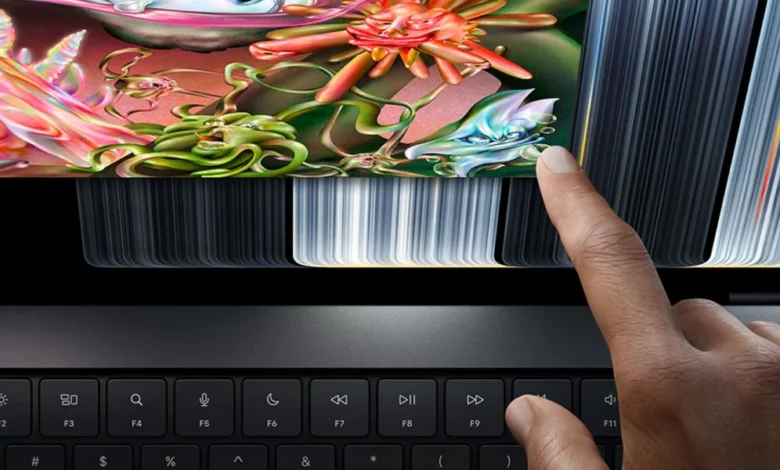
A New Era for Apple Hardware
The introduction of the touchscreen MacBook Pro, running the latest iteration of macOS 27 Golden Gate, is the culmination of years of internal development and speculation. For over a decade, Apple executives, including CEO Tim Cook, famously defended the separation of touch-based tablets and mouse-driven laptops. However, the convergence of hardware capabilities and the increasingly fluid nature of cross-platform app ecosystems necessitated this shift.
The PROLED XDR display, which serves as the centerpiece of this new machine, represents an advancement in display technology that provides the precision required for fingertip interaction. Unlike previous generations of Retina displays, the PROLED XDR incorporates a sensor layer optimized for low-latency feedback, ensuring that touch inputs feel as responsive as those on an iPad Pro.

Chronology of the Touch Transition
The journey toward a touch-enabled Mac has been a slow, calculated progression. The initial signs of a shift appeared in 2024, when Apple began unifying the architecture of its silicon chips, allowing iOS applications to run natively on Apple Silicon Macs.
In early 2025, developers noted "touch hooks" within the macOS kernel, suggesting that the underlying frameworks were being prepared for a non-cursor-based input system. The release of macOS 27 Golden Gate earlier this year solidified these foundations, introducing adaptive UI elements that could recognize the difference between a high-precision mouse pointer and the larger, more imprecise contact area of a human finger.
The unveiling of the PROLED XDR MacBook Pro this month completes the puzzle, providing the necessary hardware to utilize the software features that had been quietly maturing in the background for months.

Enhancements and Adaptive Interface Design
Apple has implemented a suite of design changes to ensure that macOS remains usable in a touch-first environment. Among the most notable is the adjustment to the "traffic light" window controls. Located at the top left of every application window, these buttons—close, minimize, and zoom—now dynamically scale in size when the system detects a finger approaching the screen. This adaptive scaling reduces the margin for error, providing a more forgiving target area that accommodates the natural variance in finger contact points.
Furthermore, the integration of system-wide gestures brings the Mac closer to the intuitive feel of iPadOS. Users can now perform three-finger swipes to invoke Mission Control, switch between desktops, or navigate web pages. In a significant design shift, Spotlight Search is now accessible via a direct interaction with the Dynamic Island, mirroring the gesture-heavy navigation currently utilized on iPhone devices running iOS 27.
For the developer community, the update is arguably the most transformative. The new iOS simulator allows for native touch interaction, enabling engineers to test application responsiveness and gesture-based navigation directly on their development machines without needing to constantly context-switch to an external testing device. This creates a more seamless feedback loop for developers building applications that are intended to be deployed across both iOS and macOS.

Industry Implications and Market Analysis
The move to touchscreens on professional-grade hardware presents a strategic pivot for Apple. By bringing touch to the MacBook Pro, Apple is directly challenging the long-standing market dominance of Windows-based convertibles and touch-enabled workstations. Industry analysts suggest that this development could revitalize the enterprise laptop market, where users have increasingly demanded the flexibility of touch input for creative workflows and real-time collaboration.
However, the transition is not without challenges. Critics have historically argued that the ergonomics of a vertical screen are suboptimal for extended touch interaction, citing "gorilla arm" fatigue. Apple’s software-side optimizations appear to be a measured response to these concerns. By focusing on touch-enabled "helper" gestures and specific UI targets rather than a complete overhaul of the macOS desktop interface, Apple is encouraging a hybrid workflow where touch serves as an extension of the trackpad, rather than its replacement.
From a manufacturing perspective, the PROLED XDR display represents a high-cost component that will likely keep the new MacBook Pro in the premium segment of the market for the foreseeable future. The decision to lead with the Pro line suggests that Apple is positioning touch as a professional tool—useful for photo editing, timeline scrubbing in video production, and precise interface navigation—rather than a casual consumer feature.

Official Stance and Future Trajectory
While Apple has kept specific sales targets and long-term hardware roadmaps private, company spokespeople have indicated that this launch is merely the beginning of a broader initiative to unify the interaction model across the Mac lineup. During the launch presentation, representatives emphasized that the integration of touch is not meant to dilute the efficiency of the cursor, but to provide "additive functionality" that empowers power users.
Looking ahead, all eyes are on the next Worldwide Developers Conference (WWDC). Expectations are that Apple will provide a more comprehensive set of APIs for third-party developers, allowing them to integrate touch-specific features into their own applications. As the technology matures, it is widely expected that these touch optimizations will eventually trickle down to the MacBook Air and other, more accessible hardware tiers.
The move also signals a softening of the boundaries between the Mac and iPad product lines. As macOS continues to adopt touch-centric UI elements, the functional overlap between a high-end iPad Pro with a keyboard and a touch-enabled MacBook Pro will reach an all-time high. This puts pressure on Apple to further differentiate the two product categories, likely through more distinct software features or specialized hardware use cases in the future.

Broader Context
The shift to a touchscreen is not just a hardware update; it is an acknowledgment that the modern computing experience is becoming increasingly multimodal. In an era where users move between voice commands, keyboard shortcuts, trackpad gestures, and direct screen interaction, the Mac needed to evolve to remain relevant.
The inclusion of "pull-to-refresh" in Safari and increased spacing between menu bar items—changes that are now universal across all Macs running macOS 27—suggests that Apple is preparing its entire user base for a future where touch is a baseline expectation. By silently updating these legacy interface elements, Apple is ensuring that the ecosystem is ready for a potential wave of future touch-enabled hardware.
In conclusion, the arrival of the MacBook Pro with PROLED XDR is a landmark event. It satisfies a long-standing request from a segment of the professional user base while maintaining the high performance and design standards expected of the brand. As developers and users begin to integrate these new touch capabilities into their daily routines, the industry will be watching closely to see how this influences the design of the next generation of personal computers. Whether this marks the beginning of the end for the traditional mouse-and-keyboard-only era remains to be seen, but the trajectory is clear: the Mac is becoming more tactile than ever before.