Framework Laptop 13 Pro buyers to receive less memory than ordered due to unprecedented RAM cost spikes

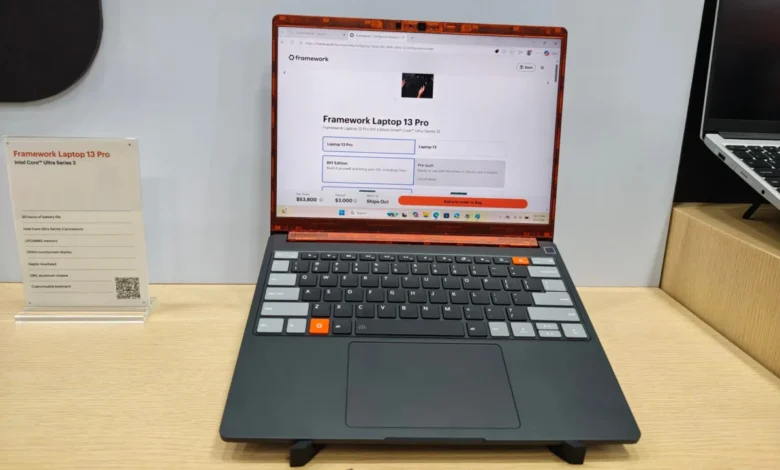
In a significant shift that underscores the volatility of the global semiconductor market, Framework, a company renowned for its commitment to repairability and user customization, has announced that a portion of its Laptop 13 Pro pre-order customers will receive less memory than they originally selected. This development stems from a dramatic and unforeseen surge in the cost of LPCAMM2 memory modules, a key component in the company’s latest premium offering. While Framework recently celebrated finding a more cost-effective SSD for the Laptop 13 Pro, this new challenge presents a stark reminder of the fluctuating economic landscape impacting technology production.
The company revealed in a recent update that its memory supplier has reported a price increase for LPCAMM2 modules that has more than doubled compared to their previous inventory. This escalation far surpasses the modest, low-to-mid double-digit percentage increase that Framework had initially anticipated. While the company maintains it possesses sufficient memory modules to fulfill all existing orders in aggregate, the critical issue lies in the availability of specific capacities. Framework has found itself with an insufficient supply of the higher-capacity 64GB, 32GB, and 16GB modules to meet the exact configurations of all pre-orders.

Downscaled Memory Configurations Impacting Pre-Orders
The ramifications of this memory price shock are directly affecting customers who have placed pre-orders for the Framework Laptop 13 Pro and its associated mainboards. For orders configured with 64GB of RAM, Framework has sufficient stock to fulfill those placed through Batch 4 for the Laptop 13 Pro and Batch 7 for mainboard orders. However, pre-orders placed for later batches that specified 64GB will now be automatically downgraded to 32GB of memory. Crucially, these customers will be charged the original price corresponding to the 32GB configuration, a move designed to mitigate the financial burden of the unexpected cost hike.
Similarly, pre-orders for DIY Edition and Mainboard configurations that included 32GB of RAM, and which fall beyond the aforementioned batch limitations, will be adjusted down to 16GB. These customers will also be billed at the original price for the 16GB option. It is important to note that Framework’s prebuilt Core X7 Ultra orders configured with 32GB of RAM are not subject to this change. This exception is due to the company currently not offering a 16GB configuration for that specific prebuilt model, implying a different supply chain or component sourcing strategy for that particular product line.

Broader Price Adjustments and Market Context
Beyond the direct impact on memory configurations, Framework has also acknowledged that new orders will reflect increased pricing. The company has implemented revised pricing for LPCAMM2 modules. Furthermore, system and mainboard prices are undergoing adjustments to account for the elevated costs associated with processors, Windows licenses, memory, storage, and other critical silicon components. This indicates a systemic cost pressure across multiple facets of the Laptop 13 Pro’s bill of materials.
This is not the first instance of price increases impacting Framework’s customer base. As far back as May, the company had issued a warning regarding the depletion of its cheaper SSD inventory sourced from 2025. This scarcity necessitated a transition to newer, more expensive stock, consequently driving up storage prices. At that time, DDR5 memory pricing had been relatively stable, although an increase in the price of 8GB modules was noted after Framework exhausted its lower-cost inventory of those specific components. The current situation with LPCAMM2 represents a more acute and widespread price shock impacting a more fundamental component.

The volatile nature of the memory market is a well-documented phenomenon. Industry analysis firms have repeatedly highlighted the cyclicality of DRAM and NAND flash prices, driven by factors such as manufacturing capacity, demand from major device manufacturers (like smartphones and servers), and geopolitical influences. The current surge in LPCAMM2 costs, a newer form factor of RAM often found in high-performance and enterprise-grade devices, is likely a confluence of these factors, potentially exacerbated by specific supply chain constraints or increased demand from emerging technologies.
Framework’s Balancing Act: Price Reductions Amidst Increases
Despite the prevailing upward trend in costs for several components, Framework continues its practice of dynamic pricing adjustments. The company has also announced price reductions on certain components. Specifically, 48GB DDR5 modules, 8TB SN850X SSDs, and 1TB SN7100 drives have seen their prices decrease. Conversely, 16GB DDR5 modules, 1TB SN850X SSDs, and 4TB SN7100 drives have experienced price increases. This granular approach to pricing demonstrates Framework’s ongoing effort to optimize costs and reflect market fluctuations across its diverse component offerings.

A significant aspect of Framework’s customer-centric approach is its policy for existing pre-orders. The company has committed to honoring the lower pricing for customers who have already placed orders, even when component costs rise. Conversely, when prices for components fall, existing preorders automatically benefit from these reductions. This policy aims to provide a degree of price stability and predictability for its early adopters, a core tenet of the company’s philosophy.
Analysis of Implications and Future Outlook
The current situation with LPCAMM2 memory prices presents several implications for both Framework and the broader consumer electronics market. For Framework, it highlights the inherent risks of relying on specific suppliers and the challenges of navigating a rapidly shifting component landscape. The company’s modular design, while facilitating repairs and upgrades, still necessitates sourcing components from third-party manufacturers. The substantial cost increase for LPCAMM2 suggests a potential bottleneck in its production or a significant surge in demand that outstrips current supply.

From a broader perspective, this event serves as a cautionary tale for consumers anticipating new hardware releases. The era of consistently falling component prices, particularly for cutting-edge technologies, may be temporarily paused or even reversed in certain segments. The demand for high-performance computing, increasingly driven by AI and machine learning applications, could be placing unprecedented pressure on the supply chains for advanced memory solutions. The Framework Laptop 13 Pro, with its emphasis on advanced processing capabilities and modularity, is at the forefront of this trend, making it particularly susceptible to these market dynamics.
The company’s transparency in communicating these changes, while undoubtedly disappointing for affected customers, is a testament to its commitment to its user community. By proactively informing customers and offering adjusted pricing, Framework aims to maintain trust and manage expectations. The long-term impact of these price adjustments on Framework’s sales figures and market position remains to be seen, but the company’s established reputation for quality and ethical business practices may help it weather this challenge.
Moving forward, it will be crucial for Framework to continue monitoring the memory market closely and explore all available avenues for securing components at competitive prices. Diversifying its supplier base, where feasible, and potentially exploring alternative memory technologies or configurations in the future could be strategic considerations. For consumers looking to purchase the Framework Laptop 13 Pro, understanding these market realities and the potential for component cost fluctuations is essential. The company’s commitment to providing a high-performance, upgradeable laptop remains, but the current economic climate necessitates a pragmatic approach to pricing and configuration. The ongoing evolution of the semiconductor market ensures that such challenges, while disruptive, are an inherent part of bringing advanced technology to consumers.