Dreamforce 2026: Salesforce Ushers in the Era of Agentic AI and Autonomous Interfaces

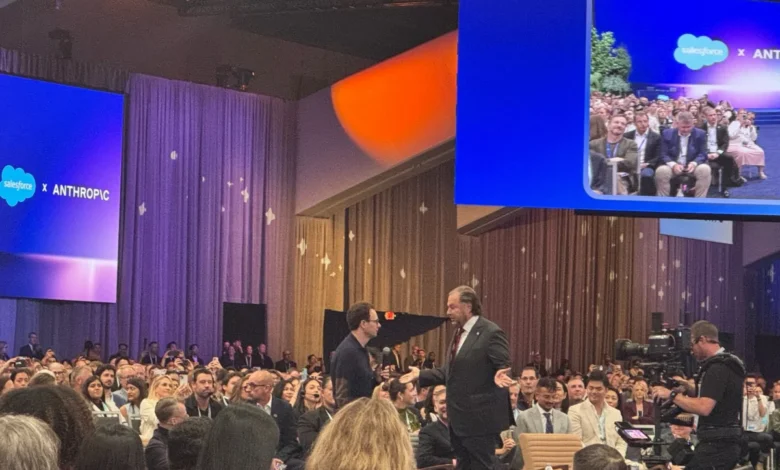
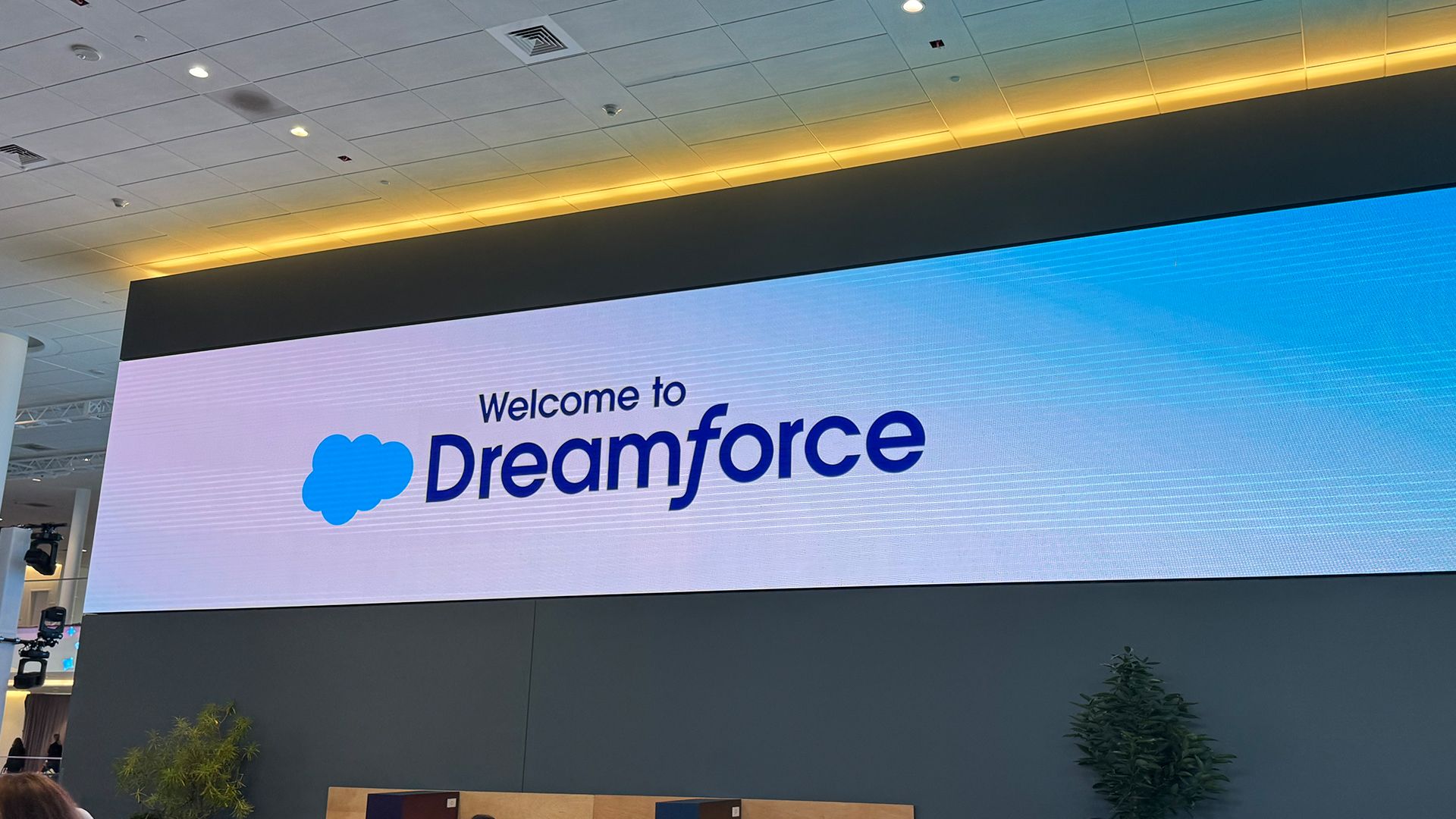
The annual Salesforce Dreamforce conference kicked off at the Moscone Center in San Francisco this week, marking what CEO Marc Benioff has described as the most pivotal moment in the company’s history. As the tech industry navigates a volatile period often dubbed the "SaaSpocalypse," Salesforce has positioned itself not merely as a software provider, but as the architect of an autonomous, agent-led enterprise future. The keynote proceedings, which drew thousands of attendees and featured appearances by industry heavyweights including Nvidia CEO Jensen Huang and Anthropic CEO Dario Amodei, centered on the unveiling of AIforce, a foundational shift in how humans interact with enterprise software.
The Paradigm Shift: From Software to Agentic Workflows
At the heart of the 2026 event is the transition away from static, command-based interfaces toward what Salesforce terms "live interfaces." For decades, enterprise software has required human operators to navigate complex, rigid menus, shifting between disparate applications to input data or extract insights. Benioff argues that this era is over. With the launch of AIforce, Salesforce is introducing a layer that sits atop its core product suite, allowing for the orchestration of autonomous AI agents that handle processes end-to-end without constant human intervention.
This is not a theoretical exercise. During the opening demonstrations, Salesforce showcased the practical application of this technology, moving beyond the hype of generative AI into the domain of operational efficiency. The message from the keynote was clear: companies that fail to "agentify" their business processes risk being left behind in an increasingly competitive, AI-driven global economy.
Chronology of the Opening Keynote
The event began with the customary community-focused festivities, including the Akaka family blessing and a performance by Gwen Stefani, reflecting the company’s emphasis on its "Trailblazer" community, which now spans 23 million members across 90 countries. However, the tone shifted quickly as the keynote transitioned into the technical deep dive.
By 10:00 AM PST, the focus moved to the announcement of AIforce and the introduction of Koa, a new CRM-focused reasoning model developed in partnership with Nvidia. Koa, built on Nvidia’s open-weight Nemotron model family, represents a significant evolution in specialized enterprise AI. Unlike general-purpose large language models, Koa is engineered to understand the specific semantics and business logic of the Salesforce ecosystem.
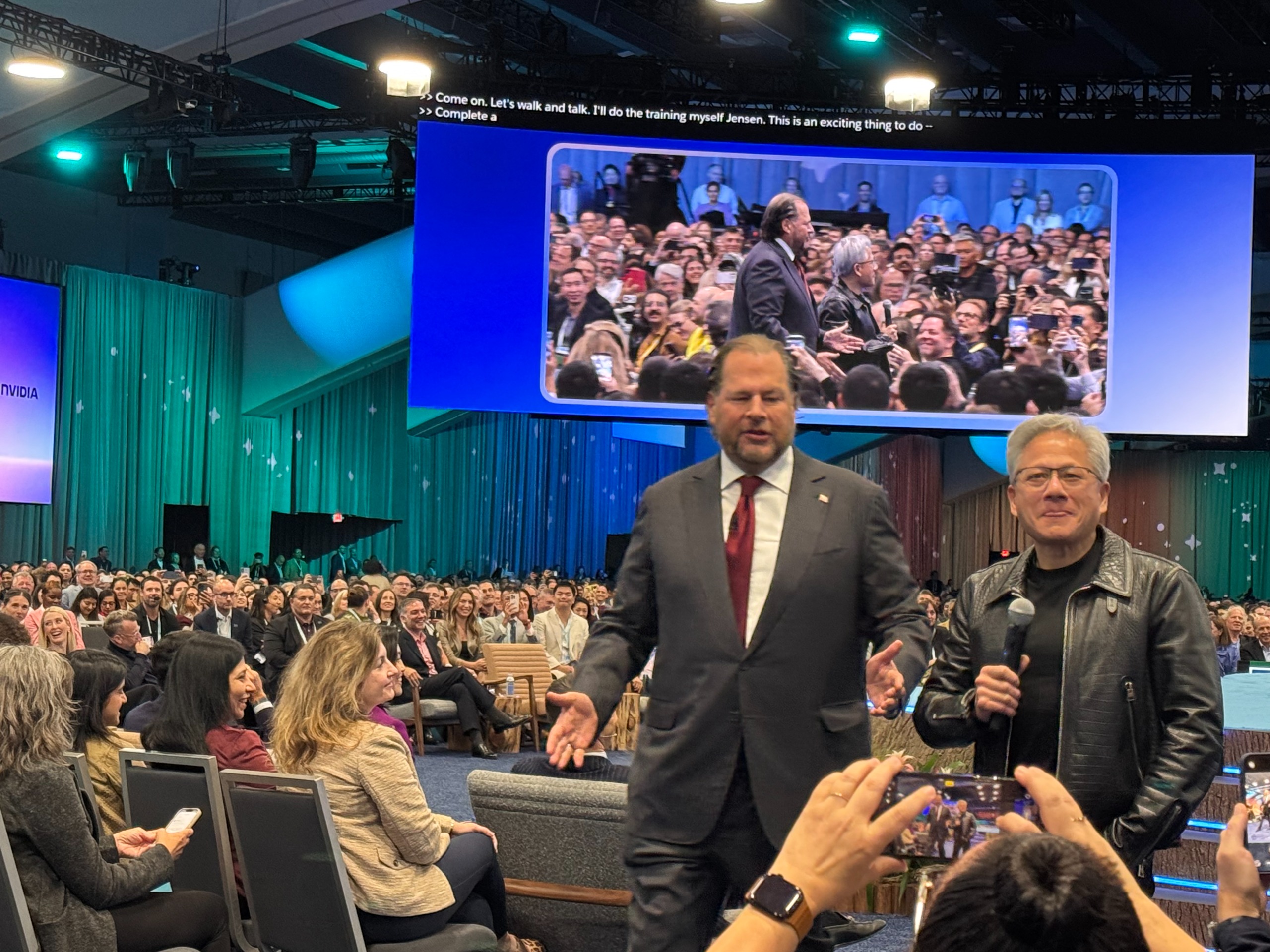
Following the unveiling, the stage hosted a series of high-profile industry leaders. Nvidia’s Jensen Huang, in a dynamic exchange with Benioff, emphasized the unprecedented rise of open-source models, which he noted have surged from 30% to 70% of the market in just one year. Huang reinforced the notion that every software company is now, by necessity, an AI company, predicting that interface layers like those provided by Salesforce will become the standard for enterprise adoption.
The morning also featured a practical case study from Siemens. President and CEO Roland Busch detailed how the manufacturing giant is deploying "Piper," an inbound sales pipeline agent, to convert leads into concrete sales using natural language processing. Furthermore, the company highlighted "Marshall," an agent trained on SAP sandbox environments that successfully reduced the supplier onboarding process—historically a multi-week undertaking—to just 90 minutes.
Deepening Ties with Anthropic and Claudeforce
A significant portion of the morning was dedicated to the strategic partnership between Salesforce and Anthropic. The unveiling of "Claudeforce" signals a deeper integration of Anthropic’s frontier models into the Salesforce product range. Anthropic CEO Dario Amodei joined Benioff on stage to discuss the balance between rapid innovation and safety.
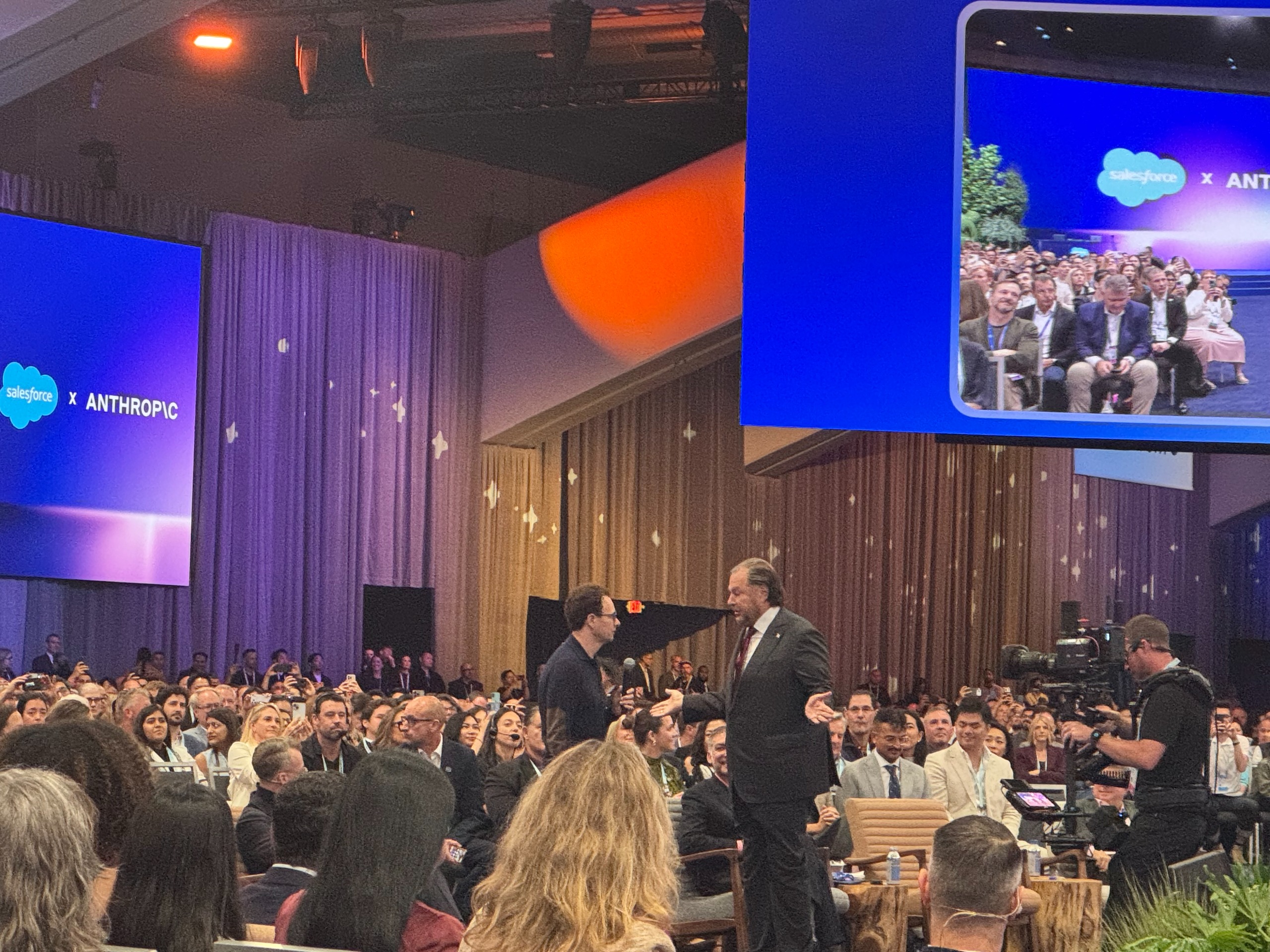
Amodei noted that the pace of AI development has exceeded internal projections, particularly regarding business and economic integration. Addressing concerns about safety, Amodei argued against "freezing the frontier," instead advocating for rigorous testing environments and responsible development practices. This partnership is expected to be a cornerstone of Salesforce’s strategy, with Slack acting as the primary hub for this agentic orchestration. Slackforce, the updated iteration of the communication platform, is being marketed as the central "where AI works" environment, a move that aligns with the broader industry shift away from fragmented communication tools toward centralized, AI-enabled workspaces.
Data and Productivity: The Tangible Gains
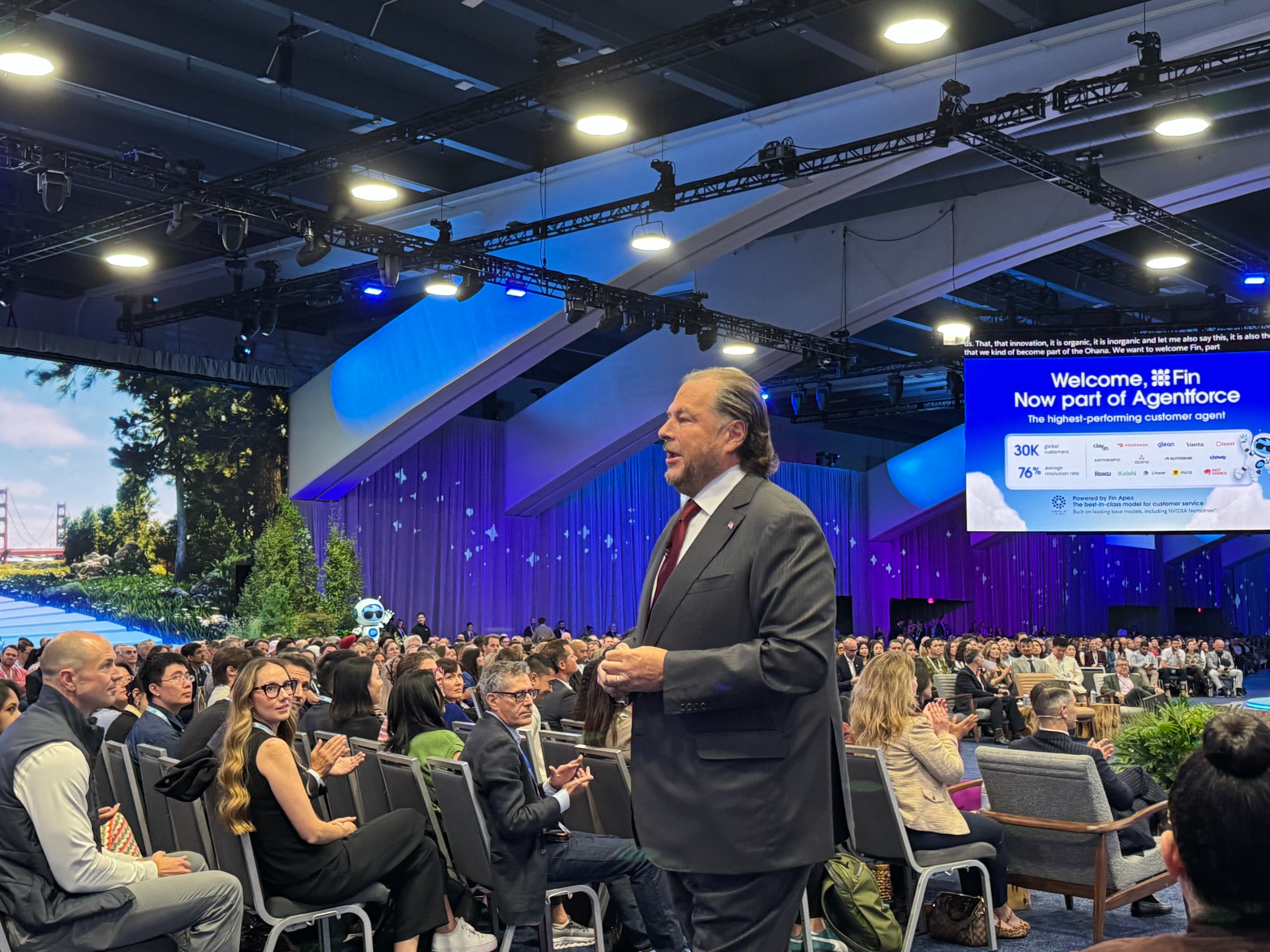
The economic argument for this transition was bolstered by real-world data shared by corporate partners. Denis Machuel, CEO of Adecco Group, provided a compelling look at the productivity gains achievable through agentic integration. Adecco, which has been systematically "agentifying" its workflows, reported that it has placed 20,000 more individuals this year to date compared to previous cycles, citing time savings for recruiters as the primary driver.
This data provides a critical counter-narrative to the prevailing skepticism regarding AI’s impact on the labor market. Benioff and his guests argued that the narrative of AI destroying the job market is "vastly overblown." Instead, they suggest that AI acts as an augmentative layer, allowing employees to focus on higher-value tasks while agents handle the repetitive, administrative, and logic-based workflows that have historically bogged down enterprise productivity.
Strategic Implications for the Enterprise
The introduction of AIforce and the expansion of the agentic ecosystem have several long-term implications for the enterprise software market:
- The Death of Rigid UI: The shift toward AI-generated, custom interfaces suggests that the future of enterprise software is not in standardized dashboards, but in user-specific interfaces generated on the fly. This will likely reduce the training time for new employees and allow for more dynamic interaction with corporate data.
- The Rise of Reasoning Models: The development of Koa confirms that generic LLMs are insufficient for complex, highly regulated, or data-dense business tasks. We should expect to see a proliferation of "domain-specific" reasoning models that are trained on industry-specific semantic layers.
- Orchestration as a Service: As companies deploy dozens or even hundreds of specialized agents, the ability to orchestrate these agents—to ensure they communicate correctly and adhere to business rules—becomes the new "killer app." Slack’s evolution into a central orchestration hub reflects this reality.
- Safety as an Engineering Problem: The shift in rhetoric from "regulatory oversight" to "engineering safety" is notable. By emphasizing that companies must build products they are confident in before bringing them to market, Salesforce and its partners are attempting to preempt aggressive government intervention through proactive self-regulation and technical rigor.
Conclusion: The Road Ahead
As Dreamforce 2026 continues, the narrative is firmly established: the era of manual data entry, fragmented interfaces, and static software is drawing to a close. The "AI door" has been opened, and as Benioff observed, while the adoption across the globe remains uneven, the path for the enterprise is now clearly paved with autonomous agents.
Whether these technologies will fully deliver on the promise of hyper-productivity remains to be seen, but the sheer scale of the investment from giants like Nvidia and the operational results shared by firms like Siemens and Adecco suggest that the shift is already well underway. For the thousands of professionals gathered in San Francisco, the challenge of the coming year will not be deciding whether to adopt AI, but how to effectively manage the transition to a workforce where humans and agents work in tandem to drive business growth.
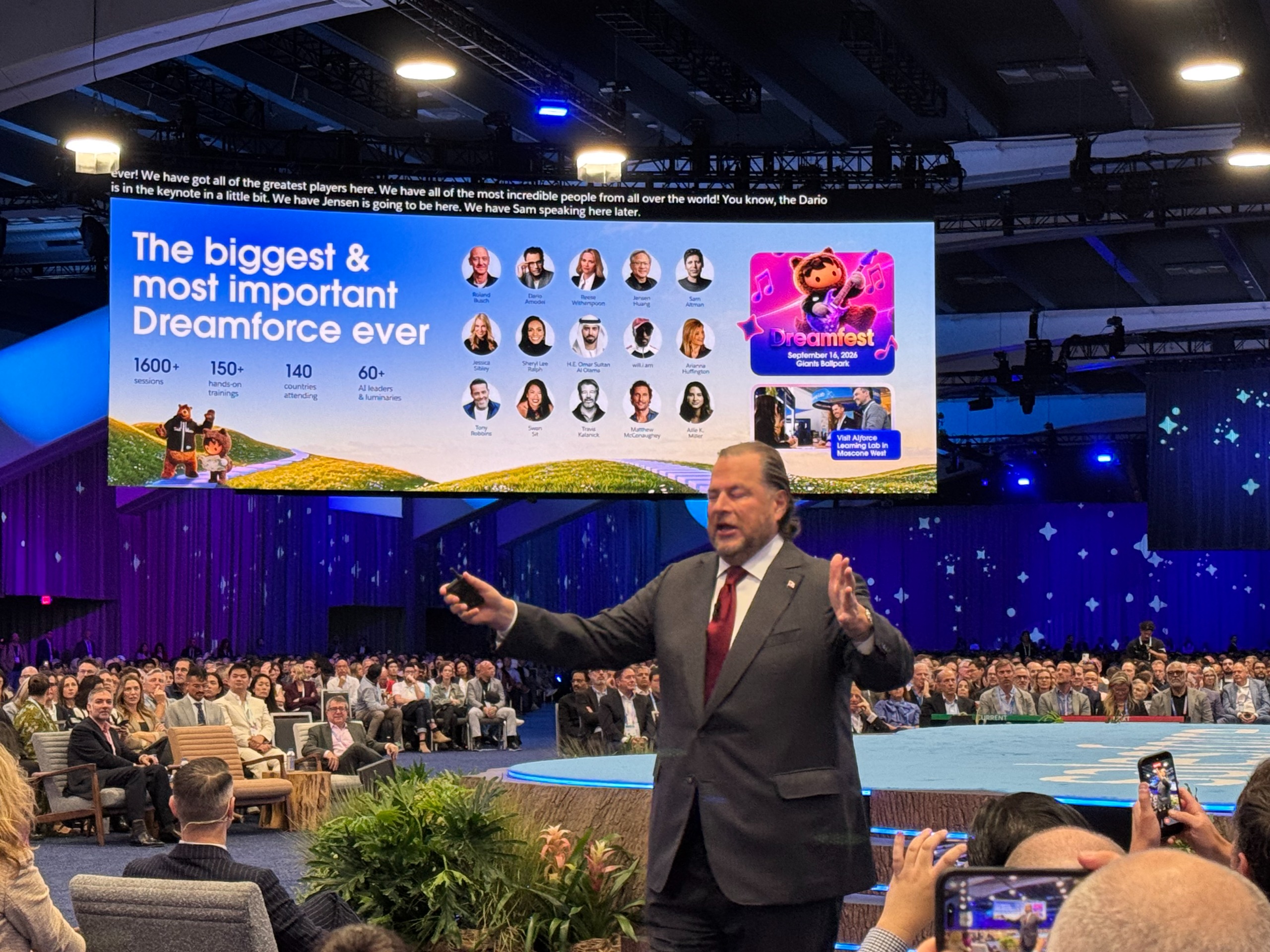
The next few days of the conference are expected to yield further technical specifications on the integration of these agents across Sales, Marketing, Commerce, and Field Service Clouds. However, the core message from day one is unmistakable: the enterprise is becoming autonomous, and the interface of the future is the agent itself.