Cosmic Symphonies: How Scientists and Artists Translated Ancient Fast Radio Bursts into Sound

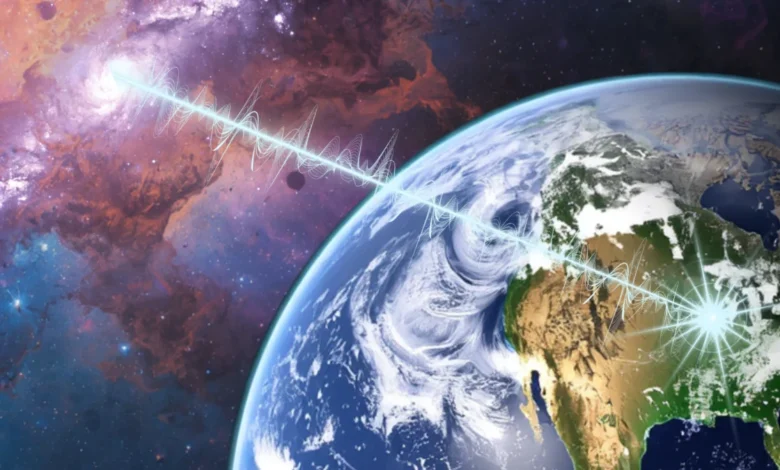
For centuries, humanity has gazed up at the night sky, charting the movements of stars, planets, and distant galaxies through the lens of light. Yet, the universe communicates across a vast electromagnetic spectrum largely invisible and silent to human senses. Among the most enigmatic phenomena in this hidden realm are fast radio bursts (FRBs)—brief, blinding flashes of cosmic energy that erupt from distant galaxies, releasing as much power in a single millisecond as our sun produces in three days. Because these signals manifest as invisible radio waves and last only a fraction of a second, they have remained strictly within the domain of graphs, data tables, and high-performance computing clusters.
That boundary has officially dissolved. Through a groundbreaking collaboration between physics and musical composition, humanity can now hear the ancient melody of the cosmos. Andrew Melchior, an artist and composer, has partnered with Kiyoshi Masui, an associate professor of physics at the Massachusetts Institute of Technology (MIT), to transform millions of years of archival astronomical data into an immersive acoustic experience. Their installation, titled "The Logos," has been echoing through the vaulted architecture of Oulu Cathedral in Finland since early April, serving as a scheduled fixture of auditory science communication through the end of the year.
By converting raw radio telescope data into complex acoustic frequencies, this project bridges the chasm between abstract astrophysics and human sensory experience. It allows listeners to hear not only the rhythmic hums and whistles of deep space, but also the physical history of the universe encoded within the sound waves themselves.
The Mechanics and Chronology of Fast Radio Bursts
To understand the magnitude of transforming FRBs into sound, one must first grasp the ephemeral and violent nature of the signals themselves. The history of fast radio bursts is relatively brief, beginning less than two decades ago. The first recorded FRB, frequently referred to as the "Lorimer Burst," was discovered in 2007 by astronomers scouring archival data collected by the Parkes Observatory in Australia. Captured in 2001, the signal lasted a mere five milliseconds, yet its immense dispersion measure indicated that it originated far outside our Milky Way galaxy, hailing from deep cosmological depths.
In the years immediately following the 2007 discovery, FRBs presented a baffling mystery to the astrophysical community. They were notoriously difficult to catch. Because these events are unpredictable and vanish almost as quickly as they appear, early detections relied entirely on serendipity—astronomers had to be fortunate enough to have their radio telescopes pointed at the exact right coordinates of the sky when a flare occurred. By the late 2010s, only a few dozen bursts had ever been documented, leaving researchers with too little data to determine their origins, mechanisms, or frequency.
This limitation was shattered with the advent of the Canadian Hydrogen Intensity Mapping Experiment (CHIME), located at the Dominion Radio Astrophysical Observatory in British Columbia. Unlike traditional tracking telescopes that focus on narrow patches of the sky, CHIME features a wide, stationary reflector design combined with a massively powerful correlator—a supercomputer capable of processing vast streams of incoming digital data simultaneously.
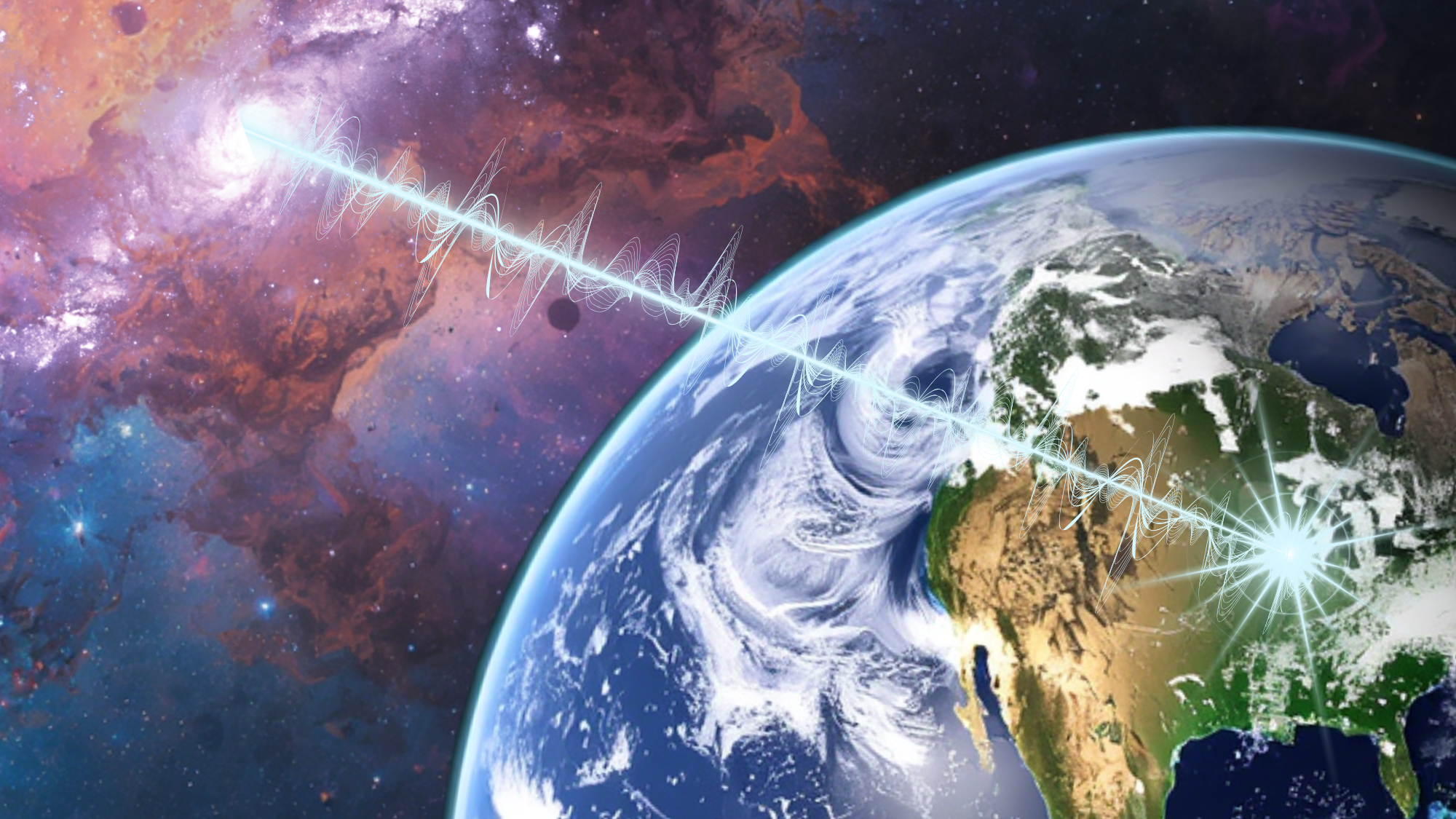
CHIME revolutionized the field almost immediately upon its deployment. During its first year of operation alone, the facility more than quadrupled the global catalog of known FRBs. Between the years 2018 and 2023, CHIME recorded an unprecedented 4,539 individual bursts originating from 3,641 distinct cosmic sources. This monumental influx of data transformed FRBs from rare anomalies into a statistically robust population of cosmic events, paving the way for advanced statistical analyses, localizations, and—ultimately—artistic sonification.
Translating Data into Acoustics: The Architecture of ‘The Logos’
Converting a millisecond-long pulse of radio frequency data into an audible acoustic experience requires a meticulous translation process. Radio waves are fundamentally distinct from sound waves; while sound waves require a medium like air or water to travel through, radio waves are electromagnetic radiation capable of propagating through the absolute vacuum of space. Because human eyes cannot perceive radio frequencies and human ears cannot natively detect them, Melchior and Masui had to bridge this technological gap.
The core of the installation relies on mapping the structural characteristics of real CHIME data to varying musical pitches and frequencies. The sonification process takes the digital signatures of thousands of FRBs and distributes them across a complex array of 12 loudspeakers strategically positioned throughout the interior of Oulu Cathedral.
When visitors enter the cathedral, they are enveloped in an acoustic landscape where distant FRBs manifest as deep, resonant hums, low-frequency rumbles, sharp metallic pops, and piercing whistles. Crucially, the sounds are not arbitrary compositions; they are governed by the strict laws of astrophysical physics.
As a fast radio burst travels billions of light-years across the universe toward Earth, it does not move through empty space. Instead, it navigates through the interstellar and intergalactic medium—vast oceans of ionized gas, plasma, and magnetic fields. This diffuse matter affects different frequencies of the radio wave at varying speeds. High-frequency waves tend to travel slightly faster or experience different degrees of delay compared to lower-frequency components, a phenomenon known as dispersion.
Consequently, when an FRB reaches a radio telescope, it arrives not as a single uniform tone, but as a descending sweep where high frequencies register first, followed sequentially by lower ones. In "The Logos," this physical dispersion is directly translated into sound.
"Each burst arrives with its high frequencies first and sweeps downward, stretched by its journey through intergalactic gas," Melchior explained in correspondence with science media. "And you can hear that dispersion as it falls from the dome."
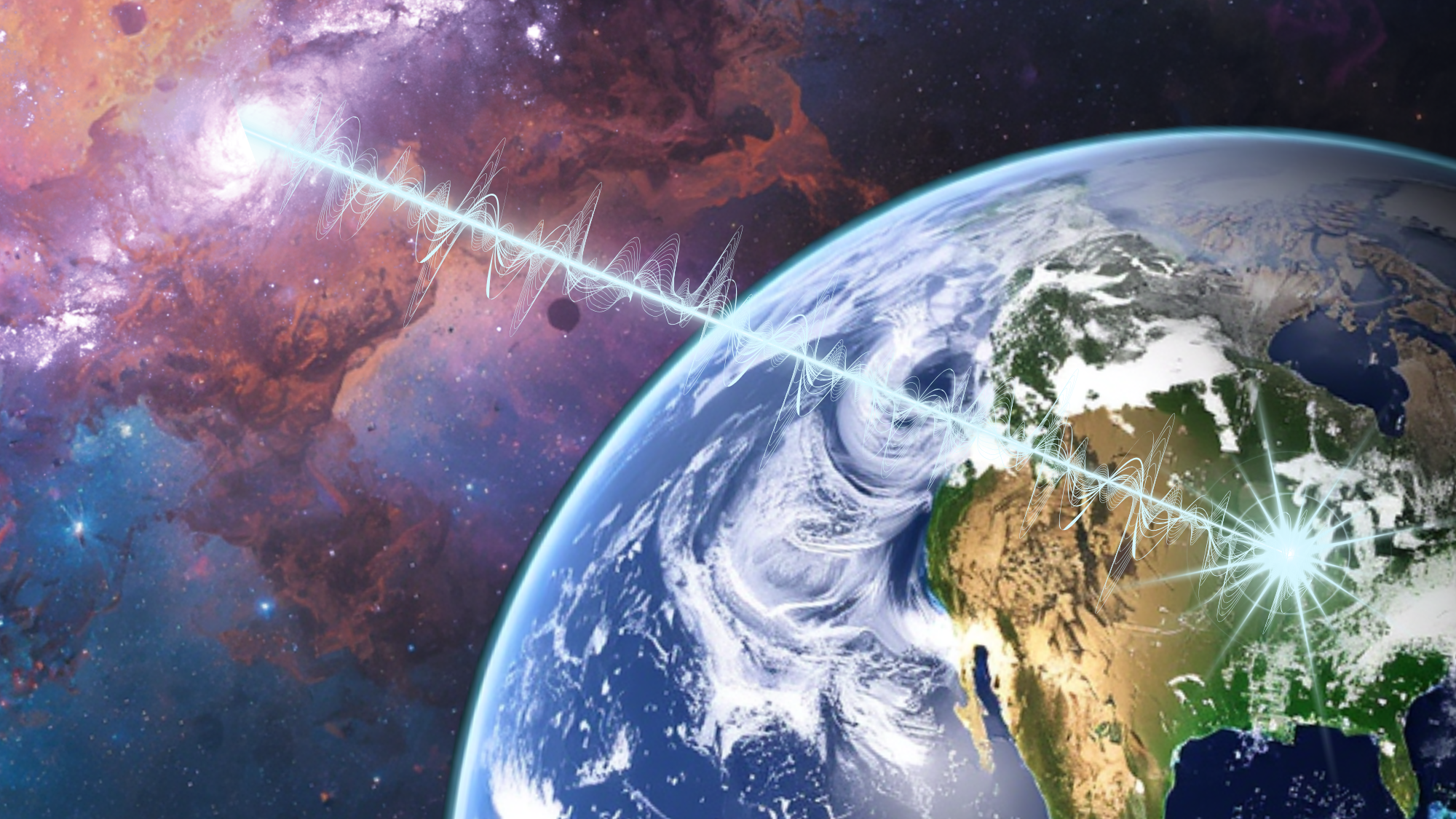
The temporal span of the data is equally staggering. According to project documentation, the acoustic signals reverberating through the Finnish cathedral possess vastly different cosmic pedigrees. The youngest bursts captured in the installation originated approximately 50 million years ago—a mere blink of an eye in geological terms—while the oldest signals embarked on their multi-billion-year journeys roughly 8 to 9 billion years ago, long before our solar system even existed.
Unraveling the Cosmic Engines: Magnetars vs. Binary Mergers
While the public experiences the poetry of deep space through cathedral acoustics, astrophysicists continue to wrestle with the hard science of what generates these extreme events. Pinpointing the exact engines behind FRBs has proven to be one of the most persistent challenges in modern astronomy.
For many years, leading hypotheses divided the scientific community. One prominent theory suggested that FRBs were produced by the cataclysmic mergers of compact stellar remnants, such as two neutron stars colliding or a neutron star merging with a black hole. However, recent observational breakthroughs have increasingly challenged this narrative, pointing instead toward active, highly magnetized young stellar objects.
In a landmark discovery, astronomers utilizing the capabilities of the James Webb Space Telescope (JWST) successfully pinpointed the host galaxy of the most distant fast radio burst detected to date. This particular FRB erupted during an epoch when the universe was only about 3 billion years old.
To the surprise of researchers, the host galaxy was identified as a small, young, star-forming dwarf galaxy—far smaller and less massive than standard models predicted. This discovery complicated the binary merger theory, as such dense stellar collisions typically require billions of years of orbital decay to occur, making them an unlikely source for an FRB in a very young, early-universe dwarf galaxy.
Instead, the data aligns much more robustly with an alternative hypothesis: that fast radio bursts are launched by magnetars. Magnetars are a specialized class of neutron stars possessing extraordinarily intense magnetic fields—trillions of times stronger than Earth’s magnetic field. According to frameworks supported by NASA and leading astrophysical institutions, these extreme objects can be forged in the violent aftermath of a massive star’s core-collapse supernova. A newborn magnetar can release colossal amounts of magnetic energy in rapid succession, producing powerful, repeating radio flashes shortly after the stellar death that created it.
Broader Implications and Future Engagement
The intersection of art and science demonstrated by "The Logos" extends far beyond an innovative public exhibition. Projects that translate complex scientific datasets into sensory experiences play an increasingly vital role in science communication. By converting abstract, invisible radio telemetry into visceral audio that echoes through a historic cathedral, researchers and artists can communicate the sheer scale and temporal depth of the universe to audiences who might otherwise find astrophysics inaccessible.
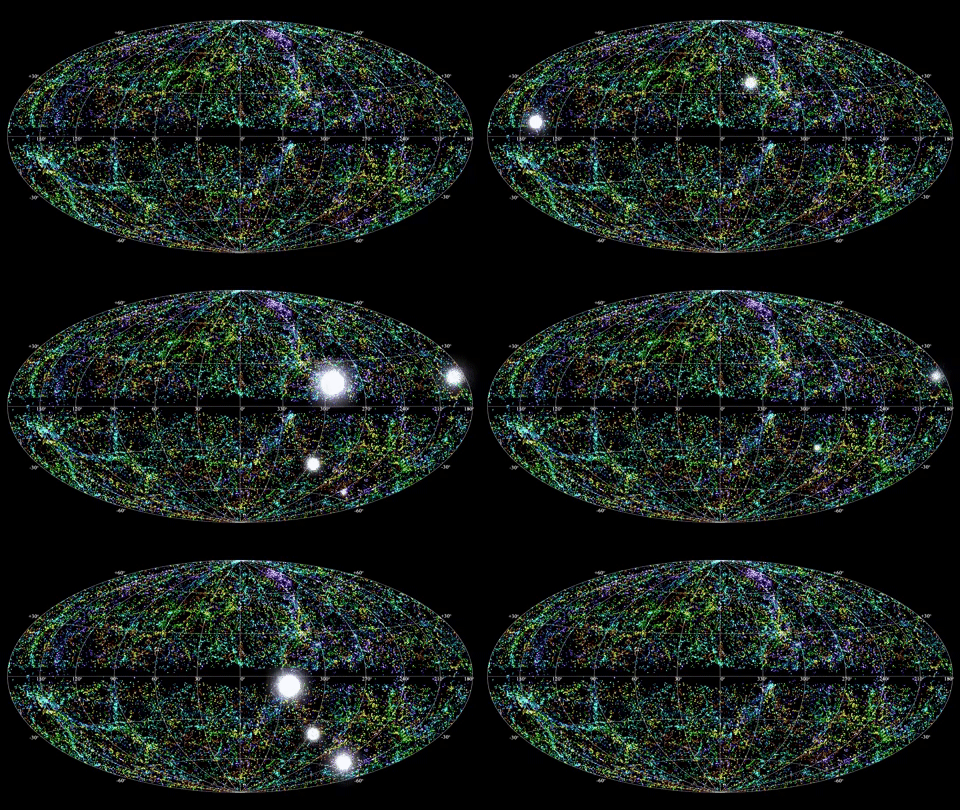
Furthermore, the project highlights the ongoing evolution of how humanity interacts with big data. As modern astronomical surveys—such as those conducted by CHIME, the Vera C. Rubin Observatory, and the Square Kilometre Array—generate petabytes of information, traditional visual analysis must be supplemented by multi-sensory approaches. Sonification allows researchers to listen for anomalies, patterns, or structural rhythms in large datasets that might otherwise be overlooked in traditional visual plots.
The collaboration in Oulu is scheduled to reach a dramatic milestone. On November 21, the installation will transition from a passive playback environment into an interactive live performance. Thirty professional vocalists will take positions among the audience members inside Oulu Cathedral, actively singing back to the acoustic representations of the sky in the Finnish language. Simultaneously, composer Andrew Melchior will manipulate and trigger real-time FRB datasets from a centralized keyboard.
Reflecting on the auditory geometry of the installation, Kiyoshi Masui noted the layered complexity of the experience. "The fast flashes will echo as snare-like beats bouncing through the cathedral," Masui remarked in an MIT statement. "It should feel rich and layered, while also revealing something real about how these signals travel across billions of years of cosmic space before reaching Earth."
As humanity continues to peer deeper into the cosmos—decoding the origins of magnetars, charting the distribution of intergalactic gas, and capturing whispers from the early universe—installations like "The Logos" ensure that our connection to the stars remains not only intellectual, but profoundly human.