AWS Weekly Roundup: Generative AI Voice Upgrades, Advanced Security Innovations, and Infrastructure Enhancements

Amazon Web Services (AWS) has announced a substantial wave of updates spanning enterprise security, infrastructure management, artificial intelligence, and database migration. Highlighting the intersection of emerging technology and real-world industrial applications, recent deployments demonstrate a clear strategic pivot toward autonomous systems, zero-downtime migrations, and enhanced generative capabilities tailored for non-traditional technology sectors, including global agribusiness.
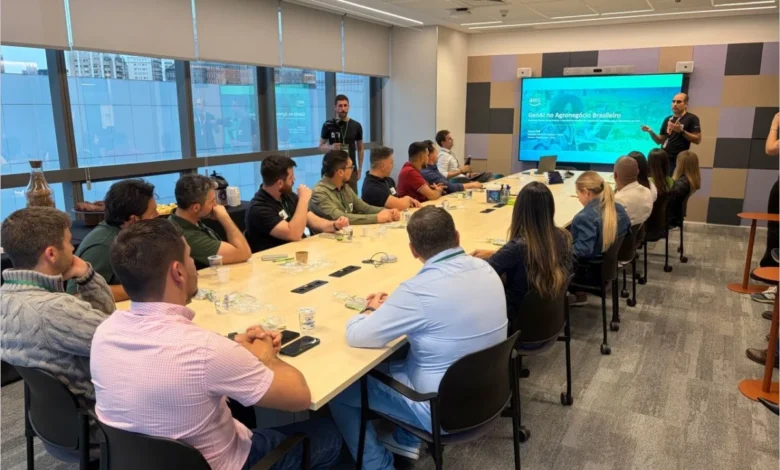
The rapid pace of technological integration was recently underscored during a presentation at the AWS regional headquarters in São Paulo, Brazil. Addressing a delegation of technology and commercial leaders from the Brazilian agricultural sector, industry experts emphasized that traditional markets are rapidly becoming the primary testing grounds for generative artificial intelligence. In sectors where end-users—such as farm managers and equipment operators—interact with digital systems while actively navigating large agricultural tracts, the user interface is fundamentally voice-driven.
Addressing this operational demand, AWS rolled out a major update to its Amazon Polly Generative engine, introducing 14 new voices across nine locales, prominently featuring two native Brazilian Portuguese options. This strategic deployment bridges the gap between sophisticated cloud architecture and frontline industrial utility.
Revolutionizing Vulnerability Management: The General Availability of AWS Continuum
Security dominated the broader industry landscape following the general availability of AWS Continuum, a service designed to fundamentally reframe vulnerability management from a passive detection model into an active, automated remediation pipeline. Historically, vulnerability scanners generate extensive lists of Common Vulnerabilities and Exposures (CVEs), leaving engineering teams to manually triage, investigate, and patch systems while threat actors exploit newly disclosed flaws.
AWS Continuum shifts this paradigm by constructing a comprehensive context graph linking code repositories directly to live cloud environments. Rather than presenting abstract severity labels, the system evaluates findings based on real-world evidence levels, automatically reproducing exploitable flaws within an isolated sandbox environment using proof-of-concept code. Issues are systematically ranked according to the proximity of the attack path to mission-critical business systems.
Once prioritized, Continuum generates automated remediation workflows, opening direct pull requests to resolve identified vulnerabilities. To maintain architectural stability and security governance, remediation is currently gated by mandatory human approval, requiring engineering oversight to review and merge pull requests. However, future iterations are expected to introduce autonomous fix classes governed by strict confidence thresholds. At launch, AWS Continuum is available in the US East (N. Virginia) and US West (Oregon) commercial regions.
The Shrinking Patch Window: Threat Intelligence and the PHP2Shell Discovery
The necessity for automated, rapid-response security frameworks like AWS Continuum was underscored by recent telemetry data published by Amazon Threat Intelligence. The findings reveal that the traditional timeline—measuring weeks or months between a vulnerability’s public disclosure and active exploitation—has effectively ceased to exist.
According to telemetry data from Amazon’s MadPot honeypot network, researchers detected active exploitation attempts of the PHP2Shell vulnerability on October 17. Crucially, this activity occurred four days prior to the public disclosure of the associated vulnerabilities, designated as CVE-2026-109618 and CVE-2026-109619. Furthermore, on the official day of disclosure, fully functional proof-of-concept exploits were observed circulating online at approximately 02:00 UTC, a full twelve hours before the official embargo lifted at 14:00 UTC.
This compressed timeline carries profound implications for cybersecurity strategies. Enterprise incident response plans that measure vulnerability patching windows in days or weeks are operating under an obsolete paradigm. Security analysts now recommend initiating forensic investigations from the earliest recorded exploitation telemetry rather than relying on official vendor disclosure dates. Concurrently, AWS released specific AWS WAF (Web Application Firewall) mitigation rules to protect vulnerable endpoints against these remote code execution vectors.
Streamlining Microservices Architecture with Amazon ECS Gateway
In the realm of cloud infrastructure, AWS introduced Amazon ECS Gateway, a service engineered to decouple network administration from application deployment within Amazon Elastic Container Service (ECS) environments.
Managing ingress traffic, transport layer security (TLS) certificates, and web application firewalls traditionally required extensive coordination between dedicated platform engineering groups and individual application development teams. Amazon ECS Gateway resolves this friction by enabling platform teams to define a centralized gateway encompassing organization-wide subnets, security groups, listener configurations, and WAF web access control lists (ACLs).
Application developers can subsequently opt into the infrastructure by attaching a gateway connector directly to their service definitions. In response, ECS automatically provisions an AWS Certificate Manager (ACM) certificate, a unique DNS hostname, listener rules, target groups, and strict security groups that restrict inbound traffic exclusively to the designated Application Load Balancer (ALB).
The architectural efficiencies of the ECS Gateway are substantial. Up to 25 microservices can efficiently share a single ALB, significantly reducing infrastructure overhead. Furthermore, ECS dynamically provisions the initial load balancer upon the first connection and automatically decommissions ALBs when they are no longer actively utilized. A single gateway can scale to associate with up to 10,000 clusters, with a maximum of five gateways permitted per cluster. Organizations can adopt the service incrementally using standard UpdateService commands without disrupting existing load balancers. Amazon ECS Gateway is available at no additional charge in all commercial AWS regions where Amazon ECS is supported.
Advancing Machine Learning Workloads: Trainium, SageMaker, and Bedrock
Machine learning and artificial intelligence infrastructure received significant updates aimed at optimizing performance, reducing operational friction, and expanding developer flexibility.
TorchNeuron: Native PyTorch Support for AWS Trainium
AWS announced the public beta of TorchNeuron, an open-source PyTorch backend designed to allow developers to execute machine learning models on AWS Trainium hardware through minimal code modification. By substituting standard device declarations with .to('neuron'), engineering teams can migrate existing PyTorch workloads to Trainium infrastructure without rewriting core architectures, while maintaining full support for eager execution and torch.compile. Integrated directly with the Neuron Kernel Interface for custom operators, the framework is fully compatible with both Trainium2 and Trainium3 instances, arriving alongside the rollout of AWS Neuron version 2.33.

Customizing Models on Amazon SageMaker AI Without GPU Management
Addressing the operational complexity of distributed machine learning, Amazon SageMaker AI introduced generally available training session APIs. These tools grant developers granular control over the post-training lifecycle—including the implementation of custom loss functions and specialized reward signals—while abstracting away the underlying infrastructure management. SageMaker AI automatically handles GPU allocation, distributed execution, fault recovery, and checkpoint storage. Developers are billed strictly for active token processing time, with metering suspended while custom reward functions evaluate processing batches. Concurrently, SageMaker added native support for cutting-edge foundational architectures, including Muse Glimmer, Qwen 3.8, and Ministral 3.
Structured Outputs for Claude on Amazon Bedrock
To improve the reliability of generative AI integration in enterprise workflows, AWS enabled native structured output generation for all Anthropic Claude models hosted on Amazon Bedrock. Accessible across both bedrock-runtime and bedrock-mantle endpoints, developers can now request schema-compliant JSON payloads directly from the models. This capability eliminates the need for complex custom parsing logic, retry routines, or downstream post-processing, significantly streamlining automated processes such as financial report data extraction, clinical note parsing, and intent-based support ticket routing.
Enterprise Database Migration and Cost Optimization
Infrastructure efficiency extended into database administration and agentic artificial intelligence systems with several notable releases and case studies.
Zero-Downtime Migration to Amazon ElastiCache Serverless for Valkey
Organizations utilizing self-managed Valkey or Redis OSS deployments on Amazon EC2 can now execute online migrations directly into Amazon ElastiCache Serverless with zero downtime. Defined by strict service-level agreement (SLA) availability metrics, the migration process ensures that zero errors are returned to client applications during the transition. Administrators initiate the migration, synchronize data layers, and execute manual or automated cutovers without relying on third-party replication utilities. The feature is available across all commercial regions, China regions, and AWS GovCloud (US) environments.
Runtime Tool Discovery via AWS Agent Registry
Addressing the scalability limitations of building static toolsets into artificial intelligence agents, AWS introduced the AWS Agent Registry. Operating as a managed catalog for Model Context Protocol (MCP) servers, agents, and specialized agent skills, the registry allows runtime orchestrators to dynamically search and instantiate approved capabilities. This architecture ensures that agent systems can query necessary tools dynamically at execution time rather than compiling every potential dependency into the initial build, while returning essential connection metadata without exposing invocation credentials.
Enterprise Scale: U.S. Bank Migrates 119 TB to Amazon RDS
Demonstrating the viability of large-scale enterprise database modernization, U.S. Bank completed the migration of four core Oracle Exadata databases totaling approximately 119 terabytes of data to Amazon RDS for Oracle. Utilizing a configuration-driven pipeline powered by Oracle XTTS, AWS DataSync, and Amazon EFS over a bandwidth-capped AWS Direct Connect link, the initial baseline data copy was completed in approximately seven days with zero data loss. Subsequent database cutovers averaged roughly four hours each, illustrating the enterprise-grade reliability of managed cloud relational databases for mission-critical financial workloads.
Upcoming Industry Events and Community Engagement
As the technology sector looks toward the close of the calendar year, preparation is underway for major industry gatherings. The annual AWS re:Invent conference is scheduled to run from November 30 to December 4 in Las Vegas, featuring a comprehensive catalog of over 2,200 technical sessions, with reserved seating currently open to attendees. Regionally, the AWS community season in South America will conclude with the AWS Community Day Brasil Norte, taking place in Belém on October 31.
These ongoing deployments reflect a concerted industry focus on bridging the gap between advanced cloud infrastructure, automated security governance, and practical generative AI integration across both digital-native enterprises and traditional industrial sectors.
Related posts: