A Stereoscopic Journey to Taurus-Littrow: Reflecting on the Legacy of Apollo 17 and the Lunar Rover

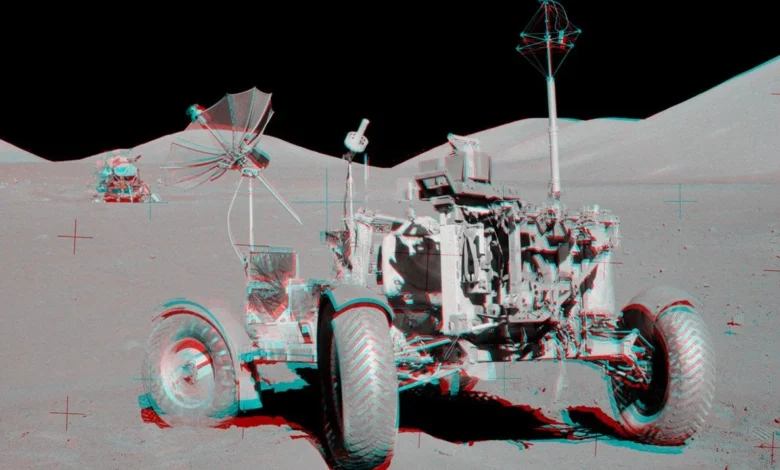
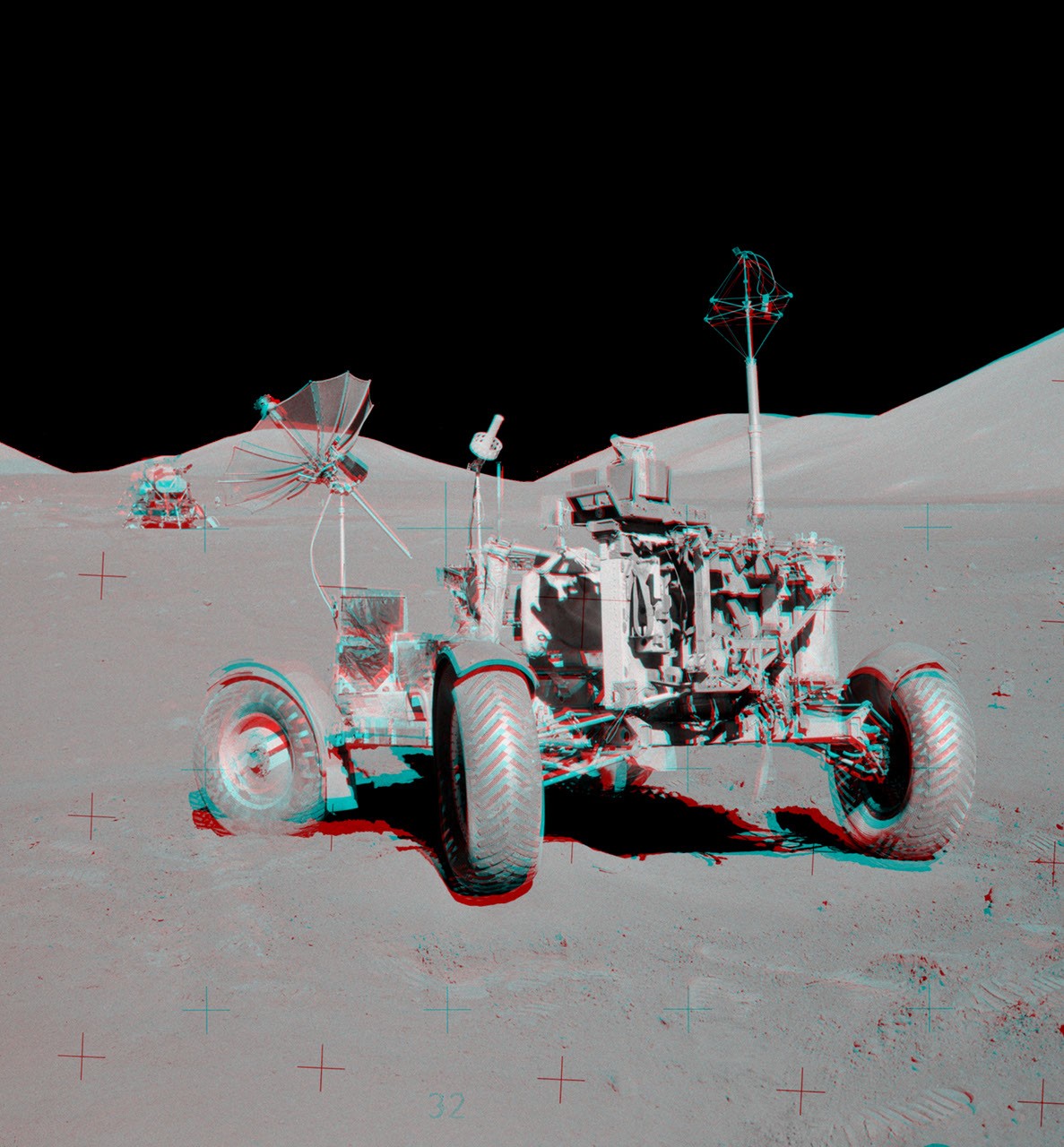
The Apollo 17 mission, which concluded in December 1972, stands as a monumental achievement in human exploration, representing the final time humanity set foot on the lunar surface. Recent high-resolution imagery, presented as a three-dimensional anaglyph, offers a unique perspective on the Taurus-Littrow valley, highlighting the Lunar Roving Vehicle (LRV) parked in what was colloquially known as the "VIP Site." This visual record serves as both a testament to the engineering prowess of the early 1970s and a poignant reminder of the physical footprint left by Eugene Cernan and Harrison Schmitt. By donning red/blue glasses, viewers can perceive the depth of the lunar landscape, seeing the Lunar Module, the rover, and the distant, rugged hills of the Moon’s surface in a way that standard two-dimensional photography cannot replicate.
The Significance of the Taurus-Littrow Valley
The landing site of Apollo 17, the Taurus-Littrow valley, was specifically chosen for its geological diversity. Unlike the vast, smooth maria explored by previous missions, Taurus-Littrow offered a complex mix of highland material and dark volcanic deposits. This site was selected to provide scientists with a more comprehensive understanding of the Moon’s evolutionary history. The valley is situated at the southeastern edge of the Mare Serenitatis, and its steep, mountainous walls provided the crew with a dramatic backdrop that has been immortalized in the mission’s extensive photographic archives.
The presence of the Lunar Roving Vehicle (LRV) in the foreground of this recent anaglyph is particularly significant. The LRV was not merely a convenience; it was a technological breakthrough that exponentially increased the range and efficiency of the astronauts. By allowing for rapid traversal across the lunar regolith, the rover enabled the crew to collect a more diverse array of geological samples than would have been possible on foot.
A Chronology of the Final Lunar Sojourn
The Apollo 17 mission began with a spectacular night launch on December 7, 1972, and concluded on December 19, 1972. The timeline of the surface operations remains one of the most productive periods in the history of space exploration:
- December 11, 1972: The Lunar Module, named "Challenger," touched down in the Taurus-Littrow valley. Commander Eugene Cernan and Lunar Module Pilot Harrison Schmitt began preparations for their surface activities.
- December 12–14, 1972: Over the course of three distinct Extravehicular Activities (EVAs), Cernan and Schmitt logged approximately 75 hours on the surface. During this time, they traveled over 30 kilometers in the LRV.
- December 14, 1972: The ascent stage of the Lunar Module lifted off from the Moon, with the event captured by the television camera mounted on the LRV. This maneuver marked the final departure of humans from the lunar surface.
- December 19, 1972: The command module, with Ronald Evans, Cernan, and Schmitt, splashed down in the Pacific Ocean, successfully concluding the Apollo program.
Supporting Data and Scientific Contributions
The success of Apollo 17 is best measured by the sheer volume of scientific material returned to Earth. The crew brought back 110 kilograms (approximately 243 pounds) of lunar rock and soil samples. This collection remains the largest and most diverse set of samples from any Apollo mission. Analysis of these samples over the past five decades has fundamentally altered our understanding of lunar chronology and the impact history of the inner solar system.
The "VIP Site," where the rover is depicted in the anaglyph, earned its name because it was strategically positioned to capture the ascent of the Lunar Module’s upper stage. NASA engineers ensured the rover was parked at an optimal distance and angle so that the TV camera could transmit the historic liftoff back to Earth in real-time. This provided the global audience with an unprecedented look at the mechanics of lunar departure, solidifying the rover’s role as both a scientific tool and a broadcast platform.
Reflections on the Lunar Rover’s Engineering
The Lunar Roving Vehicle was a masterpiece of specialized engineering, designed to operate in a vacuum with extreme temperature fluctuations. Powered by silver-zinc batteries and featuring four independently steerable wheels, the LRV was capable of speeds up to 13 kilometers per hour. The chassis was constructed from high-strength aluminum alloy, and the tires were made of zinc-coated steel mesh to provide traction on the fine, powdery lunar regolith.
The integration of a TV camera on the rover allowed for remote control from Earth, a feat that required precise coordination between the ground crew in Houston and the astronauts on the surface. The imagery produced by this system continues to be analyzed today, as modern processing techniques allow for the creation of stereoscopic views that reveal nuances of the terrain previously missed by the naked eye.
The Human Element: Cernan and Schmitt
Eugene Cernan and Harrison Schmitt occupy a unique place in history as the last humans to stand on the lunar surface. Harrison Schmitt, a geologist by training, was the first scientist-astronaut to participate in a lunar landing, and his presence on the mission ensured that the field work performed in the Taurus-Littrow valley was of the highest scientific caliber.
In various post-mission interviews and statements, both astronauts emphasized the profound psychological impact of their time in the valley. Cernan, in his final words before lifting off, noted that "we leave as we came and, God willing, as we shall return, with peace and hope for all mankind." These sentiments underscore the duality of the mission: while it was a triumph of engineering and geology, it was also a milestone of human ambition and international diplomacy.
Broader Implications and Future Exploration
The legacy of Apollo 17 is currently experiencing a resurgence in relevance as international space agencies and private companies turn their attention back to the Moon. The Artemis program, which aims to return humans to the lunar surface, draws directly from the lessons learned during the Apollo era.
The data collected at Taurus-Littrow—specifically the mapping of volcanic vents and the identification of highland materials—is being used to identify candidate sites for future lunar bases. The "VIP Site" and the surrounding lunar terrain serve as a benchmark for the endurance of human-made structures in the harsh lunar environment. Observations made by the Lunar Reconnaissance Orbiter (LRO) over the last decade have confirmed that the equipment left behind, including the Lunar Rover, remains remarkably well-preserved, shielded from the corrosive effects of wind and weather that would degrade such objects on Earth.
The Scientific Value of Stereoscopic Imaging
The release of the anaglyph imagery highlights the ongoing value of archival data. By applying modern digital processing to the original 70mm film frames captured by the Apollo 17 crew, researchers are extracting new depth information from decades-old photos. This process demonstrates that the mission’s scientific value is not static; as imaging technology advances, the archive becomes a dynamic resource for future discovery.
For the scientific community, the anaglyph provides a clearer sense of the slopes and depressions in the Taurus-Littrow valley, allowing for a more accurate reconstruction of the astronauts’ traversal routes. This is vital for understanding the context of the samples collected, as the geological setting of a rock is just as important as the rock itself.
Conclusion: A Lasting Legacy
As we look toward the future of space exploration, the images of the Lunar Rover in the Taurus-Littrow valley stand as a reminder of the capabilities demonstrated in 1972. The mission was not an end, but a foundational chapter in a much larger narrative. While the Apollo program concluded shortly after the return of the Apollo 17 crew, the infrastructure, the data, and the spirit of exploration established during those 75 hours on the surface continue to drive the next generation of spaceflight. The sight of the rover, resting silently in the dust of a valley billions of years old, serves as a bridge between the accomplishments of the 20th century and the lunar ambitions of the 21st.
Related posts: