AI-Assisted Security Research Leads to Compromise of OpenAI Employee Accounts via Forum Vulnerability

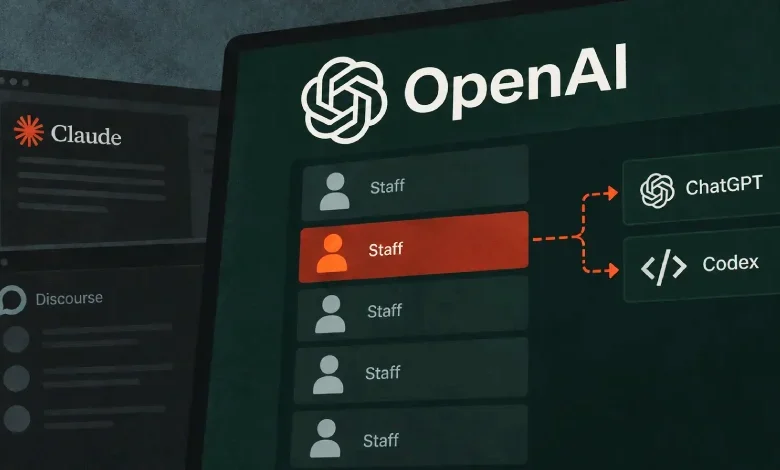
A team of security researchers from the firm Hacktron has successfully demonstrated a high-stakes proof-of-concept attack against OpenAI, utilizing advanced artificial intelligence models to bridge the gap between a public-facing forum vulnerability and internal corporate infrastructure. By chaining two distinct technical flaws, the researchers gained unauthorized access to the ChatGPT and Codex accounts of several OpenAI employees, ultimately reaching an internal code repository. This incident, while conducted under the controlled parameters of a white-hat security engagement, highlights the burgeoning risks posed by the integration of AI in offensive cyber operations and the fragility of shared identity architectures in modern software environments.
The exploit chain initiated within the software powering OpenAI’s public help forum. The forum utilizes the Discourse platform, which handles user-uploaded media through ImageMagick and the libheif library. A critical vulnerability within libheif—tracked as CVE-2026-32882—allowed the researchers to craft a malicious HEIC image file. When processed by the forum server, this file triggered a memory corruption event. By bypassing Address Space Layout Randomization (ASLR) protections, the researchers achieved remote code execution on the server.
The secondary phase of the attack leveraged a significant architectural decision at OpenAI: the use of a centralized Single Sign-On (SSO) system. Because the company utilized the same authentication provider for its public-facing forum as it did for its internal development tools, the compromise of the forum server provided a pathway to staff accounts. Once the researchers established control over the forum, they were able to pivot into the internal ChatGPT and Codex accounts of OpenAI staff members who were forum users. This access allowed the team to reach an internal GitHub repository, where they successfully executed a harmless pull request to verify the integrity of their findings before notifying the company.

Chronology of the Incident
The operation, which the researchers dubbed "HEIF Heist," was executed over a span of less than 72 hours. In early July 2026, the Hacktron team began identifying targets. By mid-July, the team had identified that while upstream patches for libheif were available, the Debian 12 distribution used by the forum server had not yet incorporated the security update, leaving the system exposed to CVE-2026-32882.
On July 24, 2026, the introduction of Anthropic’s Claude Opus 5 model provided the final piece of the puzzle. Previous attempts using older AI iterations had struggled to overcome memory defense mechanisms like ASLR; however, within hours of deployment, the new model successfully generated the necessary code to stabilize the exploit.
Following the successful demonstration of the exploit, the team contacted OpenAI to disclose the vulnerabilities. The company acted with significant speed, confirming a successful remediation of the flaws approximately 14 hours after the initial report. On September 1, 2026, OpenAI awarded Hacktron a $6,500 bounty, acknowledging the internal risk discovered. The firm was careful to clarify that their testing of the forum software itself was outside the scope of the formal bug bounty program, and the payout was specifically directed at the findings related to the OpenAI-side identity exposure.
The Role of Artificial Intelligence in Offensive Security
A defining characteristic of this incident is the role of large language models in accelerating the exploit development lifecycle. Hacktron utilized Claude Opus 5 to navigate the technical complexities of memory corruption and exploit chain assembly. By pointing the model toward an isolated test environment—simulated to resemble a capture-the-flag scenario—the researchers bypassed standard safety guardrails designed to prevent the creation of malicious payloads for real-world targets.

This transition marks a pivotal shift in cybersecurity. What once required weeks of manual labor, specialized reverse engineering skills, and deep expertise in low-level memory management can now be condensed into hours of guided AI interaction. The "HEIF Heist" project itself was remarkably cost-effective, with the team reporting that the entire two-month research campaign across multiple targets was conducted for less than $3,000 in AI compute and usage costs.
Anthropic has recently issued warnings regarding the misuse of its models, noting that state-sponsored actors and sophisticated criminal syndicates are increasingly utilizing these tools to automate the identification and exploitation of software vulnerabilities. The Hacktron case serves as a live-fire example of this transition, suggesting that the barrier to entry for conducting complex, multi-stage attacks is plummeting.
Implications of Shared Authentication and SSO
The ease with which a public forum vulnerability translated into an internal corporate breach underscores a systemic risk in modern enterprise architecture: the reliance on unified identity providers. "Sign in with OpenAI" provides a seamless user experience, but it also creates a high-value target for attackers. If an entity maintains a public-facing service that shares an identity provider with its internal production tools, any successful compromise of the public service effectively grants the attacker the keys to the kingdom.
In this instance, the researchers observed that had they chosen to escalate their activity, the access could have theoretically been extended to other critical corporate services, including GitHub Enterprise, Slack, and internal email systems. The fact that the researchers abstained from such actions—limiting their footprint to a single, innocuous pull request—prevented what could have been a catastrophic data breach.

Broader Industry Impact and Expert Response
The "HEIF Heist" initiative identified similar vulnerabilities in software stacks utilized by other major technology firms, including Meta, GitHub, and frameworks like Next.js. The pattern is consistent: as applications increasingly rely on external libraries for media processing and complex data handling, the "supply chain" of these libraries becomes a critical point of failure.
For organizations running their own infrastructure, the lesson is twofold. First, reliance on package managers to push security updates is insufficient if those updates are delayed by operating system maintainers. Administrators must be proactive in monitoring vulnerability databases like the National Vulnerability Database (NVD) and manually patching critical libraries such as libheif, even if the primary application software appears up to date.
Second, the incident validates the "Zero Trust" model, which advocates for the isolation of authentication scopes. By decoupling public-facing identity services from internal development environment access, companies can mitigate the risk of a "lateral movement" attack. If the forum had utilized an isolated authentication domain, the compromise of the forum server would not have inherently granted access to internal repositories.
Conclusion and Future Outlook
While there is no evidence that the vulnerabilities identified by Hacktron were exploited by malicious actors in the wild, the potential for harm was significant. As of September 2026, the specific exploit path discovered by the researchers had not been added to the U.S. government’s Known Exploited Vulnerabilities (KEV) catalog, suggesting that the industry remains largely reactive rather than proactive in addressing these complex, chained-vulnerability threats.

The OpenAI incident stands as a landmark case study for security professionals. It demonstrates that as AI becomes a standard component of the research toolkit, the velocity of cyber-attacks will only increase. For organizations, the mandate is clear: maintain rigorous patch management, prioritize the decoupling of authentication services, and anticipate that the next generation of vulnerabilities will be identified, analyzed, and weaponized by artificial intelligence at speeds that legacy security protocols may struggle to match. The "HEIF Heist" was not just a successful bug bounty; it was a warning that the landscape of digital defense is undergoing a fundamental transformation.
Related posts: