In an era where the digital landscape has become the primary source of news, entertainment, and social interaction for the majority of the global population, the line between reality and fabrication has blurred to an unprecedented degree. As of late 2026, the internet is no longer a neutral conduit for information; it is a hyper-optimized ecosystem designed to capture attention through speed, engagement, and algorithmic personalization. For the average user, this environment has created a crisis of perception. With over half of Americans now relying on social media as their primary news source, the struggle to distinguish authentic reporting from sophisticated AI-generated deception has become a critical public health and civic concern.
The Erosion of Digital Reality
The sheer volume of synthetic content permeating the web has reached a critical inflection point. Recent data from the Pew Research Center indicates that more than one-third of all new web content is now generated by artificial intelligence. More alarmingly, some industry analysts suggest that "AI slop"—content created by automated systems to inflate traffic or influence sentiment—may now account for over 50 percent of total internet activity.
This shift is exacerbated by the prevalence of bot networks. Estimates vary, but reports from cybersecurity firms like Cloudflare suggest that non-human traffic, including "agentic bots" designed to mimic human browsing behavior, now constitutes 57.4 percent of total internet traffic. Human presence on the web has effectively become the minority, forcing users to navigate a digital space where the feedback loops—likes, shares, and comments—can be artificially inflated to create a false sense of consensus.

A Chronology of the Misinformation Crisis
The journey toward this current state of digital volatility did not happen overnight. The following timeline outlines the evolution of the modern misinformation ecosystem:
- 2016–2018: The Rise of Bot-Driven Political Influence: The initial focus on "fake news" centered on human-run content farms and state-sponsored bot accounts designed to polarize discourse during major global elections.
- 2020–2022: The Infodemic: During the COVID-19 pandemic, the rapid spread of medical misinformation highlighted the deadly consequences of unverified content. Platform moderation efforts struggled to keep pace with the velocity of viral claims.
- 2023–2024: The Generative AI Explosion: The widespread public availability of high-quality image, video, and text generation tools turned the creation of hyper-realistic deepfakes into a trivial task, democratizing the ability to deceive.
- 2025–2026: The Automation Threshold: We have entered the era of the "agentic bot," where autonomous AI agents can actively browse, comment, and generate news-style content without human intervention, leading to the current state of "indistinguishability" between synthetic and human-made information.
The Design of Deception
The technical architecture of modern social media platforms is fundamentally at odds with the need for critical analysis. Marijus Briedis, Chief Technology Officer at NordVPN, notes that platforms are not passive observers. "Feeds are explicitly designed to move you quickly," Briedis explains. "They reward content that triggers immediate, emotional reactions—the exact environment where synthetic, sensationalist content thrives."
This design philosophy includes "infinite scroll" features, autoplay video, and recommendation algorithms that prioritize high-engagement content regardless of its veracity. While regulators in the U.S. and the European Union have begun to challenge these design choices—citing their role in social media addiction and the spread of harmful misinformation—the platforms have been slow to implement structural changes. In many cases, the response from major tech companies has been to reduce human moderation teams in favor of automated systems, a strategy that often fails to capture the nuance of political disinformation or sophisticated deepfakes.
Implications for Media Literacy
The lack of formal media literacy education remains one of the most significant barriers to addressing this crisis. According to data from the National Association for Media Literacy Education, only 12 percent of U.S. schools currently incorporate media literacy into their core curriculum. This educational gap leaves millions of adults and students ill-equipped to verify the sources of the information they consume daily.

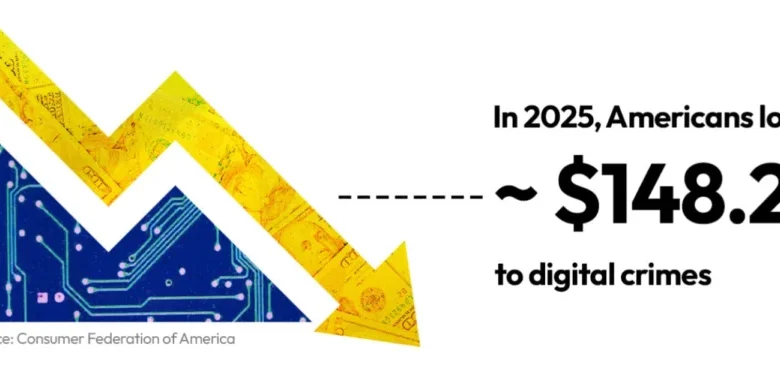
The consequences are not merely academic. Economic losses due to digital fraud reached an estimated $148.2 billion in the United States alone in 2025. These scams increasingly utilize "cutesy" or personable AI agents to build false trust with users, weaponizing the human desire for convenience. As noted by Eyal Elazar, head of market intelligence at Riskified, the modern user’s demand for "frictionless" digital experiences—where chatbots provide instant, consolidated answers—creates a massive vulnerability. By bypassing the need to visit original sources or cross-reference claims, users are essentially handing the keys of their critical thinking to the very algorithms that may be deceiving them.
Strategies for the Modern Consumer
While the challenge is systemic, experts emphasize that individual agency remains a powerful tool. Protecting oneself does not require a background in cybersecurity or advanced technical knowledge; it requires a conscious shift in behavioral habits.
1. The Power of the Pause:
The most effective defense against misinformation is to break the loop of reactive consumption. When a post triggers an intense emotional response—whether it is outrage, fear, or validation—that is the precise moment to stop. "Social media is designed to make you react in a second," says Andrew Jones, co-founder of Adaptive Security. "By simply building a two-minute pause into your routine before sharing or commenting, you disrupt the algorithm’s ability to manipulate your impulses."
2. Cultivating Skepticism, Avoiding Cynicism:
There is a vital distinction between these two mindsets. Skepticism is the active, investigative process of asking questions and verifying claims. Cynicism, by contrast, is the belief that nothing is true, which often leads to a total abandonment of critical evaluation. Chuck Salter, CEO of the News Literacy Project, warns that cynicism is a dangerous trap. "If you believe that everything is fake, you become vulnerable to the most extreme narratives because you stop looking for the truth entirely," Salter notes.

3. Verification through Human Networks:
In an age where digital evidence is easily forged, offline verification becomes more important. If a piece of news seems particularly inflammatory or significant, discuss it with peers or consult trusted, independent, and non-partisan news organizations. Relying on a single chatbot or a social media feed as an all-in-one information source is a primary vulnerability.
4. Contextualizing the Source:
Always evaluate the motivation behind a post. Ask: Why is this account sharing this? Who benefits if I believe this? Is there a clear, verifiable link to an external, reputable source? If the content lacks citations or appears on a platform that does not allow for linking to external fact-checking entities, it should be treated with extreme caution.
The Road Ahead
The "indistinguishability threshold"—the point at which human perception can no longer discern reality from machine-generated falsehoods—is now a reality we must navigate. As Zohaib Ahmed of Resemble.AI points out, the challenge is that once a society loses its shared foundation of truth, the damage is difficult to reverse.
The onus for change lies with both the platforms and the users. While federal and state regulators continue to weigh the legal responsibility of tech companies for the content they amplify, the immediate responsibility falls on the individual. The internet was built for speed, but the future of a functional, informed society depends on our collective ability to slow down, verify, and think critically. In a world of infinite, automated noise, the most revolutionary act is to be a discerning reader.