AWS Announces General Availability of Continuum for Code Vulnerabilities to Streamline Cloud Security and Automated Remediation

Amazon Web Services (AWS) has officially announced the general availability of AWS Continuum for code vulnerabilities, a security service designed to fundamentally change how organizations identify, validate, and remediate application security flaws. In an era where malicious actors leverage advanced artificial intelligence to transform public vulnerability disclosures into active exploit code within minutes, security teams are perpetually overwhelmed by the sheer volume of alerts generated by traditional vulnerability scanners. AWS Continuum aims to bridge this widening gap by moving beyond generic risk scoring, utilizing sophisticated context graphs, isolated sandboxing, and automated pull requests to deliver precise, business-aware fixes.
The Launch and Core Value Proposition
The release of AWS Continuum addresses a long-standing bottleneck in enterprise software development and cybersecurity management. Modern application estates frequently span thousands of microservices, cloud resources, and repositories, producing tens of thousands of raw scanner findings daily. A significant portion of these alerts often represent unreachable code paths, unexploitable conditions, or risks already mitigated by existing runtime configurations. Historically, determining whether a specific finding posed a genuine threat required hours of meticulous manual investigation. Furthermore, deploying a patch safely often demanded days of inter-team coordination across security, infrastructure, and development departments to understand the potential blast radius of the change.

AWS Continuum solves this friction by automating the lifecycle from detection to remediation validation. The service ingests raw findings, confirms exploitability within the target environment, ranks the resulting issues based on actual business impact, and automatically generates proposed patches, dependency upgrades, or configuration adjustments. Crucially, the platform operates under a human-in-the-loop governance model during its initial rollout. Continuum proposes the fix, but a designated engineer must review and approve the pull request before any code modification ships to production. This design ensures that development teams retain absolute control over their codebases while systematically shrinking their security backlogs.
Context-Driven Security: How AWS Continuum Works
At the heart of AWS Continuum is its ability to construct a comprehensive context graph by synthesizing data from two primary sources: connected code repositories—such as GitHub or Amazon S3 buckets—and the active AWS environment where applications run. To ingest infrastructure context, organizations deploy an AWS Continuum collector within the designated AWS account and region. This collector gathers detailed resource metadata via AWS Config and complex network configurations.
By mapping this data, Continuum gains deep visibility into service dependencies, resource ownership, data sensitivity, and network reachability. The service can accurately distinguish between a critical vulnerability isolated to an internal development utility and a medium-severity flaw residing merely one hop away from a sensitive payment processing database or customer data store.

When a scan executes, Continuum evaluates each finding against this multidimensional environment context, assigning a rigorous evidence level. For vulnerabilities that can be safely reproduced, the service runs the exploit inside an isolated sandbox environment, generating concrete proof-of-concept code, step-by-step reproduction data, exact attack paths, and comprehensive blast radius assessments. Rather than supplying a generic severity number, Continuum provides definitive proof of whether an attacker can realistically traverse the network to reach the vulnerable component.
Automated Remediation and Workflow Integration
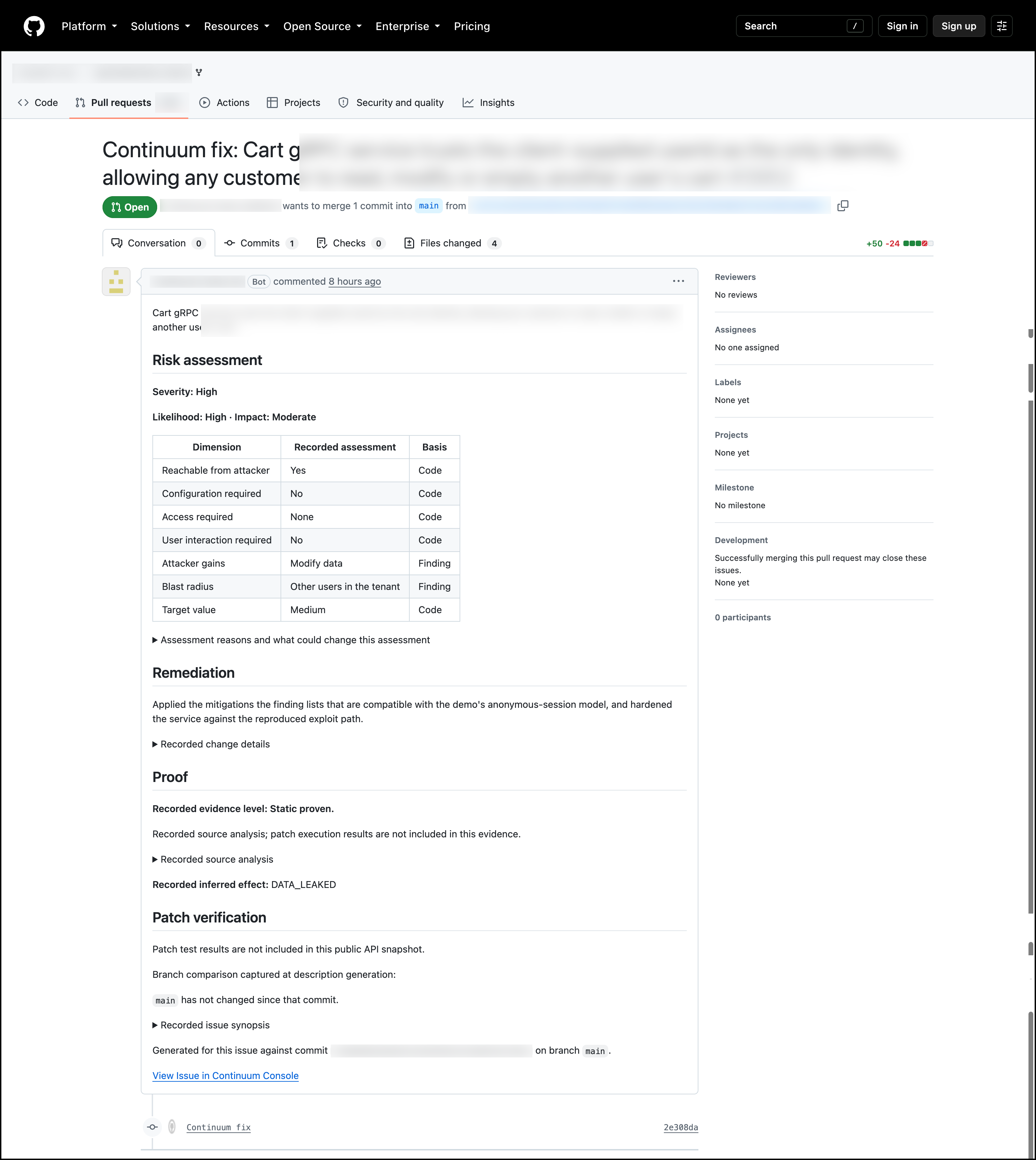
Once a vulnerability is validated and prioritized, AWS Continuum automatically generates an appropriate remediation package. This can manifest as a code patch, a dependency version upgrade, or a specific infrastructure configuration change. The service then opens this proposed solution directly as a pull request within the connected code repository, complete with a detailed description outlining the underlying risk assessment, source analysis, and proof-of-concept validation.
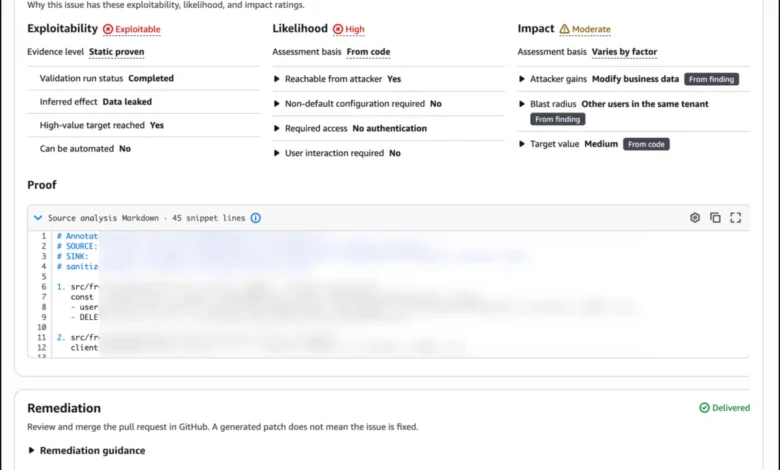
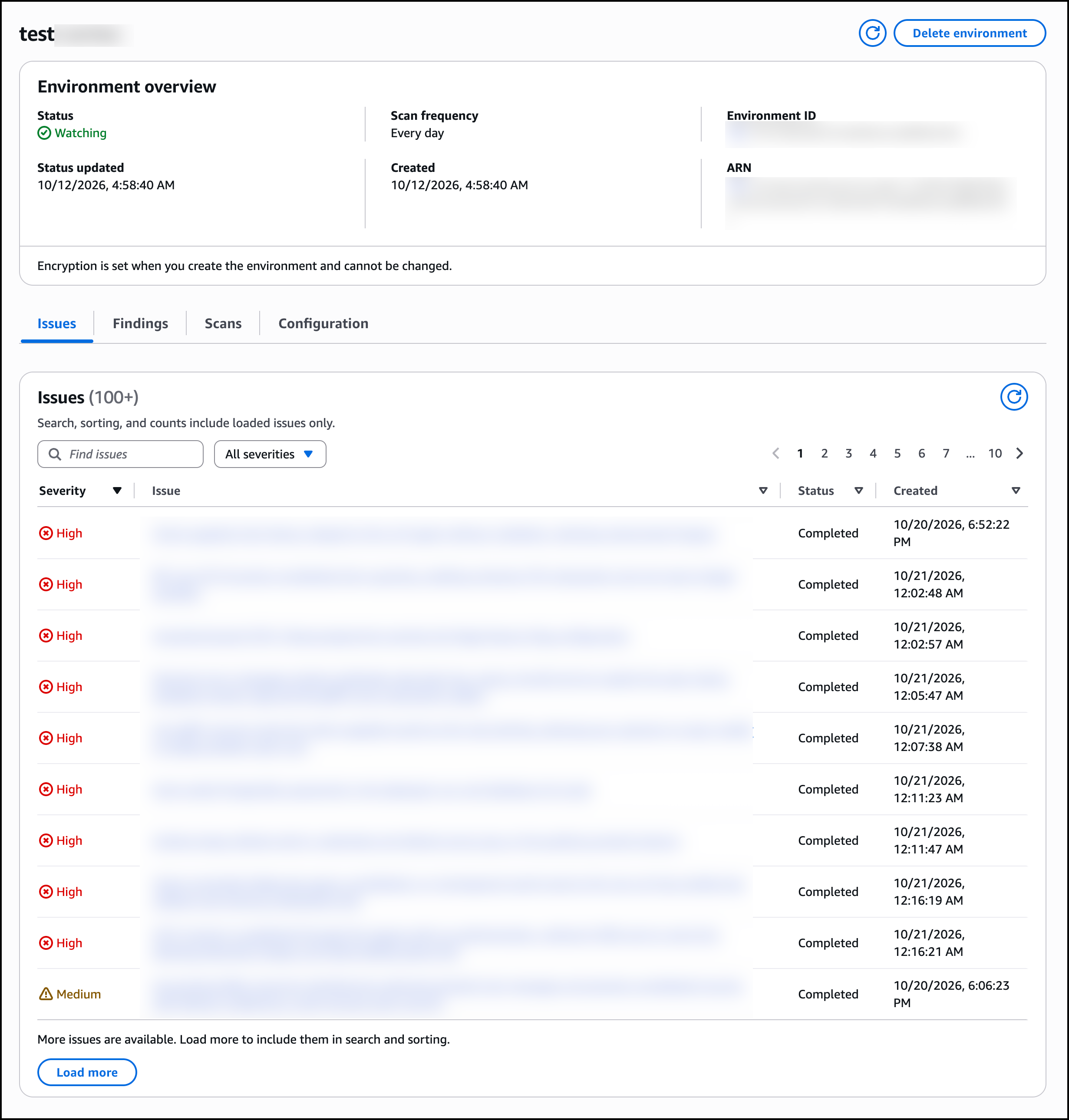
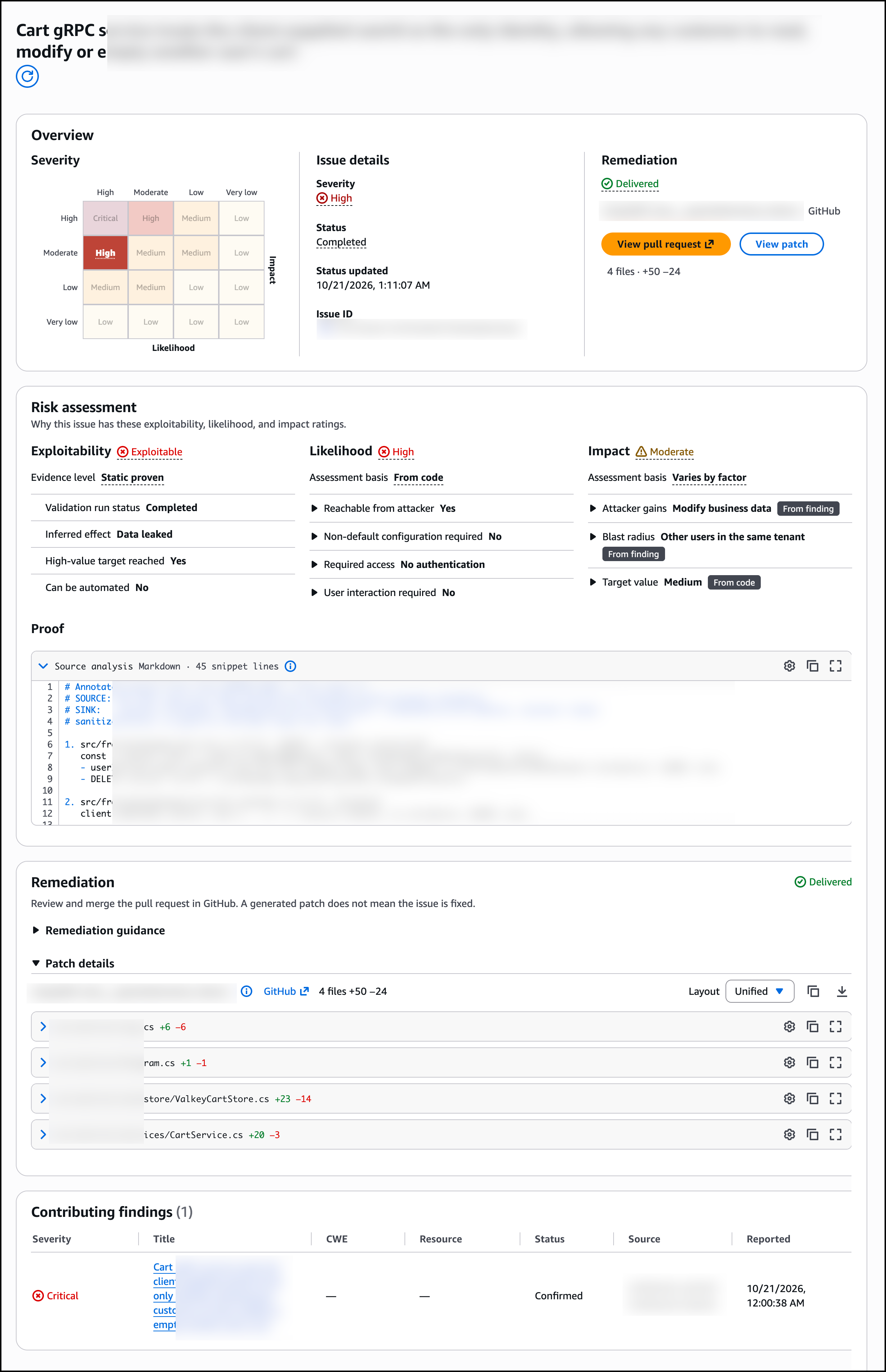
In practice, a security engineer or developer interacting with the AWS Continuum console can review these findings within the Code Vulnerabilities dashboard. The interface categorizes issues by severity, validation status, and creation timestamp. Selecting a specific finding reveals a granular risk breakdown:
- Exploitability rating (e.g., statically proven)
- Likelihood of attack (evaluating authentication requirements and user interaction)
- Potential business impact and blast radius
- Direct links to the generated pull request in GitHub
Reviewers can inspect the exact file modifications—such as lines added and removed across a specific microservice—directly within their standard Git workflow without needing to switch platforms. While the current version mandates human approval for every merge, AWS plans to introduce customizable automation guardrails in the future. Organizations will soon be able to establish confidence thresholds—incorporating metrics such as historical success rates, test coverage, and strict scope bounds—allowing Continuum to autonomously apply verified remediation classes without manual intervention.
Background Context: The Escalating Threat Landscape
The launch of AWS Continuum arrives against a backdrop of rapidly evolving cybersecurity challenges. Cloud-native architectures have accelerated software delivery velocities, but they have simultaneously expanded the enterprise attack surface. In recent years, threat actors have adopted frontier machine learning models to automate the exploitation of newly discovered vulnerabilities. When a Common Vulnerabilities and Exposures (CVE) record is published, automated scanning scripts and AI agents weaponize the flaw faster than traditional patch management cycles can respond.
Simultaneously, "alert fatigue" has become a pervasive crisis within enterprise security operations centers (SOCs). Traditional static application security testing (SAST), software composition analysis (SCA), and dynamic application security testing (DAST) tools frequently inundate engineering teams with false positives and low-context warnings. Because standard scoring systems lack operational context regarding cloud topologies and runtime controls, security personnel often prioritize vulnerabilities based on theoretical severity rather than actual exploitability. This misalignment wastes valuable engineering hours and leaves genuine attack paths unaddressed. AWS Continuum directly targets this systemic inefficiency by shifting the industry standard from raw vulnerability enumeration to verified, context-aware remediation.
Setup, Regional Availability, and Prerequisites
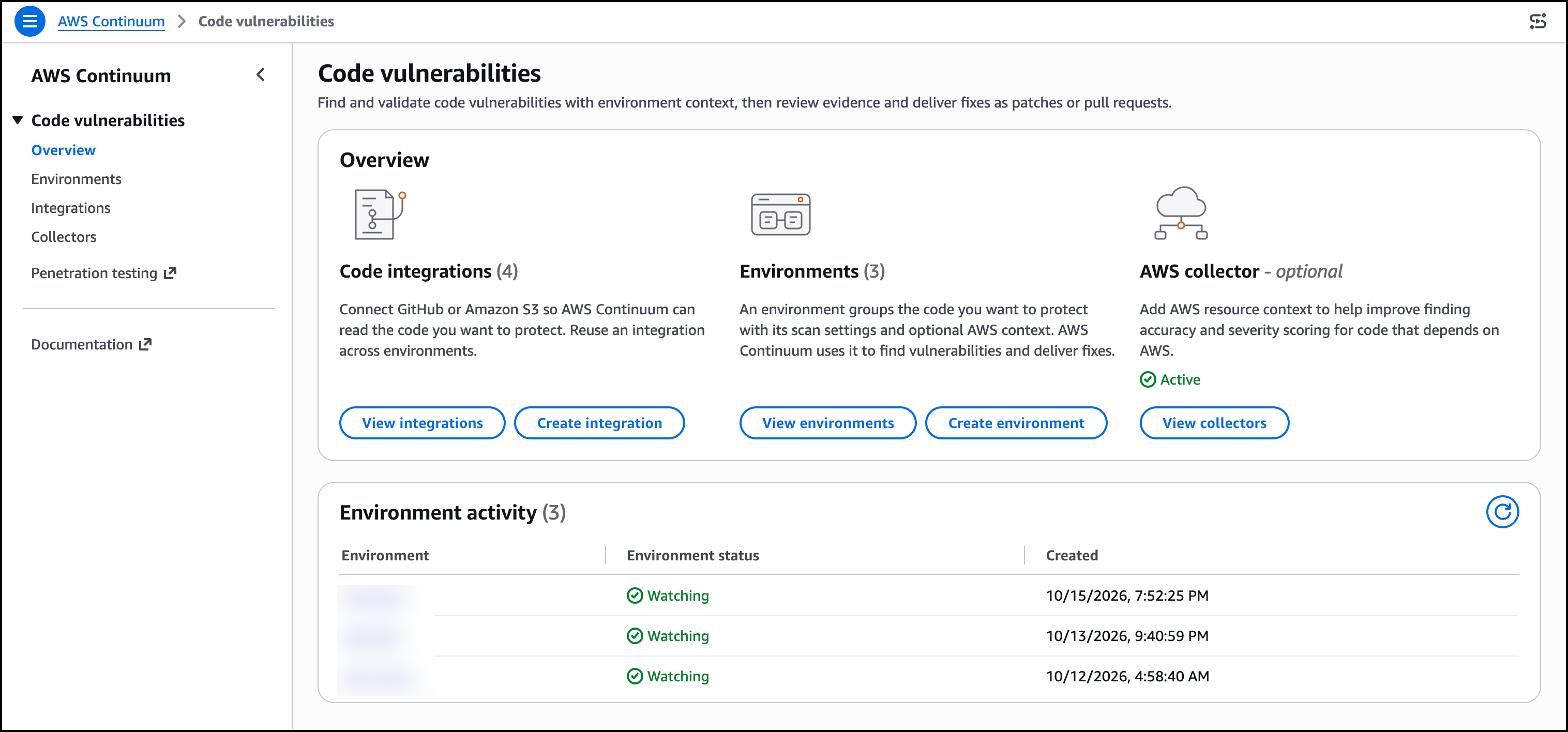
AWS Continuum is designed for seamless integration into existing cloud environments. To initialize the service, administrators navigate to the AWS Continuum console, establish code source integrations via GitHub or Amazon S3, and configure scheduled scanning cadences.
For S3-based code sources, prerequisites require the storage bucket to reside within the exact same AWS account and region where AWS Continuum is enabled, with access granted via an assumed AWS Identity and Access Management (IAM) role. Users can further enrich the analysis by deploying and authorizing an AWS Continuum collector to supply real-time infrastructure context.
At its initial general availability launch, AWS Continuum for code vulnerabilities is available in two key cloud regions:
- US East (N. Virginia)
- US West (Oregon)
Detailed pricing structures, usage tiers, and comprehensive configuration guidelines are documented on the official AWS Continuum product and user guide pages, with ongoing support provided through standard enterprise AWS support channels.
Industry Implications and Future Outlook
The general availability of AWS Continuum marks a significant milestone in the maturation of cloud security posture management (CSPM) and application security orchestration. By unifying code-level visibility with cloud-infrastructure context graphs, AWS is pushing the market toward intelligent, closed-loop security automation.
Industry analysts note that services like Continuum represent the future of defensive cybersecurity. As the complexity of cloud estates and the speed of AI-driven attacks continue to scale exponentially, manual code review and traditional alert triage are no longer sustainable defenses. By automating the labor-intensive phases of vulnerability validation, exploit reproduction, and patch drafting, AWS enables security and development teams to redirect their focus toward architectural resilience and strategic innovation.
Looking ahead, the success of automated remediation services will depend heavily on enterprise adoption of trust frameworks and automated testing guardrails. As organizations grow more comfortable with Continuum’s accuracy through its human-approved workflow phase, the eventual transition toward policy-driven autonomous patching could drastically reduce the mean time to remediate (MTTR) enterprise vulnerabilities. For now, AWS Continuum provides a powerful, context-driven bridge between theoretical threat detection and practical, secure software engineering.