AI Stocks Stage Relief Rally After Global Rout, but Questions Linger Over Market Sustainability


Artificial intelligence stocks staged a tentative comeback on Friday, clawing back a portion of ground lost during a severe market rout that swept swiftly from Wall Street trading floors to major financial hubs across Asia. Despite the green session, the modest recovery does little to resolve the overriding anxiety plaguing investors heading into the weekend: whether this week’s violent sell-off represents a healthy and long-overdue market correction or the early, structural stages of a speculative AI bubble bursting.
The dramatic swings highlighted the extreme volatility currently characterizing the technology sector, driven by a combination of surging valuations, shifting political landscapes, and macroeconomic pressures.
Market Overview and Global Spillover
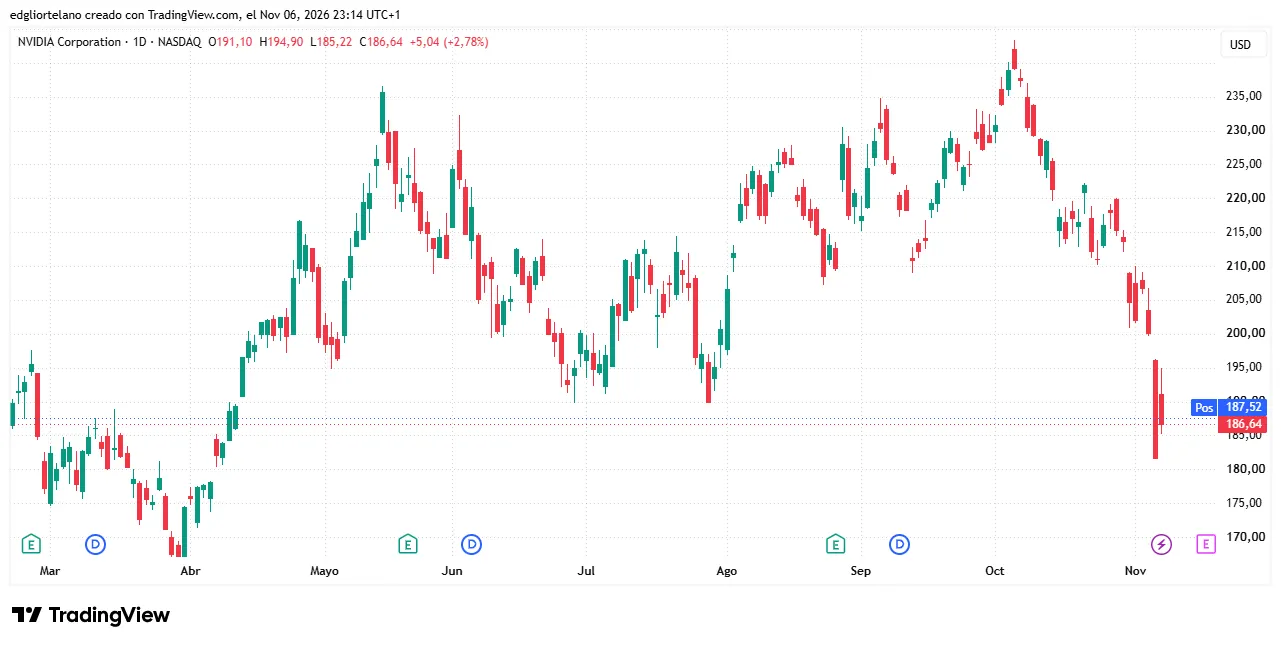
In the United States, major AI-linked equities attempted to stabilize after catastrophic single-day declines earlier in the week. Nvidia shares rebounded 2.78% to close at $186.64, attempting to claw back ground after plunging an alarming 9.3% on Thursday. Similarly, Advanced Micro Devices (AMD) posted a recovery session, moving up to $449.04 following a staggering 17.3% collapse a day prior. Despite these upward movements, both semiconductor giants remain deeply depressed compared to their lofty peaks reached in October, underscoring the limited capacity of a single-day relief rally to repair extensive technical damage.
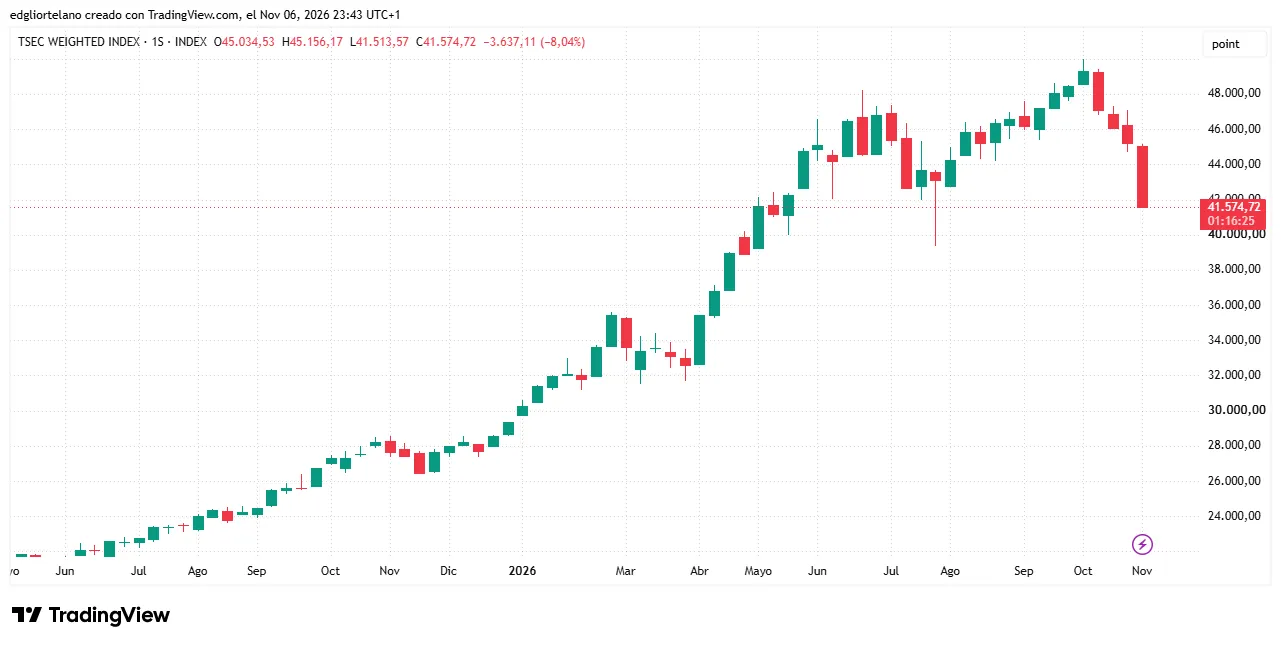
The contagion was not confined to domestic exchanges. International markets faced severe downward pressure, led by massive liquidations in Asian technology bellwethers. South Korea’s benchmark KOSPI index tumbled 6% on Friday alone, while Taiwan’s Taiex index suffered its worst week in months, shedding more than 8% over the five-day trading period. During the height of the panic, semiconductor manufacturing titan TSMC hit its daily limit-down threshold. The downward spiral prompted swift state intervention; according to reports by Reuters, Taiwanese financial regulators and officials instructed state-owned domestic banks to deploy capital to support equity prices and restore order.

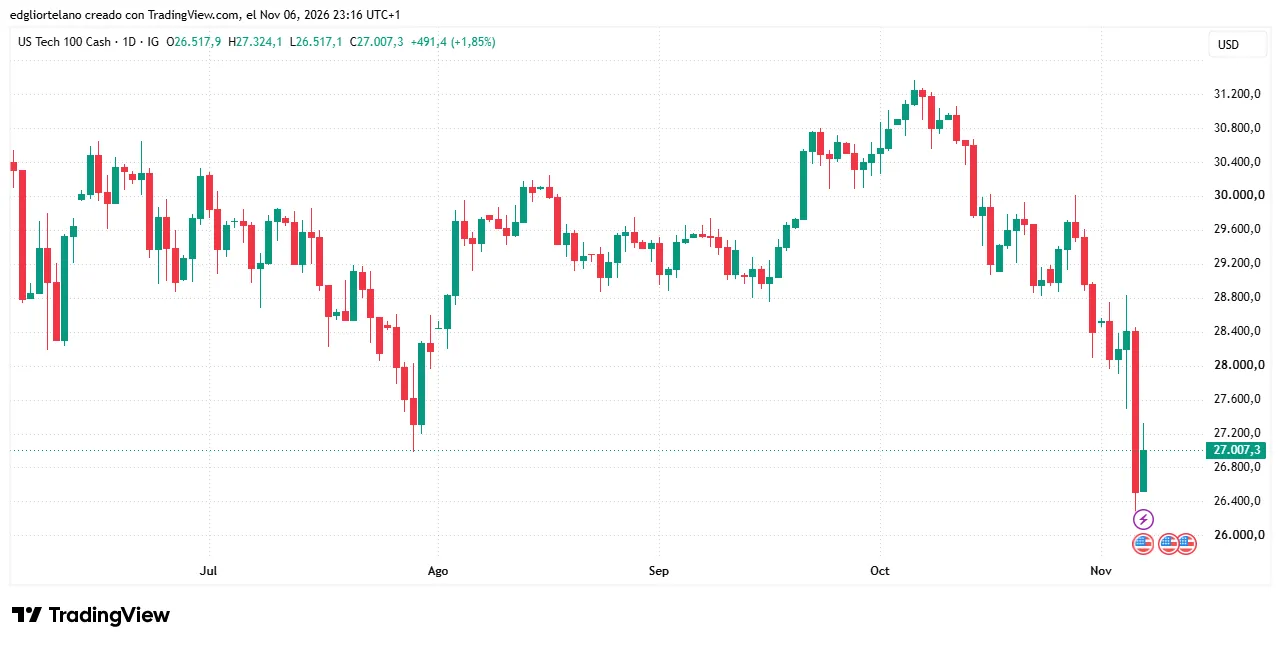
Meanwhile, the US Tech 100 cash-market proxy mirrored the broader semiconductor stabilization, gaining 1.85% to reach 27,007.3. Nevertheless, the index finished the week down more than 5.5%, with daily charts confirming that the Friday bounce was merely a minor technical reaction following a steep descent from October highs rather than a resumption of the previous upward trend.
Catalysts Behind the Unraveling AI Trade
The sudden unraveling of the AI trade was catalyzed by a confluence of political headwinds, infrastructural bottlenecks, and valuation concerns. In the United States, the fallout from recent midterm elections introduced fresh regulatory and infrastructural risks. Voting results revealed a sweeping local backlash against the rapid expansion of energy-intensive data centers. According to an analysis by Ballotpedia, local voters rejected pro-construction measures and favored limiting data center development in 40 out of 41 local ballot contests held on November 3. While some of these local votes were advisory in nature, the political and social message sent to developers was unmistakable.
This localized resistance carries profound implications for the semiconductor industry, where data center buildouts represent the primary engine of corporate revenue growth. Constructing modern artificial intelligence infrastructure requires unprecedented capital expenditures on advanced processors, high-density servers, and immense power and cooling capacities. Any widespread regulatory delays, zoning restrictions, or community pushback threaten to stall hardware orders, disrupt supply chains, and force developers to seek alternative, potentially more costly, geographic locations.
Beyond political friction, fundamental financial pressures were already dampening market sentiment. Technology firms and their enterprise customers have been engaged in an aggressive spending cycle, pouring billions into AI capacity well in advance of clear, measurable returns on investment. This aggressive capital expenditure has coincided with an era of higher borrowing costs, making leveraged expansion increasingly difficult to sustain. Market strategists, including Interactive Brokers Chief Strategist Steve Sosnick, noted that many heavily owned tech equities had already been trading at valuations that were "priced to perfection," leaving virtually zero margin for operational error or slowing growth.
Correction Versus Bubble Bursting: Historical Parallels
As financial losses mounted, analysts scrambled to differentiate between a standard market correction and the collapse of a market bubble. In financial terminology, a correction is defined as a decline of 10% or more from a recent peak, which does not necessarily signal fundamental deterioration in the underlying business operations. For example, if a leading chipmaker trades at a price-to-earnings multiple of 60 based on expectations of explosive long-term growth, a shift in investor sentiment that reduces that multiple to 40 can erase a third of the company’s share price without a single dollar of actual profit disappearing.
Conversely, the bursting of a market bubble is a more systemic and damaging phenomenon, occurring when speculative expectations prove entirely divorced from economic reality and the liquidity supporting the asset class abruptly dries up.
Financial history provides stark warnings regarding technological over-extension. During the dot-com crash of the early 2000s, the Nasdaq composite index plummeted roughly 77% between March 2000 and October 2002. History ultimately vindicated the underlying technology—the internet was far from a transient fad—but investors had dramatically overestimated the speed at which nascent businesses could monetize the innovation. Telecom operators spent billions laying fiber-optic cables for a consumer and corporate base that did not yet exist, culminating in high-profile bankruptcies such as the 2002 collapse of international network builder Global Crossing. While the internet survived, countless investors and over-leveraged corporations did not.
Current market dynamics suggest artificial intelligence may be hurtling toward a similar mismatch between long-term transformative potential and near-term commercial profitability. The current ecosystem is characterized by various arbitrage attempts, ranging from former crypto-mining operations renting out underutilized hardware to a proliferation of cloud-inference startups.
Consider the hypothetical trajectory of an infrastructure firm borrowing billions of dollars to construct a massive data center filled with Nvidia accelerators, banking on the assumption that it can lease out computing power at premium rates for years to come. If enterprise customers ultimately pull back on AI spending, borrowing costs escalate, or construction is delayed, the underlying debt obligations remain fixed and demanding. Under such pressure, the operator may be forced to cancel or scale back chip orders, sending cascading financial shocks through hardware contractors, utility providers planning new electrical capacity, and the institutional lenders holding the debt.
Structural Differences from the Dot-Com Era
Despite these striking parallels, financial analysts emphasize critical structural differences separating today’s AI boom from the dot-com era of 2000. Unlike the speculative, pre-revenue startups that populated the internet bubble, the primary architects of the current AI infrastructure boom—specifically Microsoft, Alphabet, Amazon, and Meta—are highly profitable conglomerates boasting established commercial ecosystems and massive, stable cash flows. These balance sheets provide a substantial cushion, allowing major tech giants to absorb strategic setbacks far more effectively than smaller, specialized AI-cloud providers that rely entirely on continuous debt financing to fund expansion.
Consequently, it remains entirely plausible for artificial intelligence to continue fundamentally transforming global industries while select, over-extended corporate entities fail—and while investors who piled into successful companies at peak valuations suffer substantial losses.
Early Warning Signs in Debt and Credit Markets
As market volatility intensifies, financial warning lights are beginning to flicker outside of equity exchanges. On Friday, Reuters reported that the cost of purchasing credit default swaps to insure against a default by specialized AI-cloud provider CoreWeave climbed above 1,000 basis points. In fixed-income markets, rising insurance costs act as a direct barometer of counterparty risk, signaling that institutional investors are growing increasingly anxious regarding corporate debt repayment capabilities.
Despite localized stress within high-risk AI financing vehicles, broader bond and credit markets have thus far continued to operate with relative normalcy, indicating that current pressures are concentrated within the speculative fringes of the AI supply chain rather than signaling a systemic, economy-wide financial crisis.
Outlook and Upcoming Catalysts
The coming week will subject the artificial intelligence trade to rigorous fundamental testing well beyond the daily fluctuations of stock charts. Upcoming corporate earnings reports and operational updates from CoreWeave, Applied Materials, and Cisco Systems are expected to provide concrete data regarding whether enterprise customers are maintaining their orders for hardware capacity and manufacturing equipment. Simultaneously, forthcoming macroeconomic inflation reports will dictate the trajectory of central bank interest rate policies and overall borrowing costs.
If upcoming data reveals stable order pipelines and manageable corporate leverage, the recent market turbulence will likely be categorized as a temporary, albeit painful, sector correction. However, a pattern of canceled infrastructure projects, failed debt refinancings, and shrinking corporate sales would suggest that the financial foundations supporting the AI boom are beginning to fracture. Ultimately, the central question facing global markets is not whether artificial intelligence holds a revolutionary future, but whether every enterprise wagering billions on that future possesses the financial endurance required to reach it.