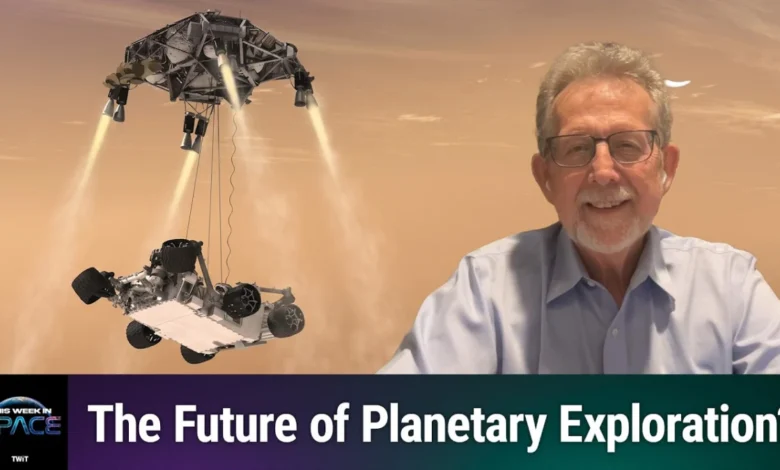
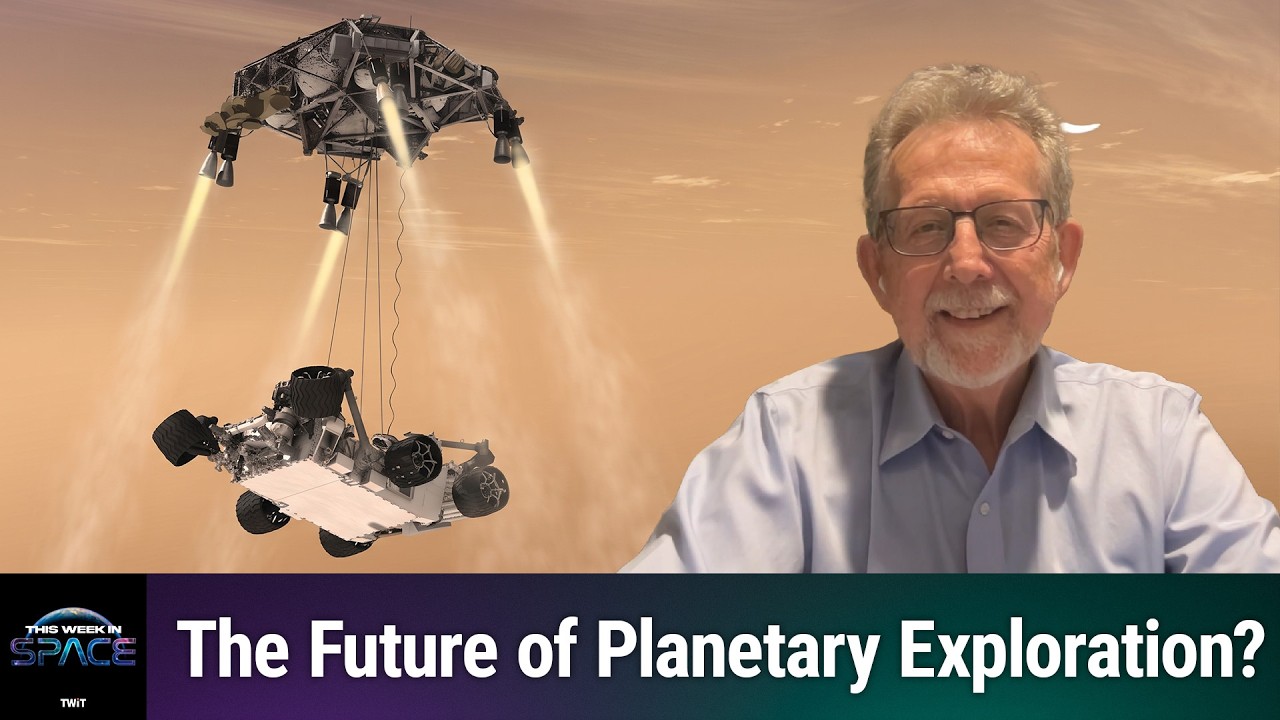
The landscape of planetary exploration has fundamentally shifted over the past several decades, moving away from purely human-led reconnaissance into an era dominated by advanced robotics. On Episode 235 of the popular podcast This Week in Space, hosts Tariq Malik and Rod Pyle welcomed Dr. Jim Green, the former Chief Scientist at NASA, to discuss the past, present, and future of humanity’s robotic emissaries. The conversation offered a comprehensive look at how robotic technology has evolved to withstand the harshest environments in the solar system, paving the way for potential biological discoveries and crewed missions to Mars and beyond.
The Vanguard of Planetary Discovery
For decades, robotic spacecraft, rovers, and orbiters have served as the vanguard of space exploration. Operating in environments that are lethal to human physiology—characterized by extreme temperatures, crushing atmospheric pressures, intense radiation, and zero-gravity vacuums—robots have successfully mapped distant worlds and returned unprecedented volumes of scientific data.
Dr. Green, who spent a distinguished career at NASA overseeing numerous high-profile science programs, emphasized during the broadcast that robotic missions will always be the prerequisite first step into deep space. Before humans ever set foot on a celestial body, autonomous or remotely operated machines must assess the terrain, test local resources, and measure environmental hazards. This calculated approach minimizes risk to human life while maximizing the scientific yield of early exploration.
During his tenure at NASA, Dr. Green championed multiple planetary science initiatives that changed our understanding of the solar system. His optimism regarding the search for extraterrestrial life remains a cornerstone of modern astrobiology. According to Dr. Green, humanity is closer than ever to answering the profound question of whether life exists beyond Earth, driven largely by the sophisticated instrumentation currently operating on Mars and targeting the icy moons of the outer solar system.
A Historical Chronology of Robotic Spacecraft
To understand the current state of planetary robotics, one must examine the rapid evolution of spaceflight technology since the mid-20th century.
- The 1960s and 1970s: The dawn of interplanetary exploration saw humanity send its first rudimentary probes into the cosmos. NASA’s Mariner program successfully conducted the first flybys of Venus and Mars, capturing grainier, black-and-white images that revolutionized planetary science. Concurrently, the Soviet Union’s Venera program achieved the first successful—albeit short-lived—landings on the scorching, high-pressure surface of Venus.
- The 1980s and 1990s: The era transitioned toward long-term orbital observation and complex outer-planet reconnaissance. The Voyager 1 and Voyager 2 spacecraft executed their historic "Grand Tour," utilizing a rare planetary alignment to visit Jupiter, Saturn, Uranus, and Neptune before heading into interstellar space. On Mars, the 1997 landing of the Mars Pathfinder and its tiny companion rover, Sojourner, proved the viability of mobile robotics on foreign soil.
- The 2000s and 2010s: Robotic capability expanded exponentially with the arrival of long-duration Mars rovers such as Spirit, Opportunity, and Curiosity. These mobile laboratories conducted geological surveys, confirmed the historical presence of liquid water on the Martian surface, and tested drill systems designed to unearth subterranean secrets. In the outer solar system, the Cassini-Huygens mission provided breathtaking insights into Saturn and its complex moons, Titan and Enceladus.
- The 2020s: The contemporary landscape is defined by high-precision astrobiology and atmospheric flight. NASA’s Perseverance rover, operating in Jezero Crater, is actively collecting and caching geological samples intended for a future Mars Sample Return mission. Meanwhile, the Ingenuity helicopter demonstrated powered flight on another planet, opening entirely new avenues for aerial reconnaissance in planetary exploration.
Technological Innovations and Data Insights
The success of modern robotic missions relies on a convergence of materials science, artificial intelligence, and deep-space communication technologies. Operating millions of miles away from Earth means that real-time joystick control is impossible due to light-speed communication delays. Consequently, modern planetary rovers and orbiters are engineered with a high degree of autonomy. They possess onboard hazard-avoidance software, intelligent power-management systems, and advanced diagnostic capabilities that allow them to make localized decisions when anomalies arise.
Data from recent decades underscore the economic and scientific efficiency of robotic missions compared to crewed flights. While a crewed mission to Mars requires massive life-support infrastructure, radiation shielding, and return-propellant logistics—estimated to cost tens or hundreds of billions of dollars—robotic explorers can be dispatched at a fraction of the cost while assuming zero human mortality risk.
Furthermore, advancements in sensor technology have allowed robotic payloads to shrink while increasing in sensitivity. Spectrometers, ground-penetrating radar, and microscopic imaging systems can now fit inside chassis smaller than a standard automobile, enabling missions to access previously restricted terrains such as steep crater walls, lava tubes, and subsurface oceans.
Broader Impact and Industry Implications
The insights shared by Dr. Green on This Week in Space highlight a broader paradigm shift within the aerospace sector. The democratization of space exploration—driven by commercial entities like SpaceX alongside traditional space agencies—has accelerated the development of launch infrastructure and hardware availability.
This commercialization extends beyond institutional science and into consumer markets, reflecting the public’s deep fascination with spaceflight engineering. For instance, space enthusiasts and model rocketry hobbyists can now purchase highly detailed, scale-recreation launchable models of heavy-lift vehicles such as the SpaceX Falcon 9. Retail products of this nature serve an educational purpose, inspiring the next generation of engineers, scientists, and astronauts who will eventually design the very robots that explore the darkest corners of the universe.
As space agencies look toward the horizon—planning crewed Artemis lunar bases, human missions to Mars, and robotic dives into the subsurface liquid oceans of Europa and Enceladus—the synergy between human ambition and robotic capability remains vital. Robots will continue to breach the dark and scary frontiers first, gathering the vital intelligence required to ensure humanity’s safe and sustainable expansion into the solar system.
Related posts: