HONOR Magic 9 Pro Max brings professional cinema-grade ARRI imaging to the smartphone flagship market

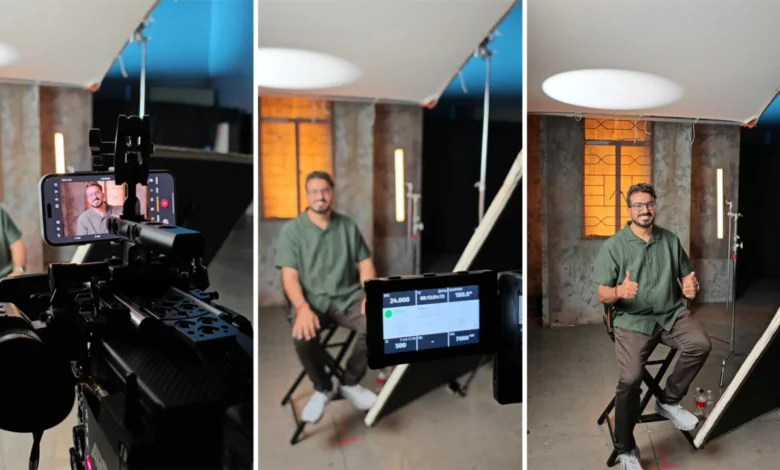
The convergence of professional-grade cinematography and mobile technology has reached a significant milestone with the introduction of the HONOR Magic 9 Pro Max. By establishing a technical partnership with the legendary German camera manufacturer ARRI, HONOR is attempting to bridge the gap between high-end studio equipment and the everyday smartphone. This collaboration is not merely a branding exercise but a deep integration of ARRI’s proprietary image science into a mobile device’s native video pipeline.

The Genesis of the Collaboration
ARRI, founded in 1917, has long been the gold standard for motion picture equipment, with its cameras used in the production of countless Academy Award-winning films. The partnership with HONOR, finalized in late 2026, marks one of the few instances where ARRI’s color science and professional workflow parameters have been adapted for a mobile chipset.
The initiative began with a series of rigorous testing phases at ARRI’s Los Angeles studio. Engineers from both companies sought to replicate the "cinematic look"—defined by specific dynamic range handling, color depth, and highlight roll-off—within the constraints of a smartphone’s sensor array. The resulting feature set, centered around the ARRI CINEMA mode, is designed to offer professional filmmakers and mobile content creators a consistent, high-fidelity capture tool that integrates seamlessly with industry-standard post-production workflows.

Technical Implementation: LogC3 and Color Science
At the core of the Magic 9 Pro Max’s imaging capability is the implementation of ARRI LogC3. Unlike standard consumer video modes that apply aggressive sharpening and saturation in-camera, LogC3 preserves the maximum possible dynamic range by recording in a flat, desaturated profile.
This professional approach utilizes 10-bit color depth and the ARRI Wide Gamut 3 (AWG3) color space. By recording in LogC3, the device captures high-contrast scenes without clipping highlights or losing detail in deep shadows. This data-heavy approach allows editors to perform color grading in professional suites like DaVinci Resolve with a level of latitude previously unavailable in mobile photography.

To assist users who may not be seasoned colorists, HONOR has integrated 14 distinct "ARRI Looks" directly into the viewfinder. These presets, which include two default calibrations and 12 stylized treatments, allow for a real-time preview of the final aesthetic. With a total library of 87 available looks and support for third-party LUTs (Look-Up Tables), the device serves as a portable reference monitor for cinematographers on the go.
Chronology of the Testing Phase
The development of the Magic 9 Pro Max followed a structured testing roadmap:

- Phase 1 (Q1 2026): Theoretical mapping of ARRI’s color science onto the HONOR Imaging Chip H1.
- Phase 2 (Q2 2026): Field testing in controlled studio environments, benchmarking against ARRI’s professional cinema line.
- Phase 3 (Q3 2026): Optimization of the mobile interface to support real-time LogC3 monitoring and 4K 60fps recording.
- Phase 4 (Q4 2026): Final calibration and public unveiling at the ARRI Los Angeles facility.
During the controlled studio tests, researchers compared footage captured by the Magic 9 Pro Max alongside an ARRI cinema camera. Observers noted that while the professional camera maintained superior detail and lens flexibility, the Magic 9 Pro Max achieved a 90–95% parity in terms of color rendition and tonal mapping. This degree of fidelity is unprecedented for a mobile device and signals a shift in how filmmakers may approach "B-roll" or supplemental footage.
The Role of Computational Imaging
The success of this integration relies heavily on the HONOR Imaging Chip H1. While the Snapdragon processor handles general computational tasks, the H1 chip is dedicated specifically to the ISP (Image Signal Processor) pipeline. It manages the complex real-time processing required to apply ARRI-approved color science while maintaining a stable frame rate at 4K resolution. This architecture ensures that the computational overhead does not introduce latency or thermal throttling, which are common issues in mobile video recording.

Field Performance and Limitations
Field testing in challenging environments, such as Yosemite National Park, demonstrated the utility of this system for outdoor videography. The ability to switch between focal lengths—24mm, 35mm, 48mm, and 85mm—allows for a varied visual narrative. However, a notable limitation remains: the absence of LogC3 support for the 12mm ultra-wide lens.
Industry analysts have pointed out that this restriction likely stems from the physical constraints of the smaller ultra-wide sensor, which may not be able to support the high-bandwidth requirements of the LogC3 workflow without significant noise artifacts. While this remains a point of contention for landscape filmmakers, the performance of the primary and telephoto sensors suggests that HONOR is prioritizing high-quality, mid-range shots over broad-angle utility.

Audio and Ecosystem Expansion
Recognizing that visual fidelity is only one half of the filmmaking equation, HONOR has developed a proprietary directional microphone system. Unlike traditional smartphone microphones that rely on omnidirectional capture, this new system utilizes software-based beamforming to isolate sound sources.
However, the lack of native XLR inputs or professional-grade wireless synchronization remains a barrier to full-scale cinematic production. To mitigate this, HONOR has introduced external hardware, including the G500 and G200 teleconverters, which enhance the optical reach of the device. These accessories indicate a broader strategy of turning the smartphone into the hub of a modular camera system.

Implications for the Smartphone Industry
The partnership between HONOR and ARRI reflects a broader trend: the "professionalization" of mobile photography. As hardware improvements hit a plateau in terms of raw megapixel counts, manufacturers are shifting focus toward color science and professional workflows.
- Competitive Landscape: By targeting the "filmmaker" demographic, HONOR is positioning the Magic 9 Pro Max against high-end rivals that have traditionally focused on photography-centric partnerships (e.g., Xiaomi/Leica, OPPO/Hasselblad).
- Market Impact: The adoption of LogC3 could force competitors to standardize their own video profiles, potentially leading to a more uniform, professional-standard video output across the industry.
- Democratization of Tools: For independent creators, the ability to record in a professional-grade format on a device that fits in a pocket significantly lowers the barrier to entry for high-quality storytelling.
Future Outlook and Verdict
The HONOR Magic 9 Pro Max represents a calculated risk. By moving away from the "computational photography" trend—which often results in over-processed, hyper-saturated imagery—and toward a "cinematic workflow" approach, the company is catering to a niche but influential segment of the market.

While the device does not aim to replace the $50,000 cinema cameras found in Hollywood studios, it succeeds in providing a high-quality, flexible, and portable alternative for specific production needs. As the industry awaits the full-scale commercial release, the key questions remain regarding the consistency of the software updates, the durability of the external lens attachments, and whether the average consumer will find value in a workflow as complex as LogC3.
Ultimately, the HONOR Magic 9 Pro Max is a testament to the fact that smartphones are no longer just devices for capturing snapshots; they are evolving into sophisticated tools for serious creative expression. The success of this endeavor will depend on HONOR’s ability to maintain the standard of this partnership in future iterations and whether the mobile community embraces the discipline required to use such advanced tools effectively. For now, the integration of ARRI image science stands as a bold, technologically ambitious effort that sets a new benchmark for mobile video.