Yelp Revolutionizes Conversational AI Through Hybrid Server-Driven UI Architecture

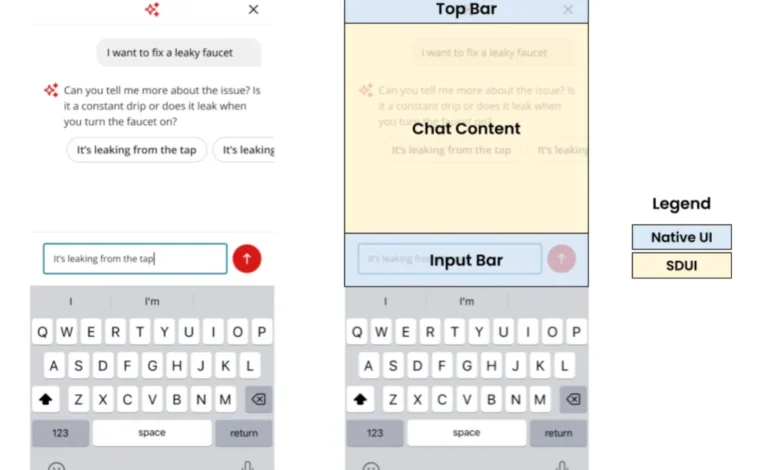
Yelp has officially adopted a sophisticated hybrid user interface architecture for its AI Assistant, marking a significant departure from traditional static mobile development. By integrating native mobile controls with server-driven conversation rendering, the company has effectively decoupled its interface design from the rigid cycle of mobile application store updates. This strategic shift leverages Yelp’s proprietary CHAOS (Content Hosting Architecture with Optimization Strategies) framework, enabling the platform to deploy real-time UI modifications across iOS, Android, and web environments with unprecedented agility.
The Evolution of the Yelp Assistant
The journey of the Yelp Assistant began in 2024 with a focused launch on iOS. Initially designed to streamline the complex process of generating project requests for local service professionals, the tool was intended to bridge the gap between user intent and business fulfillment. By allowing users to articulate their needs—such as plumbing repairs, interior design consultations, or landscaping projects—the assistant sought to minimize the friction often associated with navigating local service marketplaces.
Following its initial success, Yelp expanded the assistant’s scope significantly. The tool evolved from a project-request utility into a comprehensive concierge service capable of answering nuanced queries about business operations, checking availability, and facilitating direct actions such as reservations, service appointments, and food ordering. As the complexity of these interactions grew, the limitations of hard-coded mobile interfaces became apparent. Maintaining consistent user experiences across platforms while iterating on conversational flows necessitated a more flexible architectural foundation.
Architectural Foundations: The Role of CHAOS
At the heart of this transformation lies the CHAOS framework. Originally developed to provide a unified approach to server-driven UI, CHAOS allows the backend to act as the primary architect for the client-side experience. In a traditional app development model, a developer must write code, submit it to the Apple App Store or Google Play Store, and wait for approval and user adoption before a new feature is visible. With a server-driven approach, the server dictates what the client displays and how it interprets user interactions.
However, transitioning to a purely server-driven model for a conversational interface presented unique challenges. Daniel Andrade Groppe, Services Tech Lead at Yelp, noted that the existing CHAOS framework, while robust for display purposes, lacked the granular support required for complex conversational elements like real-time text input fields and asynchronous network request handling. Rather than delaying the product roadmap to rebuild the entire framework from the ground up, the engineering team opted for a pragmatic, hybrid approach. By maintaining navigation and primary text input as native components, Yelp ensured optimal performance and responsiveness, while delegating the rendering of the conversation stream—the core value proposition—to the CHAOS engine.
Chronology and Technical Implementation
The implementation of this hybrid model follows a clear, event-driven architecture designed to minimize latency. When a user initiates a chat session, the client performs an initial fetch of the CHAOS configuration, establishing the baseline parameters for the interface. This setup phase initializes a dataset for message events, which serves as the backbone for the ongoing interaction.
Subsequent updates to the chat window do not require the client to re-fetch the entire configuration. Instead, the backend pushes targeted events to the client. These events are categorized into several functional types:
- Persistent Messages: The core history of the conversation, including both user-generated text and bot-generated responses.
- Dynamic Indicators: Temporary UI elements, such as typing indicators, which provide essential user feedback during asynchronous processing.
- Quick Replies: Interactive buttons that guide users through common workflows, reducing the cognitive load of typing out full queries.
- Action Triggers: Sophisticated commands that allow the backend to modify the UI state in real-time, such as disabling input fields once a task is completed or rendering deep links to relevant business profiles.
This decoupling allows developers to iterate on the "conversation logic" without touching the underlying mobile application binary. For instance, if a team decides to change the way a "food order" summary is displayed, they can update the CHAOS schema on the server. The change is instantly reflected for all users on the next refresh, bypassing the weeks-long delay of a mobile release cycle.
Supporting Data and Industry Context
Yelp is not the only industry player to embrace the server-driven UI (SDUI) paradigm. Airbnb’s "Ghost Platform" remains a seminal example of this approach in the consumer-facing tech space. By leveraging server-defined UI, Airbnb has historically managed to maintain a high degree of feature parity across fragmented device ecosystems. The primary motivation for these companies is the reduction of "technical debt" associated with managing native codebases across multiple platforms.
Industry analysts observe that the move toward SDUI is increasingly common in the era of Generative AI. As AI models become faster and more capable of handling complex reasoning, the UI layer must become equally fluid. A static interface is ill-equipped to handle the unpredictable nature of conversational AI. By treating the UI as a stream of data rather than a collection of static layouts, companies like Yelp can ensure their assistants remain performant.
For Yelp, the integration of CHAOS has resulted in measurable improvements in development velocity. During the development of the "Biz Ask Anything" pilot, the engineering team was able to reuse the Android Assistant infrastructure, significantly reducing the time-to-market for a new product feature. This modularity confirms that the investment in a hybrid architecture provides long-term dividends beyond just the immediate improvement of the assistant.
Addressing Coordination Challenges
The transition to this architecture was not without its hurdles. Yelp engineers have reported that the framework introduced new coordination challenges. Because the system bridges the gap between traditional mobile engineering and backend service design, team members had to develop a cross-functional understanding of both domains. The steep learning curve associated with mastering both the Assistant logic and the CHAOS framework required dedicated time for training and documentation.
Furthermore, ensuring consistent behavior across platforms remains a persistent challenge. Even with a shared framework, native implementations of rendering engines can occasionally diverge due to subtle differences in how iOS and Android handle memory management or event queues. To mitigate this, Yelp has focused on rigorous testing of the CHAOS schemas to ensure that the "contract" between the server and the client remains immutable, regardless of the underlying hardware.

Broader Impact and Future Implications
The implications of Yelp’s architecture extend well beyond the current iteration of the assistant. By establishing a robust, server-driven foundation, Yelp is effectively positioning itself to integrate future advancements in AI, such as voice-to-text, real-time image analysis, or predictive action suggestions, without needing to overhaul the existing mobile application.
This strategy serves as a blueprint for other companies navigating the "Conversational AI" transition. As the distinction between "apps" and "chatbots" continues to blur, the ability to rapidly modify the interface to suit the context of a conversation—whether it be a simple restaurant lookup or a complex home service request—will be a key differentiator in user retention.
Moreover, the success of the hybrid model suggests that the industry is moving away from the "everything is native" philosophy that defined the previous decade of mobile development. Instead, the future appears to favor "smart" hybrid approaches where native performance is preserved for the heavy lifting, while the flexibility of web-style rendering is utilized for the dynamic, content-heavy portions of the user experience.
Looking Ahead
As of late 2026, Yelp’s next-generation Assistant is already being shaped by these architectural decisions. The focus has shifted toward deeper integration between business information and actionable user tasks. By connecting raw data points—such as menu items, operating hours, and service availability—directly to conversational triggers, Yelp is creating a more cohesive ecosystem.
The engineering team remains committed to the principle that the UI should be as adaptive as the AI powering it. As the company continues to refine the CHAOS framework and expand the capabilities of the Assistant, the technical lessons learned throughout this process will likely influence future product iterations. The shift is not merely a change in code, but a fundamental change in how Yelp views the relationship between its platform, its business partners, and its users. The hybrid UI architecture stands as a testament to the importance of balancing performance with adaptability in an increasingly dynamic digital marketplace.