WordPress sites remain vulnerable to exploitation during the update process for a critical security flaw

The cybersecurity landscape has been disrupted by a significant discovery regarding the update mechanism of WordPress, the world’s most popular content management system. Researchers have identified that while WordPress has released patches to address a critical vulnerability—tracked as CVE-2026-119977—the very process of applying these security updates can, under specific conditions, leave a website exposed to remote code execution (RCE). This paradoxical situation, where the remediation itself creates a window of opportunity for attackers, has prompted an urgent advisory from security experts and the U.S. Cybersecurity and Infrastructure Security Agency (CISA).
Understanding the Mechanics of CVE-2026-119977
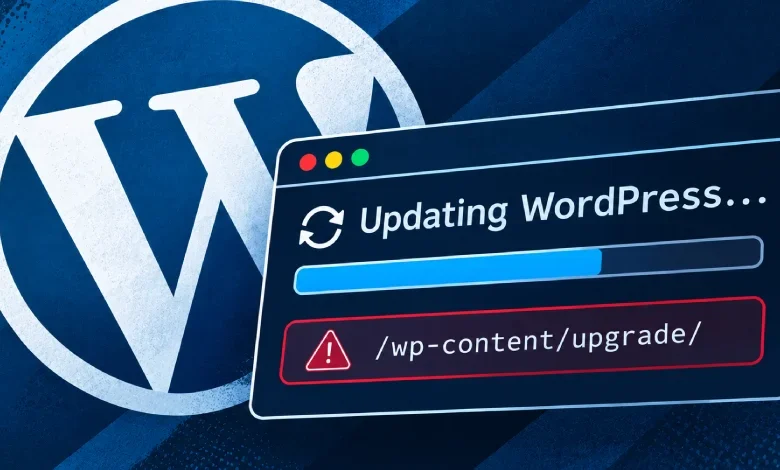
The vulnerability exists within the way WordPress handles core updates. When a site initiates an update, the platform downloads a compressed package of the new version and unpacks it into a temporary directory, typically located within the wp-content/upgrade folder. Under normal circumstances, this is a routine administrative task. However, researchers at Picus Security, led by Umut Bayram, discovered that for versions 4.7 through 7.1.3, this temporary directory could be accessed by unauthorized parties.
Because the web server is configured to serve files from the root directory, the contents of the wp-content/upgrade folder are often reachable via a web browser if an attacker can guess the folder’s name. In older, unpatched versions of the platform, these folder names were predictable, often derived directly from the filename of the downloaded update package. If an attacker identifies the directory, they can interact with the installer files contained within it before the update process completes and the temporary files are purged. By manipulating this environment—specifically by injecting a malicious wp-config.php file—an attacker can gain unauthorized access, execute arbitrary PHP code, and effectively take control of the server hosting the WordPress site.
The Paradox of the Patch
The security community’s primary concern stems from the fact that the update mechanism relies on existing code to perform the installation. When a site administrator clicks "Update," the site uses its current, vulnerable codebase to unpack the new, secure version. Consequently, the flaw is still active during the initial stages of the patch installation.
While WordPress version 7.1.4 introduces a fix by assigning randomized, unpredictable names to the temporary wp-content/upgrade directory, the transition period remains dangerous. On sites running versions 5.9 and later, the legacy updater code still uses the predictable naming convention for that final, crucial update to version 7.1.4. This means that at the exact moment a site attempts to secure itself, it may inadvertently broadcast the location of the installer to any actor monitoring for such activity.

Chronology of the Exploitation
The timeline surrounding this discovery highlights the speed at which modern threat actors capitalize on disclosed vulnerabilities.
- Pre-Disclosure Period: The vulnerability existed in the WordPress codebase for years, potentially dating back to version 2.7, released in 2008.
- Discovery and Disclosure: Following the identification of the flaw, WordPress released version 7.1.4 and corresponding backported patches for older versions.
- Immediate Exploitation: Within nine minutes of the public release of the patch and the associated security advisory, security firm Wordfence observed a surge in automated attack attempts. These attempts were not random; they were targeted, systematic probes designed to catch the "race condition" created during the update process.
- Ongoing Threat: Throughout the days following the release, malicious actors continued to scan for sites in the middle of the update cycle, confirming that the threat is not merely theoretical but a persistent, active campaign.
Data-Driven Risk Assessment
The severity of this issue is reflected in its CVSS (Common Vulnerability Scoring System) rating of 8.1 out of 10, categorizing it as a high-severity vulnerability. While WordPress’s internal advisory originally classified the risk as low, the external security community and CISA have taken a more aggressive stance, citing the ease of exploitability and the potential for full site compromise.
The scale of the threat is magnified by the ubiquity of WordPress, which powers over 40% of the web. Even if the window of vulnerability lasts only a few seconds during the file-unzipping phase, the automated nature of modern botnets means that thousands of sites can be probed simultaneously. Security analysts have noted that the "hit rate" for these attacks is bolstered by the prevalence of automated update scripts and the lack of hardened server configurations among small-to-medium enterprise users.
Strategic Defensive Measures
In light of these findings, security professionals are urging administrators to move beyond standard update procedures to ensure their infrastructure remains secure during the transition.
- Restrict Web Access: The most effective mitigation strategy is to configure the web server (e.g., Apache or Nginx) to explicitly deny public access to the
wp-content/upgradedirectory. This folder is only required by the WordPress process itself and does not need to be served to the public. By blocking this directory, administrators effectively close the door on any attacker attempting to reach the installer, regardless of whether the folder name is predictable. - Manual Updates Outside the Web Root: For high-security environments, the recommended approach is to perform updates manually. This involves downloading the update package, extracting it in a directory that is not served by the web server (outside the public
htmlorwwwfolder), and manually copying the necessary core files into the production directory. By bypassing the automated web-based updater, the installer is never created in a location accessible to external threats. - Environment Hardening: Administrators should ensure that file permissions are set correctly, preventing the web server process from having unnecessary write access to critical configuration files like
wp-config.php.
Broader Implications for Web Security
This incident serves as a significant case study in the "supply chain" of software maintenance. It highlights that the process of security remediation is not immune to the same risks as the software it aims to protect. The complexity of legacy codebases—where functionality written in 2008 must coexist with modern security standards—creates technical debt that is often difficult to reconcile.
Furthermore, the involvement of CISA in tracking this vulnerability underscores the importance of the WordPress ecosystem to global digital infrastructure. When a fundamental component of the web’s backbone is compromised, the impact is systemic. Organizations must recognize that "patching" is not a singular event, but a procedure that requires environmental awareness.

Expert Analysis and Future Outlook
The industry reaction to CVE-2026-119977 has been one of tempered concern. While the vulnerability is undoubtedly serious, it is also highly situational. It requires an attacker to possess both the capability to monitor for an update and the technical expertise to execute code within a very narrow timeframe.
However, the rise of "exploit-as-a-service" models means that these technical barriers are becoming increasingly low. Publicly available exploit code, which has already appeared on platforms like GitHub, lowers the barrier to entry for novice hackers. Consequently, the defense must be proactive.
As WordPress moves forward, the maintainers face the challenge of modernizing the core update engine to ensure that even the process of fixing the software is inherently secure. For now, the onus remains on the site administrator to implement "defense-in-depth" strategies. By securing the server environment before initiating an update, administrators can ensure that their commitment to security does not inadvertently provide the key to their own systems.
In conclusion, while WordPress 7.1.4 effectively closes the primary vulnerability, the technical nuances of the update process dictate that administrators must remain vigilant. The transition from vulnerable to patched is a critical period that requires foresight, server-level access controls, and an understanding of the underlying architecture of the CMS. As cyber threats continue to evolve in sophistication, the lessons learned from this incident—particularly regarding the security of the update lifecycle—will likely influence how content management systems approach future architectural updates.
Related posts: