The Forgotten Rail-Launch Experiment: Inside the Rise and Fall of the U.S. Air Force’s Super Strypi Rocket

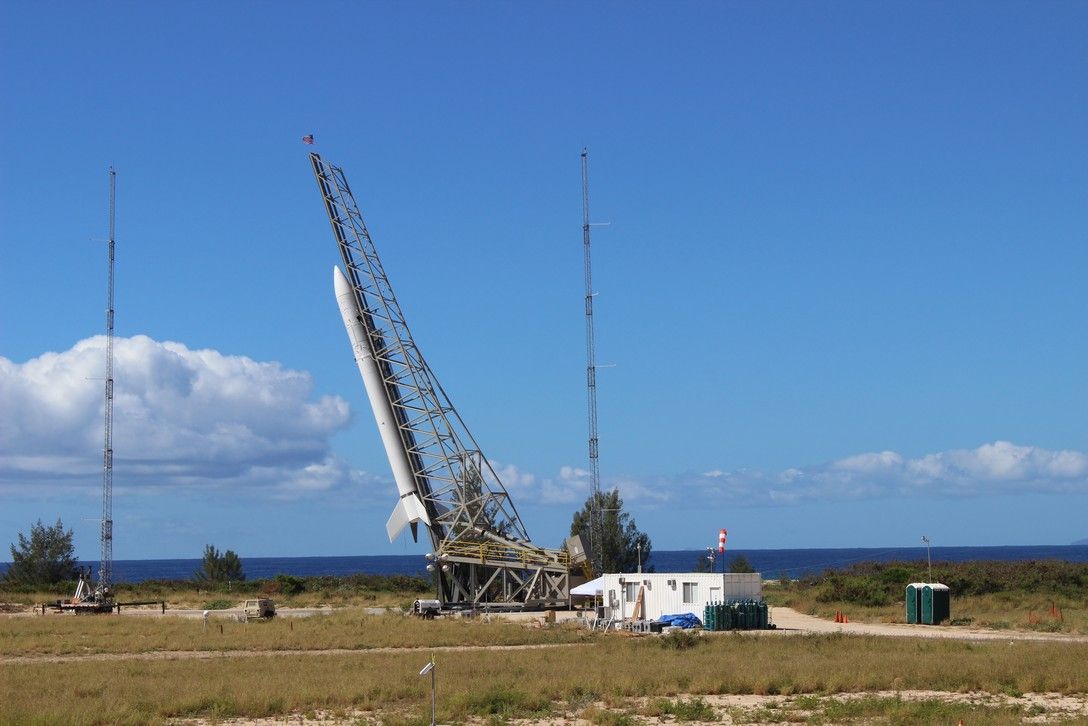
The night sky above Kauai, Hawaii, illuminated sharply just before 10:00 p.m. local time on November 3, 2015, as the U.S. Air Force attempted a novel approach to space exploration. Lifting off from the Pacific Missile Range Facility at Barking Sands, an experimental, rail-launched rocket designated the Super Strypi roared upward, carrying high hopes for a revolution in low-cost, rapid-response national security launches. However, the flight lasted less than a minute. Plagued by an abrupt and catastrophic loss of control, the vehicle spun wildly off its trajectory before crashing into the Pacific Ocean, instantly vaporizing a decade of planning, millions of dollars, and an entire fleet of cutting-edge micro-satellites.
The catastrophic failure of the Super Strypi—officially known as the Operationally Responsive Space 4 (ORS-4) mission—did more than just ruin a single night of testing in the Hawaiian archipelago. It marked the definitive end of an ambitious effort to adapt Cold War-era sounding rocket technology for the 21st-century small-satellite revolution. In the years since the accident, neither the Air Force nor its successor branch, the U.S. Space Force, has revisited the concept. Instead, the military has pivoted aggressively toward commercial aerospace partnerships to achieve rapid-response orbital access, proving that while the government’s need for fast deployment remains paramount, the methods of achieving it have radically evolved.
A 21st-Century Spin on Cold War Heritage
To understand the ambition behind the Super Strypi, one must look back at the history of the sounding rockets from which it was derived. The original Strypi family of rockets was developed in the early 1960s as a reliable, three-stage, spin-stabilized vehicle primarily utilized for suborbital test flights, atmospheric research, and anti-missile target tracking. These rockets were characterized by their simplicity and ruggedness, often relying on solid-fuel rocket motors and unguided aerodynamic stabilization.
Decades later, the U.S. Air Force recognized a growing strategic necessity: the ability to launch small payloads into orbit on short notice without relying on massive, expensive, and logistically complex heavy-lift vehicles. Enter the Super Strypi, an ambitious attempt to scale up the classic design into a true orbital launch vehicle. Developed under the direction of the Operationally Responsive Space (ORS) office, the rocket was engineered to deliver payloads weighing up to 300 kilograms (660 pounds) into low Earth orbit for an astonishingly low target cost of roughly $15 million per flight.
The engineering was uniquely unconventional for modern orbital rockets. Rather than lifting off vertically from a traditional launch pad using complex hold-down clamps and umbilical towers, the Super Strypi utilized an inclined rail system at Barking Sands. This rail guided the rocket during the initial moments of liftoff, imparting a rapid spin-stabilization mechanism designed to keep the vehicle on a stable trajectory through the atmosphere—a technique borrowed directly from its suborbital predecessors.
The Payload: A Diverse Manifest of Innovation
The stakes for the ORS-4 flight were exceptionally high because of the diverse and significant cargo packed into the vehicle’s fairing. Atop the three-stage Aerojet Rocketdyne solid-motor stack sat a primary payload alongside a dozen secondary hitchhikers, representing a collaborative milestone between the Department of Defense, NASA, and academic institutions.
The primary passenger was the ORS-4 satellite, affectionately nicknamed HiakaSat by the engineering team at the University of Hawaii who built it for the Air Force. HiakaSat was an advanced Earth-observation spacecraft designed to capture high-resolution imagery and monitor environmental phenomena over a planned one-year operational lifespan. It was intended to prove that universities and regional institutions could directly contribute to national security and scientific space assets using low-cost architectures.
Accompanying HiakaSat were 12 additional micro-satellites, predominantly comprising cubesats—standardized, modular miniature satellites that have since revolutionized access to space due to their affordability and mass-production potential. Among these were eight cubesats built for NASA’s Edison Demonstration of Smallsat Networks (EDSN) mission. The EDSN initiative was designed to demonstrate the feasibility of operating a coordinated swarm of spacecraft in low Earth orbit to gather distributed scientific data simultaneously. The remaining four secondary payloads were developed by various universities, offering students and researchers rare opportunities to test hardware in the harsh environment of space.
The Fatal Flight: A Chronology of Failure
The countdown and initial liftoff on November 3, 2015, proceeded smoothly, generating immense optimism among the engineers, military personnel, and contractors gathered at the Pacific Missile Range Facility. At approximately 9:45 p.m. local time, the Aerojet Rocketdyne solid rocket motors ignited, sending the Super Strypi surging up and away from its launch rail.
For the first few seconds, the flight appeared normal. However, telemetry and visual data soon revealed a terrifying divergence from the flight plan. Less than 60 seconds into the flight, while still ascending through the lower atmosphere, the rocket began to exhibit erratic yaw and pitch oscillations. Within moments, the vehicle completely lost stability, spinning out of control under the immense aerodynamic and propulsive stresses.
Safety officers monitoring the flight termination systems watched as the vehicle’s structural integrity was compromised. The rocket broke apart in mid-air before plunging into the ocean waters off the coast of Kauai. Search and recovery teams later confirmed a total loss of the vehicle and its entire payload manifest. HiakaSat, the EDSN cubesats, and the university experiments were instantly destroyed, leaving a crater of disappointment across the participating institutions.
Post-Accident Investigations and the Search for Root Causes
In the wake of the disaster, a thorough mishap investigation board was convened to determine what went wrong with a system that had undergone rigorous pre-flight testing. While the complete, unclassified findings pointed to several contributing factors, preliminary data strongly indicated an anomaly within the rocket’s massive first-stage solid rocket motor.
Solid rocket motors are notoriously unforgiving; once ignited, they cannot be easily throttled or shut down. If an internal burn irregularity occurs, or if the thrust vector misaligns due to casing stress or propellant fracture, the vehicle can rapidly destabilize. Compounded by the unique spin-stabilized dynamics of the rail-launch architecture, any early mechanical or aerodynamic perturbation would be amplified exponentially.
The failure exposed the inherent risks of attempting to resurrect legacy architectures for modern orbital mechanics. While the concept of using cheap, solid-fuel motors to lower the barrier to space entry was economically attractive, the engineering margins proved too narrow for the complex demands of orbital insertion.
Broader Impacts on Military Launch Strategy

The immediate fallout of the Super Strypi failure extended far beyond the immediate loss of hardware; it effectively terminated the program. Facing budget constraints, shifting strategic priorities, and the availability of alternative technologies, neither the Air Force nor the newly established U.S. Space Force allocated additional funding to revive or redesign the Super Strypi rocket. The program was quietly shelved, serving as a cautionary tale of the high risks inherent in experimental launch vehicle development.
However, the military’s underlying requirement for rapid-response, responsive space capabilities did not vanish with the rocket. If anything, geopolitical tensions and the proliferation of anti-satellite technologies in the years following 2015 have only heightened the Pentagon’s need for resilient, flexible orbital access.
Rather than developing government-owned rockets from scratch, the U.S. military pivoted decisively toward commercial partnerships. Recognizing the explosive growth of the private commercial space sector—driven by nimble startups capable of rapid iteration—the Department of Defense began outsourcing its responsive launch needs to private enterprise.
A Paradigm Shift: Speed Records in the Commercial Era
This strategic pivot has yielded remarkable results that starkly contrast with the fate of the Super Strypi. Instead of spending years developing specialized military-only launchers, the U.S. Space Force now leverages commercial launch providers who can deliver payloads to orbit on a moment’s notice using established, flight-proven vehicles.
A prime example of this modern philosophy occurred in June of this year, when the U.S. Space Force teamed up with commercial launch provider Rocket Lab to execute the Victus Haze mission. In a stunning demonstration of responsive capability, the mission was initiated with less than 17 hours of notice—setting a historic new benchmark for short-turnaround launch readiness. This capability would have been unimaginable during the era of the Super Strypi, where launch campaigns required months of meticulous preparation, weather delays, and rail-alignment procedures.
Reflecting on the Super Strypi Era
As the aerospace industry continues to push the boundaries of frequency, reusability, and cost-efficiency, the 2015 Super Strypi failure remains a significant historical waypoint. It underscores the delicate balance between innovation and reliability in aerospace engineering.
The mission’s failure demonstrated that while the allure of cheap, simple, retro-fitted rocketry is strong, the harsh realities of physics demand uncompromising precision. The loss of HiakaSat and the NASA cubesats was a profound setback for the academic and institutional teams who invested years of labor into their creation. Yet, out of that ashes of the Barking Sands launch pad emerged a more pragmatic and resilient military-industrial strategy. By relinquishing the burden of proprietary rocket development and embracing the commercial space market, the United States has successfully transformed rapid-response space access from an experimental gamble into an operational reality.