The Great Consensus Cleanup: Why Bitcoin Developers Are Eyeing BIP-54 for the Network’s Next Major Upgrade

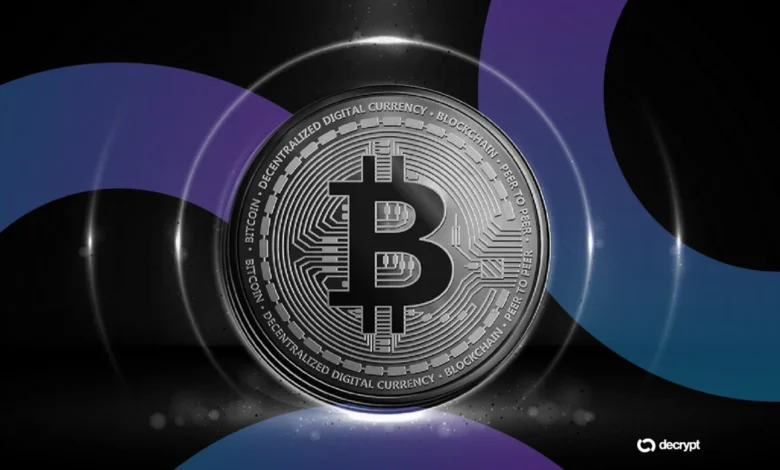
The Bitcoin development ecosystem is increasingly shifting its focus away from speculative future-proofing toward the immediate, practical necessity of network hygiene. While long-term existential threats like quantum computing resistance routinely capture mainstream headlines and command considerable academic research, core developers and network engineers are converging on a much more pragmatic reality. According to prominent contributors, Bitcoin’s next soft fork is highly likely to be a sweeping maintenance update designed to eradicate long-standing technical debt, correct historical design oversights, and patch minor vulnerabilities that have lingered within the network’s consensus rules for years.
This prospective upgrade is formally known as the Great Consensus Cleanup, cataloged across the development community as Bitcoin Improvement Proposal 54 (BIP-54). First proposed in 2019, BIP-54 aims to address the accumulated "cruft"—inefficiencies, edge cases, and minor architectural flaws—embedded deep within Bitcoin’s foundational source code. Despite widespread technical agreement regarding the existence of these vulnerabilities, proposed fixes have historically been sidelined or placed on the back burner as the community grappled with more contentious, feature-laden protocol upgrades. However, as the network matures and debates over protocol ossification reach a fever pitch, developers argue that clearing out this technical debt is no longer optional.
Unpacking the Technical Debt: What BIP-54 Seeks to Resolve
At its heart, BIP-54 targets a laundry list of known code anomalies that, while not representing immediate catastrophic risks to the network, nevertheless introduce friction, operational inefficiencies, and potential vector vulnerabilities. Veteran Bitcoin developer and BIP-54 co-author Matt Corallo recently emphasized the pressing nature of these flaws during an appearance on MARA Foundation TV.
"There’s a laundry list of things we know of that we really need to clean up," Corallo stated during his discussion with MARA Foundation Head Isabel Foxen Duke. "All of these issues are real concerns that could impact Bitcoin negatively, but they’re not like, ‘Oh, the sky is falling.’"
Specifically, BIP-54 focuses on resolving four distinct consensus-level vulnerabilities that have persisted since the early days of the network. These include vulnerabilities within Bitcoin’s difficulty adjustment mechanism, which under rare and specific mathematical edge cases could be manipulated or rendered inefficient; subtle consensus rules governing block validation; and potential denial-of-service (DoS) vectors that could be exploited maliciously by bad actors against miners.
While individual developers have long recognized these flaws, orchestrating a coordinated network-wide upgrade to resolve them requires overcoming significant social and technical hurdles. Corallo estimates that there is currently an 80% probability that the Great Consensus Cleanup will serve as the vehicle for Bitcoin’s next soft fork. Beyond merely patching code, he views the upgrade as a valuable practical exercise for a newer generation of Bitcoin developers who have not yet navigated the complex, high-stakes lifecycle of deploying a soft fork.
Divergent Perspectives: Janitorial Maintenance Versus Transformative Innovation
Not all corners of the Bitcoin ecosystem view a maintenance-focused soft fork with unbridled enthusiasm. While core engineers emphasize the vital importance of software hygiene, some market analysts and protocol designers argue that spending political and social capital on a non-feature upgrade represents a missed opportunity for network advancement.
Following recent developer surveys conducted at the TABconf event in Atlanta, Paul Sztorc, co-founder and CEO of LayerTwo Labs, expressed mixed feelings regarding the trajectory of protocol upgrades. On the social media platform X, Sztorc characterized the potential activation of BIP-54 as "kind of depressing, since it is a janitorial maintenance fork that doesn’t do anything."
Sztorc’s assessment reflects a broader ideological tension within the Bitcoin development community. On one side are developers who prioritize bulletproofing the existing architecture against latent bugs, ensuring absolute stability and security for the base layer. On the other side are proponents of more expansive protocol changes—such as OP_CAT (BIP-347) or OP_CHECKTEMPLATEVERIFY (BIP-119)—who argue that Bitcoin must continually expand its programmatic capabilities to support advanced layer-two protocols, smart contract functionality, and enhanced native utility.
Despite these differing viewpoints, Sztorc noted that Bitcoin’s leading minds predominantly expect the Great Consensus Cleanup to take precedence over feature-driven upgrades. Industry consensus places the earliest possible activation timeline around late 2027, with the majority of developers pointing toward 2028 or beyond as a more realistic window for deployment.
Navigating the Timeline: Ossification and the Taproot Aftermath
The debate surrounding BIP-54 takes place against a backdrop of prolonged protocol gridlock often referred to as "ossification." Since the successful activation of the Taproot upgrade in November 2021, the Bitcoin community has experienced years of friction regarding subsequent consensus changes. Reaching ecosystem-wide consensus has become exceedingly difficult, constrained by a conservative culture deeply protective of Bitcoin’s immutability and monetary security.
This reluctance to change is deeply rooted in Bitcoin’s design philosophy. Changes to consensus rules require near-unanimous agreement among miners, node operators, developers, and economic users. When network participants cannot agree, upgrades stall indefinitely.
However, Corallo points out that the challenges facing modern soft forks extend far beyond pure computer science. While technical hurdles have always been a component of protocol development, recent years have witnessed an escalation in political and social friction. The activation of Taproot itself was preceded by months of contentious debate regarding the optimal activation mechanism, with developers, mining pools, and businesses fiercely arguing over whether to utilize miner-signaling thresholds or mandatory user-activated soft fork (UASF) flag days.
Establishing a Deployment Playbook for Future Upgrades
One of the most compelling arguments for tackling the Great Consensus Cleanup first is its potential to serve as a standardized deployment playbook for all future protocol modifications. By routing a relatively uncontroversial, maintenance-focused upgrade through the consensus pipeline, the Bitcoin community can test, refine, and codify its social coordination mechanisms.
"In every recent soft fork, there’s also been a bunch of drama about activation mechanisms," Corallo noted. "So hopefully we could do a soft fork to go through that drama, and then copy and paste and reuse it and head off some of that drama [for future soft forks]."
In this light, BIP-54 is as much an experiment in human governance as it is a technical patch. If the community can successfully navigate the social consensus layer to clean up minor historical bugs, it will establish a reliable framework for addressing more complex, feature-driven proposals down the road. Successfully executing a janitorial soft fork demonstrates that Bitcoin’s social layer remains functional, adaptable, and capable of collaborative maintenance.
Broader Implications and Market Outlook
As the discourse surrounding BIP-54 matures, the implications for the broader Bitcoin ecosystem are manifold. For everyday holders and institutional investors, a maintenance soft fork reinforces the network’s long-term resilience by proactively neutralizing latent threat vectors before they can be exploited. It underscores the diligence of Bitcoin’s decentralized engineering workforce, proving that the protocol is actively tended to rather than left entirely to historical inertia.
At the same time, the extended timeline projected by developers—pointing toward 2027 and 2028—highlights the methodical, glacial pace at which base-layer Bitcoin development necessarily operates. While rapid innovation characterizes the application layer, layer-two scaling solutions, and auxiliary financial products, foundational protocol changes remain subject to rigorous peer review, exhaustive testing, and prolonged debate.
Ultimately, the Great Consensus Cleanup represents a crucial transitional milestone for the world’s leading cryptocurrency. By addressing foundational technical debt and streamlining the social coordination required for protocol upgrades, BIP-54 may well lay the groundwork that ensures Bitcoin remains secure, stable, and capable of evolution for decades to come.
Related posts: