Project Tessera heralds a new era of open-source hardware security and integrated key management at the OCP Global Summit

At the 2026 Open Compute Project (OCP) Global Summit, Microsoft officially unveiled Project Tessera, a landmark initiative designed to transform the landscape of hardware-based security. By evolving the proprietary Azure Integrated Hardware Security Module (HSM) into a fully open-source framework, Microsoft, in collaboration with Marvell, Oracle, and the broader Open Compute Project community, aims to standardize the way global enterprises protect cryptographic keys and sensitive credentials. This announcement marks a strategic pivot toward industry-wide transparency, positioning open-source silicon and firmware as the primary defense against the escalating threats of the AI and post-quantum computing era.
The summit, a cornerstone event for data center innovation, served as the launchpad for a project that intends to address the long-standing industry tension between high-performance computing requirements and the rigid, often isolated nature of traditional security hardware.
The Evolution of Hardware Security: A Chronological Context
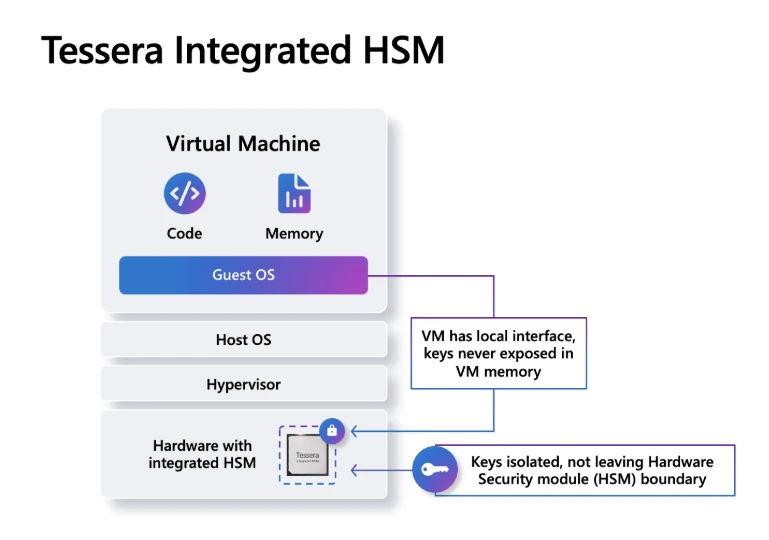
The trajectory toward Project Tessera began with the introduction of the Azure Integrated HSM, which moved away from the "centralized vault" model of security. In traditional architectures, cryptographic operations are performed on dedicated, physically separated HSMs. While secure, this design forces data to traverse network connections, introducing latency that often forces engineers to implement insecure workarounds, such as caching keys in software or using less robust, proprietary protocols.
In 2023 and 2024, Microsoft began socializing the concept of workload-attached HSMs, which place security boundaries directly adjacent to the compute resource. This reduced the performance penalty of high-assurance security. The subsequent development of Caliptra—a silicon-based root-of-trust project—demonstrated the feasibility of a collaborative, open-source approach to hardware security. With the launch of Project Tessera, Microsoft is applying the "Caliptra model" to the more complex domain of HSMs, transitioning from a proprietary Azure-only feature to a set of specifications, drivers, and firmware accessible to the entire hardware ecosystem.
Addressing Key Management Anti-Patterns
The urgency behind Project Tessera is rooted in the current systemic failures of modern key management. As the cybersecurity landscape shifts under the weight of AI-driven automation and the looming threat of quantum-based decryption, traditional methods have proven increasingly fragile.
Industry analysts have identified several "anti-patterns" that plague modern enterprise security. These include:
- Network-Induced Latency: The necessity of moving keys across high-traffic networks, which creates an incentive for developers to store keys in insecure memory buffers.
- Security Domain Fragmentation: The reliance on proprietary protocols that prevent interoperability, leading to "siloed" security environments where consistent policy enforcement becomes impossible.
- Inconsistent Auditable Provenance: The lack of a unified hardware-to-software stack, which prevents security auditors from verifying the lifecycle of a key from its creation in hardware to its use in a workload.
Project Tessera explicitly targets these issues by providing a standardized, open-source blueprint. By ensuring that keys remain within a hardened, tamper-resistant boundary—certified to FIPS 140-3 Level 3 standards—while maintaining low-latency access, the project eliminates the operational necessity for dangerous shortcuts.
Supporting Data and Technical Architecture
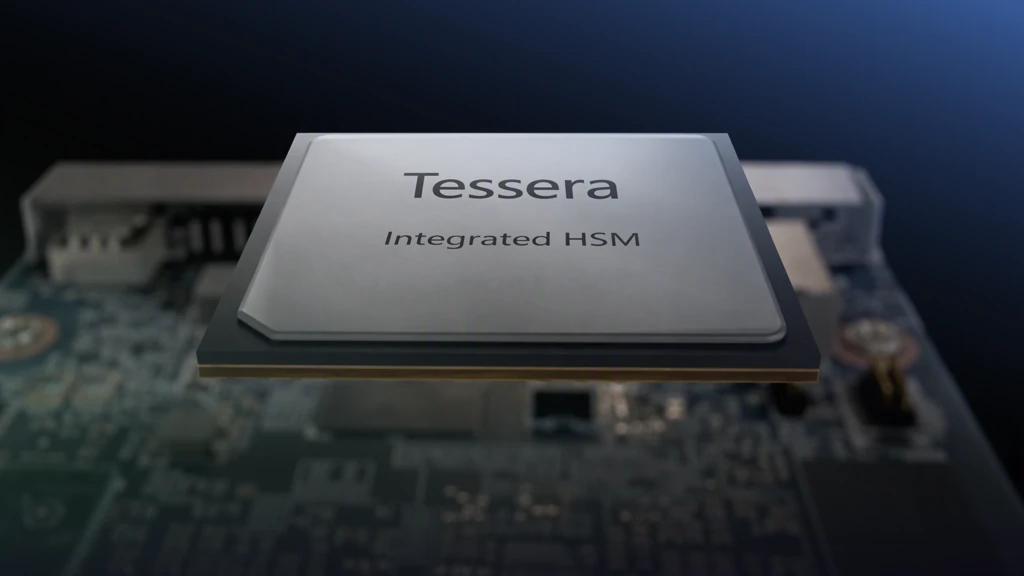
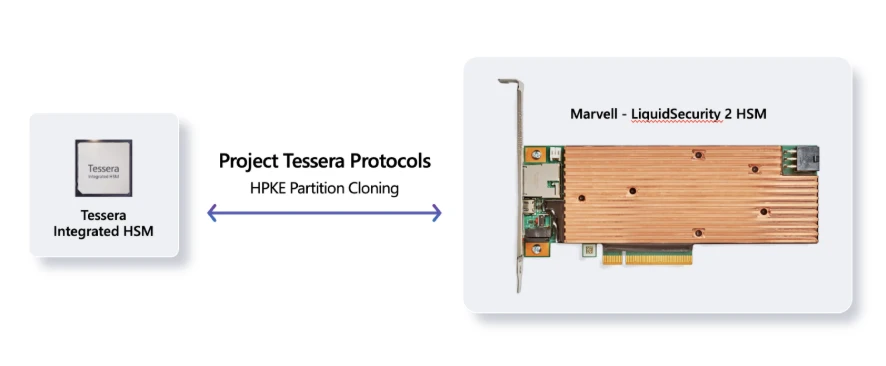
The technical core of Project Tessera lies in its ability to support heterogeneous environments. At the OCP Global Summit, a demonstration featuring Microsoft and Marvell proved that a Tessera-enabled HSM could participate in a unified security domain alongside a Marvell LiquidSecurity 2 HSM.
This interoperability is managed through specialized transfer protocols that utilize post-quantum cryptography (PQC). PQC is a vital component of the project, as the industry prepares for a future where traditional RSA and ECC encryption may be vulnerable to quantum-scale computing power. By integrating quantum-resilient algorithms directly into the HSM firmware, Tessera provides a future-proof foundation for organizations that must ensure long-term data confidentiality.
Furthermore, the project’s scope extends to Confidential Computing. Recognizing that not all systems can host dedicated HSM hardware, the project includes a unikernel-based firmware stack. This stack allows for the deployment of "Tessera-like" security within hardware-isolated environments (such as AMD SEV-SNP), bridging the gap between high-end dedicated hardware and virtualized cloud infrastructure.
Industry Perspectives and Collaborative Impact
The involvement of Oracle and Marvell underscores the shift toward a vendor-neutral standard. For enterprise cloud customers, the lack of interoperability has historically been a barrier to hybrid-cloud adoption. If a business runs infrastructure across multiple providers, they currently face the burden of managing disparate security modules, each with its own proprietary management API and lifecycle policies.
"The industry benefits when we collaborate and advance hardware security together," noted representatives from the Microsoft Infrastructure team. By open-sourcing the architecture, specifications, and reproducible build environments, the partners behind Project Tessera are inviting the broader ecosystem—including silicon vendors, server manufacturers, and software developers—to contribute to the security baseline. This collaborative model is expected to accelerate the maturation of the technology, as independent security researchers and third-party hardware manufacturers can now scrutinize and improve the firmware code, a standard that is increasingly required by government and defense-sector clients.
The Strategic Significance of Open-Source Silicon
Perhaps the most ambitious long-term goal of Project Tessera is the eventual move toward fully open-source silicon. While the current phase focuses on firmware, software libraries, and protocols, the roadmap points toward a future where the hardware design itself is open.
This move is indicative of a broader trend: "Security through transparency." By moving away from "black box" security hardware, organizations can gain a higher degree of assurance regarding the integrity of their platform. This is critical in an era where supply-chain attacks are becoming a primary vector for nation-state and criminal cyber activity.
Broader Implications for the Global IT Infrastructure
The ripple effects of Project Tessera are likely to be felt across several sectors:
- Compliance and Certification: By creating a standard that targets FIPS 140-3 Level 3, the project provides a clearer path for organizations to meet strict regulatory requirements (such as those in finance and healthcare) without being locked into a single hardware vendor.
- Accelerated Adoption of PQC: By baking quantum-resilient protocols into the default HSM stack, Project Tessera lowers the barrier to entry for enterprises looking to upgrade their cryptographic posture for the post-quantum era.
- Data Center Efficiency: The ability to perform cryptographic operations closer to the workload reduces the load on central key management services, which could lead to significant reductions in compute overhead and network congestion for high-scale cloud environments.
Looking Ahead
As the OCP Global Summit concludes, the focus shifts to the implementation phase. The GitHub repository for Tessera is now live, housing the initial drivers, firmware, and documentation. The success of the project will depend on the rate of adoption by third-party hardware vendors and the community’s ability to maintain the rigor of the security specifications as they scale.
If successful, Project Tessera will represent the most significant advancement in hardware-based key management in a decade. By moving from isolated, proprietary islands of security to a unified, open-source standard, the tech industry is taking a definitive step toward a more secure, resilient, and transparent global digital infrastructure. For organizations currently grappling with the complexity of managing keys in a multi-cloud, AI-driven world, the project offers a long-awaited path toward consistency and long-term security.
As Microsoft and its partners continue to refine the project, the focus will likely turn toward expanding support for additional confidential computing architectures beyond AMD, as well as refining the firmware stack for even broader hardware compatibility. The summit has set a clear agenda: the future of hardware security is no longer proprietary—it is open, collaborative, and quantum-resilient.
Related posts: