Meta Unveils New AI-Powered Ad Ranking Enhancements Driving Significant Growth in Clicks and Conversions

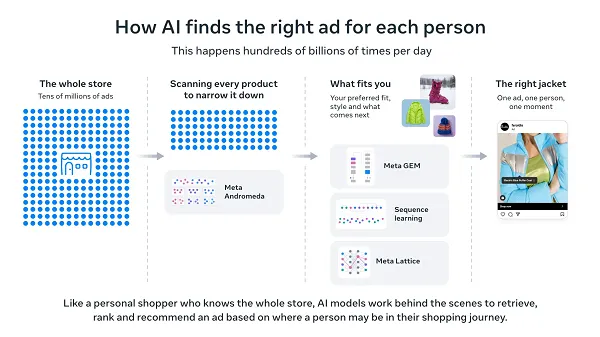
Meta has released a comprehensive set of performance data detailing the profound impact of its newly integrated artificial intelligence enhancements on its core ad delivery and ranking systems. According to the company’s latest disclosures, these advanced machine learning capabilities are drastically improving user understanding, systematic ad targeting, and overall return on investment for global marketing partners. As advertising budgets increasingly pivot toward automated and intelligent systems, Meta’s ongoing multi-billion-dollar investments in digital infrastructure are yielding measurable dividends, resulting in higher user engagement and significantly enhanced conversion metrics across both Facebook and Instagram.
The announcement underscores a transformative period for digital advertising, where algorithmic sophistication has largely supplanted traditional manual targeting methods. By leveraging massive computing power and deeply refined neural networks, Meta is now capable of interpreting complex behavioral signals in real time, matching brands with receptive audiences at an unprecedented scale.
Main Facts and Performance Metrics
The core of Meta’s recent announcement centers on concrete performance metrics achieved during the second quarter. In an October 28 formal update, the technology giant reported that upgrades to its foundational ads ranking architecture generated an 8.3% increase in ad clicks alongside a substantial 15.7% uplift in conversions specifically on Facebook. These figures reflect the platform’s enhanced capacity to recognize intent and deliver relevant commercial messaging to users who are most likely to complete a purchase or take a desired action.
Beyond the baseline ranking improvements, Meta highlighted the performance of its emerging suite of AI-driven tools. The company’s specialized AI business assistant, which is currently being rolled out globally to a broader segment of commercial advertisers, is already proving its utility. Early deployment data indicates that the assistant is driving a 5% increase in conversions while maintaining a flat cost-per-acquisition, offering small and medium-sized enterprises a more efficient way to manage complex campaigns without expanding their internal marketing headcounts.
Furthermore, collaborative commercial formats are experiencing explosive expansion. Partnership ads—which allow traditional brands to run cooperative campaigns alongside independent creators, influencers, and publishing partners—grew by more than 97% year-over-year during the third quarter. This specific category has now officially surpassed a remarkable $15 billion annual revenue run-rate, signaling that consumers respond exceptionally well to creator-backed endorsements integrated seamlessly into their social feeds.
Background Context and Chronology
To fully understand Meta’s current operational momentum, it is necessary to examine the broader trajectory of the company’s technological evolution over recent years. Following the macroeconomic corrections of 2022 and 2023, which forced digital platforms to reevaluate their monetization strategies in the wake of sweeping privacy changes introduced by Apple and global regulators, Meta made a strategic pivot toward proprietary AI infrastructure.
The timeline of this transition highlights a deliberate and aggressive capital expenditure strategy:
- Late 2022 to 2023: Meta began heavily restructuring its data centers to accommodate large-scale generative AI and machine learning workloads, shifting away from legacy hardware configurations.
- Early 2024: The company announced massive infrastructure commitments, eventually earmarking hundreds of billions of dollars for domestic U.S. data center projects designed to power next-generation recommendation engines.
- Mid 2024: Meta initiated the phased rollout of specialized AI business assistants, aiming to democratize advanced campaign optimization for smaller advertisers.
- Late 2025 to October 2026: The implementation of advanced ranking models reached maturity, culminating in the Q2 performance spikes and Q3 milestone achievements highlighted in the recent data disclosures.
This sustained expenditure on infrastructure has expanded Meta’s data processing capacity exponentially. The company can now assess a vastly broader range of user actions, contextual parameters, and product attributes simultaneously, reducing latency and executing algorithmic adjustments faster than ever before.
Technical Innovations and In-Stream Commerce
Meta’s engineering teams have focused heavily on refining how algorithms match specific ad creatives with individual consumer profiles. By shifting from broad demographic parameters to hyper-dynamic, context-aware intent modeling, the system evaluates thousands of distinct signals per ad auction.

A critical component of this evolution is the integration of native commerce pathways directly into AI-driven interfaces. Meta is actively developing streamlined checkout options within its conversational AI agents, including the newly prominent Muse assistant. These in-stream checkout capabilities are designed to minimize friction in the consumer journey, allowing users to discover products through AI interactions and complete transactions without ever leaving the application environment. By shortening the distance between discovery and purchase, Meta aims to capture higher conversion rates for brand partners while keeping user engagement high within its ecosystem.
Industry Implications and Analytical Perspectives
The implications of Meta’s data release extend far beyond its own proprietary platforms, signaling a broader industry-wide transition toward autonomous advertising systems. Industry analysts point out that as digital privacy regulations tighten and third-party cookies continue to phase out across the wider internet, walled-garden ecosystems with first-party data and advanced AI processing capabilities hold a distinct competitive advantage.
From a strategic standpoint, Meta’s ability to drive a 15.7% conversion uplift without requiring manual audience segment adjustments validates the efficacy of machine learning in digital marketing. Advertisers are increasingly willing to relinquish granular control over manual targeting in exchange for superior algorithmic performance. This trend reduces campaign management overhead for major brands while simultaneously lowering the barrier to entry for novice advertisers who utilize Meta’s automated business assistants.
However, industry watchdogs also note potential considerations regarding transparency. As ad delivery systems become increasingly black-boxed and reliant on opaque neural networks, marketers must learn to trust overarching algorithmic outcomes rather than dissecting exact audience demographics. Meta’s ongoing provision of high-level performance data is a necessary step to maintain trust and justify continued ad spend expansion among enterprise-level clients.
Ultimately, Meta’s heavy capital investments in infrastructure and artificial intelligence are delivering the exact commercial results the company promised stakeholders. With partnership ads soaring past a $15 billion run-rate and core ranking optimizations generating double-digit efficiency gains, the platform is cementing its position as a dominant force in the modern digital advertising economy.