Simulating Deep Space Isolation 22 Feet Below: Inside the SEA STAR Mission at Jules Undersea Lodge

The pursuit of interplanetary exploration has long driven researchers to seek out Earth-bound analogues that closely mimic the extreme psychological and physiological hardships of long-duration spaceflight. Among the most unique of these testing grounds is Jules’ Undersea Lab, stationed 22 feet (7 meters) beneath the surface in Key Largo, Florida. Recently, a four-person crew completed the rigorous SEA STAR simulated space mission within this submerged habitat, providing valuable insight into how human crews might cope during extended missions on Mars or aboard orbital platforms.
Led by Dr. Michaela Musilova—an acclaimed astrobiologist, explorer, and veteran commander of 40 analog space missions—the SEA STAR crew spent five uninterrupted days living and working entirely underwater. By cutting off physical contact with the surface and operating under roughly twice the atmospheric pressure experienced at sea level, the mission successfully replicated several core stressors associated with deep space exploration, including severe environmental isolation, high-stakes scientific workloads, and confined-space living.
Historical Evolution of the Habitat: From La Chalupa to Jules’ Undersea Lab
The facility that now serves as Jules’ Undersea Lab boasts a rich and unconventional engineering history. Originally constructed in the 1970s, the habitat was christened "La Chalupa" and envisioned as a mobile, self-contained base for marine researchers and saturation divers. Built inside a massive barge measuring 20 feet wide and 60 feet long, La Chalupa was designed to be towed to prime marine exploration sites and systematically submerged.
Aquanauts during that era operated by flooding the interior spaces to transition the vessel from a floating barge to a fully functional submarine. Once a research campaign concluded, water was pumped out of the structure, allowing it to resurface and relocate. This dynamic operational model made it a revolutionary tool for marine science.
However, shifting economic landscapes and dwindling federal and private funding eventually curtailed the habitat’s mobility. The vessel was permanently moored at its current lagoon home in Key Largo, Florida, where it transitioned into a stationary scientific outpost. Despite its static location, the habitat has played a monumental role in undersea exploration. Over the decades, it has hosted dozens of specialized aquanaut missions, most notably a landmark 30-day NASA project and two world-record-setting endurance missions where teams remained submerged for 73 and 100 consecutive days, respectively.
Inside the Submerged Station: Architecture and Life Support
Operating a functional research station underwater requires robust engineering and reliable life-support infrastructure. Structurally, the interior of Jules’ Undersea Lab is compact, forcing crews to master efficiency and spatial awareness.
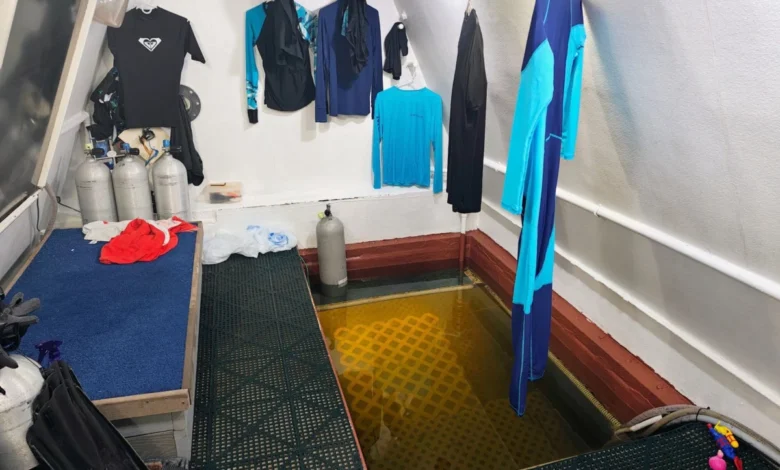
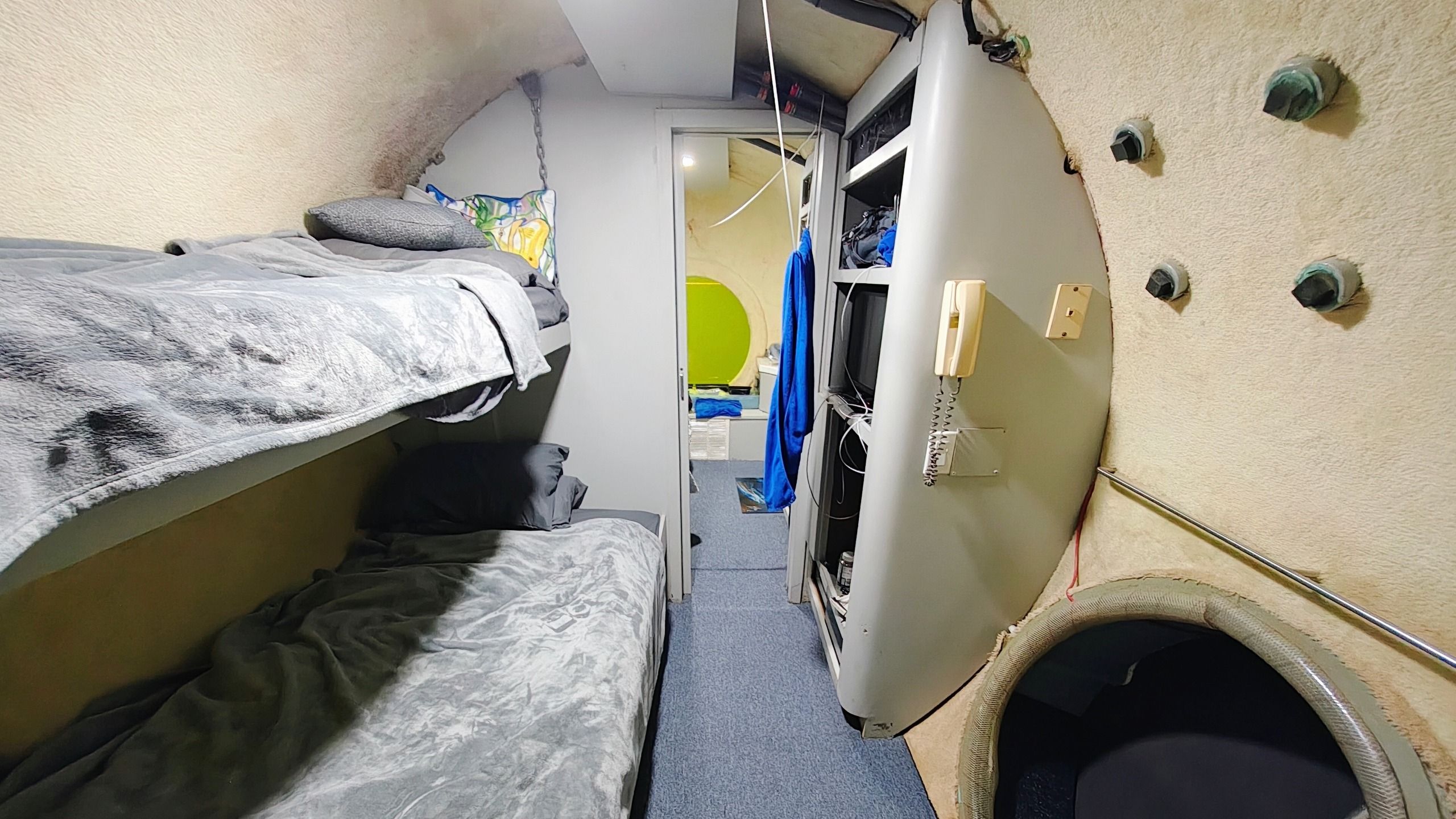
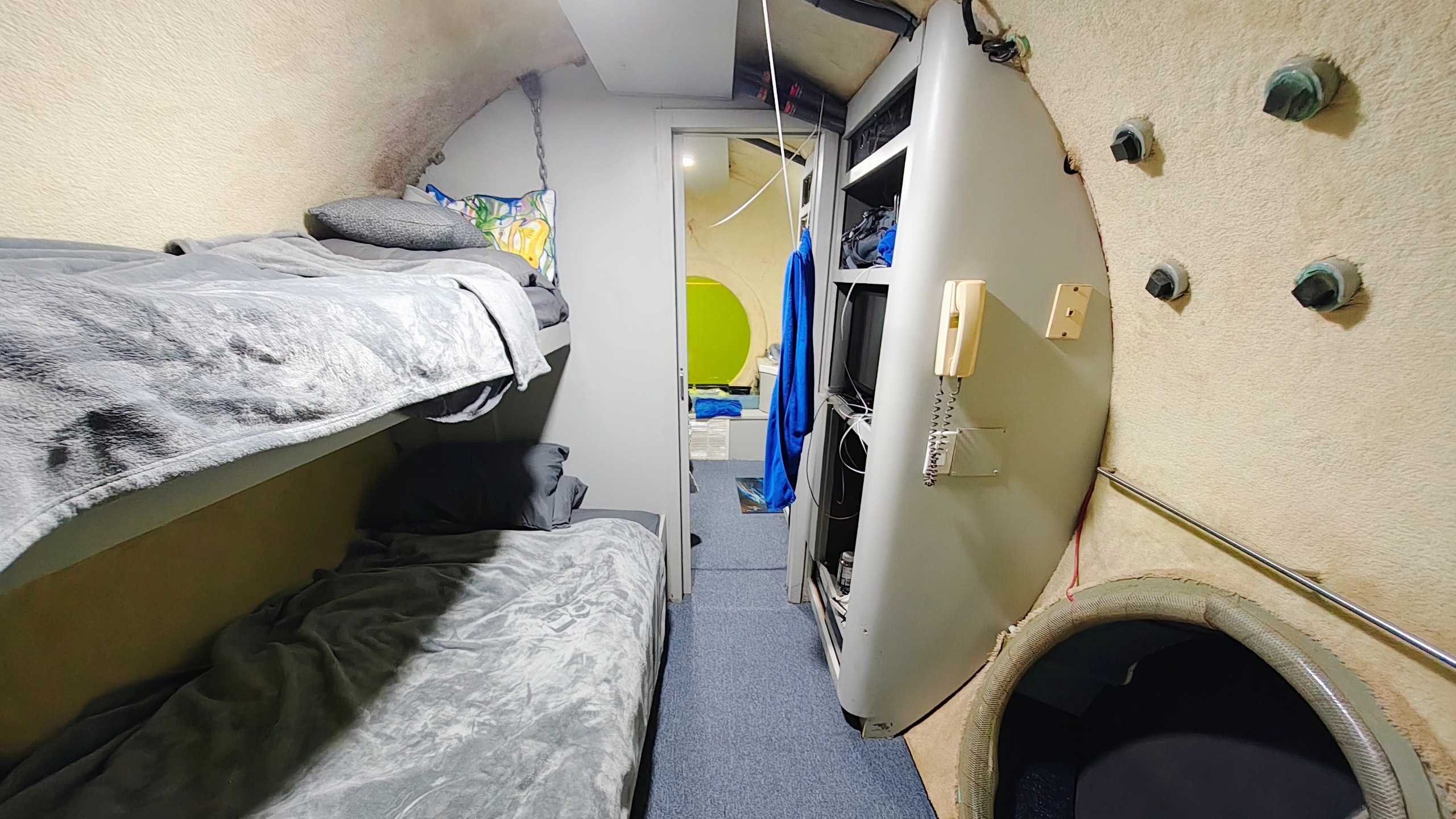
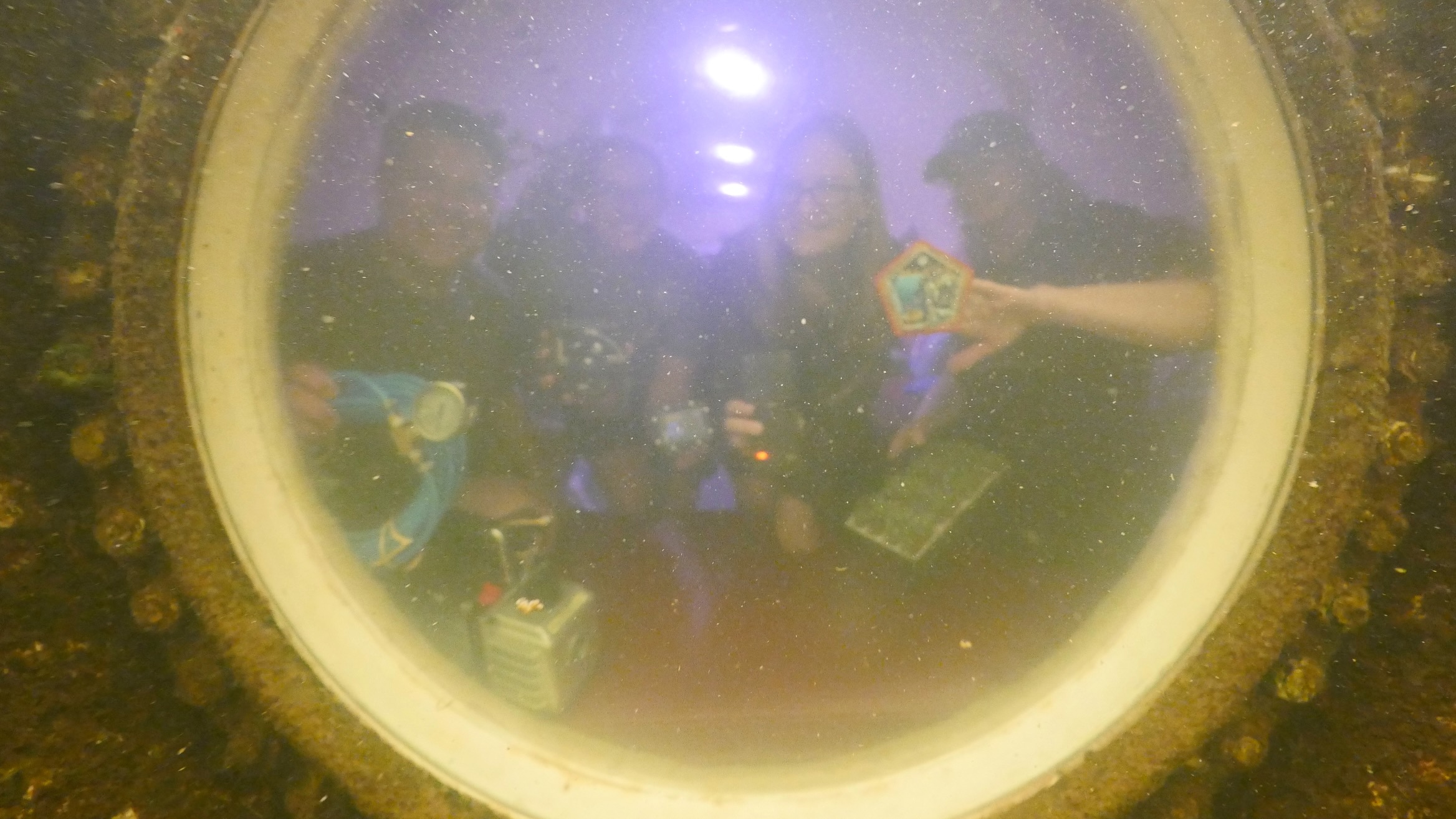
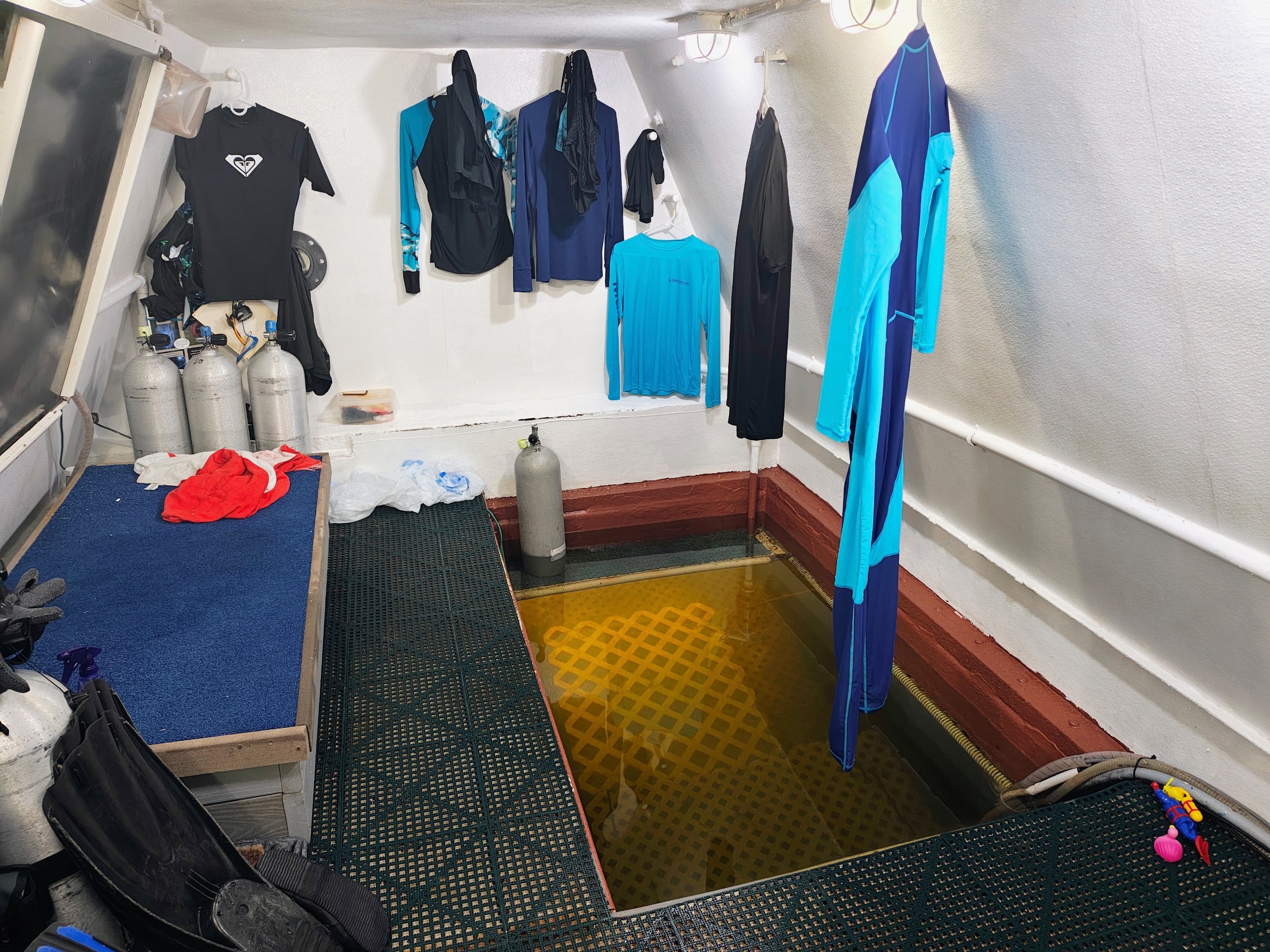
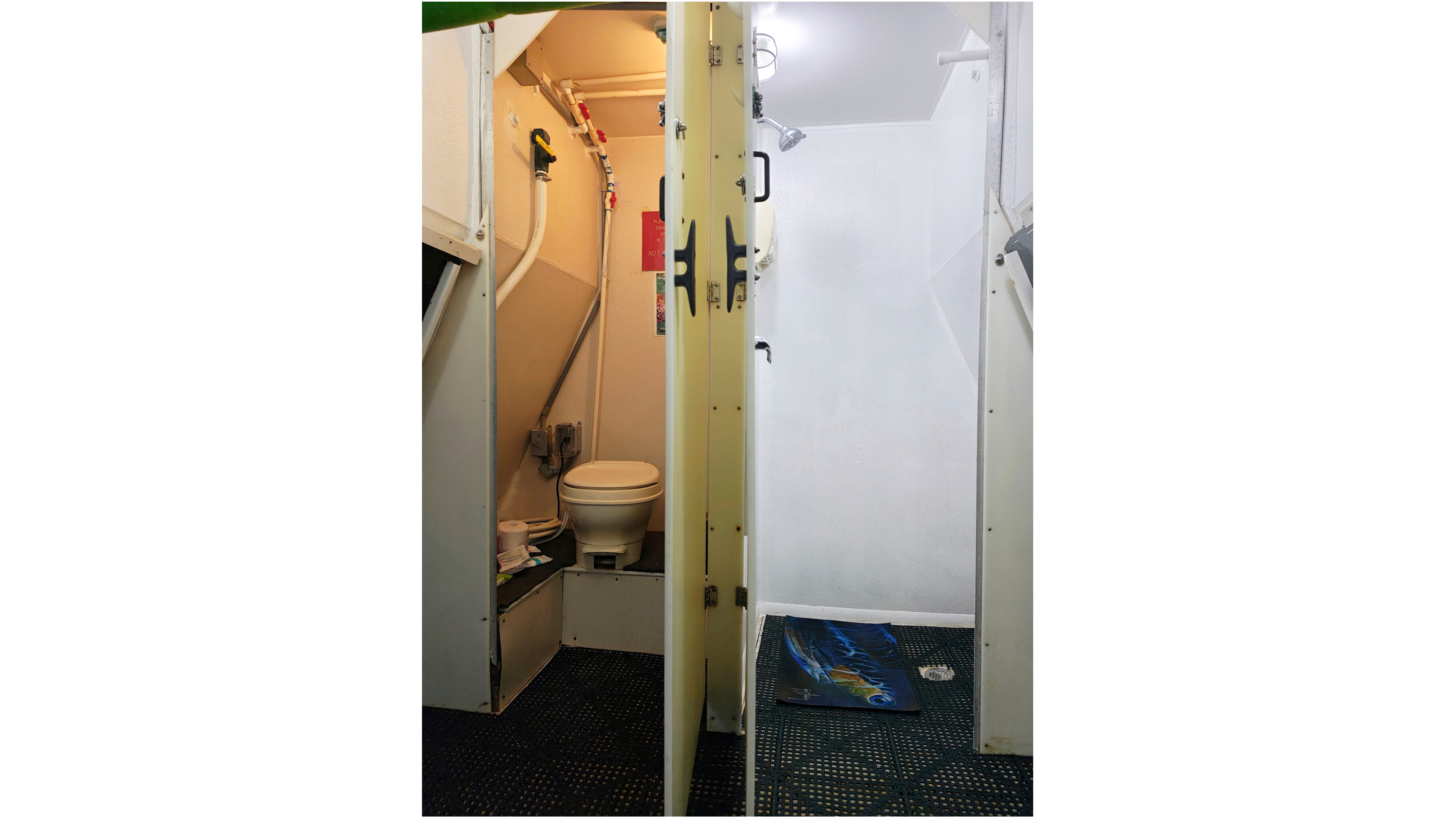
The layout features a central galley that serves a dual purpose as a kitchen, dining room, and workspace. Adjacent to the galley is a basic sanitation facility containing a toilet and a shower. The primary point of entry and exit for divers is the "moon pool"—a vertical opening at the base of the habitat that interfaces directly with the surrounding ocean. The sleeping quarters consist of a compact bedroom equipped with two bunk beds, which can be physically divided by a central partition to create two distinct rooms and afford crew members a minimal degree of privacy. Three strategically placed circular portholes provide inhabitants with glimpses of the vibrant, albeit predominantly green, aquatic ecosystem outside.
Maintaining a habitable internal climate and ensuring the crew’s physiological safety relies on an intricate network of umbilicals and life-support systems. Originally established with support from NASA, these external lines deliver continuous supplies of fresh air, electrical power, and potable water from the surface. All critical piping and electrical fittings are safely secured within the submerged barge shell, shielding them from corrosive marine elements and encrusting organisms. A secure, direct communication link to surface-based Mission Control ensures round-the-clock monitoring and emergency intervention if necessary.
The SEA STAR Mission Schedule and Operational Realities
For the SEA STAR crew, the daily routine mirrored the tightly managed schedules endured by astronauts aboard the International Space Station (ISS). Every minute of the day was meticulously planned to balance scientific obligations with station maintenance and personal well-being.
Each of the four crew members brought independent research portfolios to the mission, requiring them to execute complex experiments, record data, and undergo routine medical evaluations. Daily life also demanded active participation in domestic chores, including meal preparation, cognitive performance testing, equipment upkeep, and troubleshooting unexpected mechanical or operational glitches. As Mission Commander, Dr. Musilova bore the responsibility of keeping the team synchronized, mitigating interpersonal friction, and addressing emergent logistical roadblocks.
A distinctive component of the SEA STAR mission was the execution of underwater excursions referred to as "spacewalks." Donning full scuba gear, the crew regularly exited the habitat through the moon pool to conduct marine research and exploratory dives in the surrounding lagoon.
Notably, these physically demanding excursions precluded the need for additional daily workouts. While typical spaceflight analog missions under Dr. Musilova’s command incorporate mandatory daily exercise regimens of one to two hours—mirroring protocols used on the ISS to combat microgravity-induced muscle atrophy and bone density loss—the underwater environment introduced its own physiological stressors. Because the atmospheric pressure inside Jules’ Undersea Lab is roughly double that of sea level, the human body constantly adapts to hyperbaric conditions. Recognizing this elevated baseline physiological stress, the mission parameters omitted supplementary workout routines.
Psychological Implications and the Martian Illusion
Despite the dense schedule and physical demands of hyperbaric living, the crew reported surprisingly low levels of psychological distress. Analysts attribute this outcome to thorough mission planning, clear role distribution, and the positive psychological impact of small creature comforts. For instance, the crew was permitted to use a compact electric slow cooker, enabling them to prepare warm meals such as stews, soups, and overnight oats. These culinary routines served as vital morale boosters within the confined environment.
Furthermore, the habitat successfully fostered a psychological phenomenon often reported by astronauts: the perception of absolute isolation. Although the crew lacked a direct view of Earth from low-Earth orbit, the alien, emerald-tinted aquatic landscape visible through the portholes created a convincing illusion of residing on an extraterrestrial body. This sensory deprivation, combined with the sterile, mechanical hum of the life support systems, closely mirrored the psychological conditions anticipated for future crewed bases on Mars.
Broader Scientific Impact and Future Analogs
The successful conclusion of the SEA STAR mission underscores the enduring value of Earth-bound analog environments in preparing humanity for deep space exploration. As space agencies and private aerospace contractors look toward extended lunar bases and crewed missions to Mars, understanding the psychological and physiological impacts of confinement, elevated pressure, and isolated teamwork remains paramount.
Facilities like Jules’ Undersea Lab bridge the gap between theoretical aerospace engineering and practical human endurance. By utilizing extreme terrestrial environments to test equipment, communication protocols, and crew dynamics, researchers can better anticipate the unpredictable variables of spaceflight. The data gathered from the SEA STAR mission will feed directly into future analog studies, helping mission planners design safer, more resilient habitats for the next generation of space explorers.