Astronomers Unveil Stunning New Details of Pa 30, a Rare 850-Year-Old Supernova Remnant and Its Surviving Zombie Star

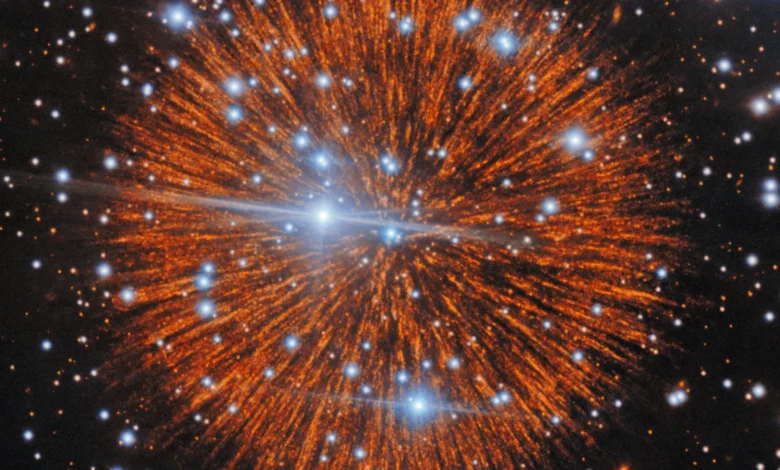
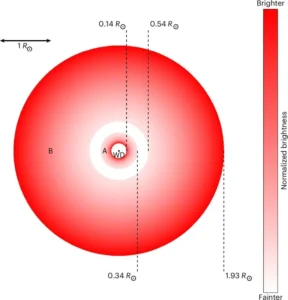
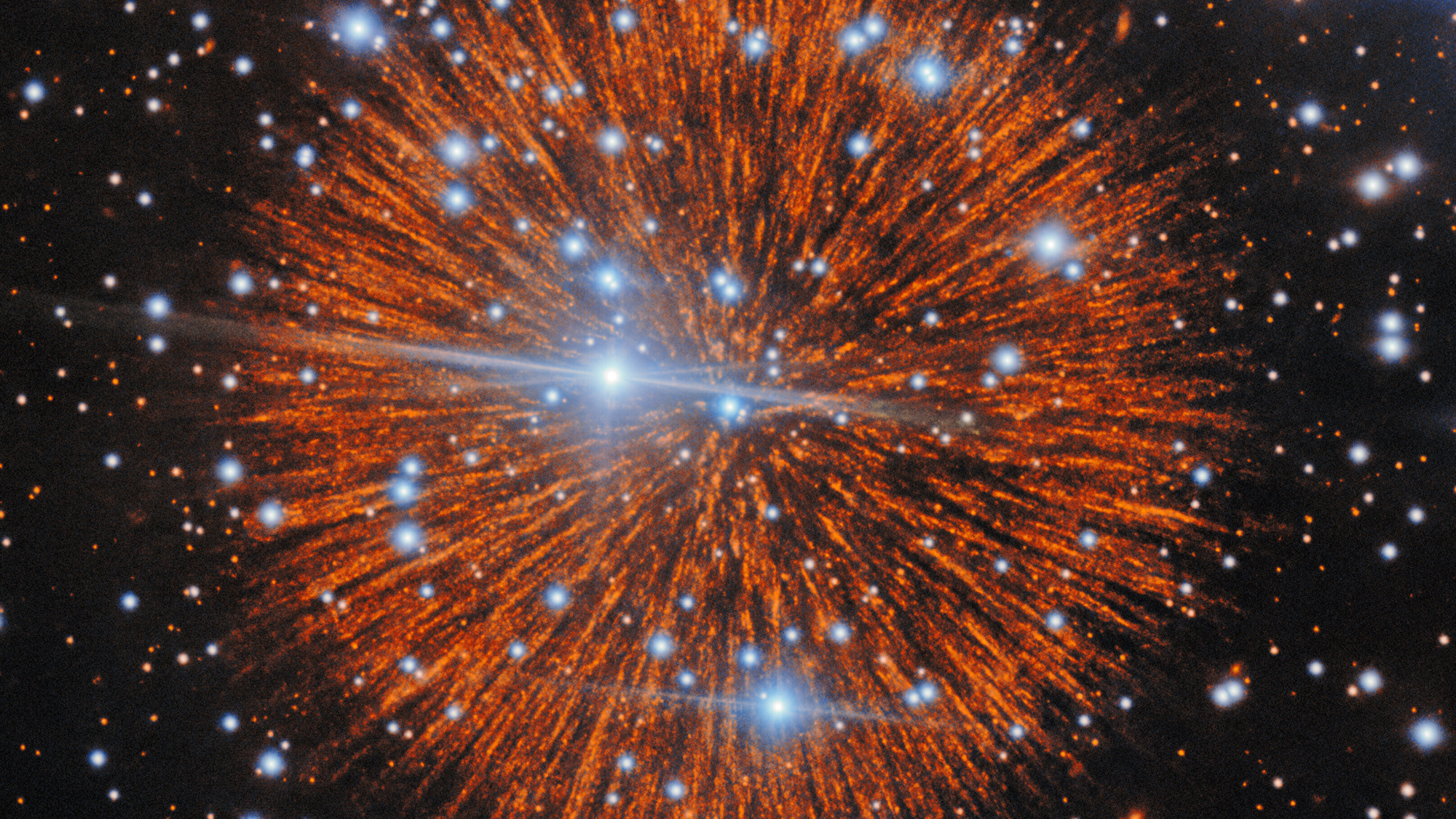
Deep within the galactic expanse of the Milky Way, astronomers have captured the most detailed and revealing observations yet of Pa 30, a celestial phenomenon often described as a cosmic "string of pearls." This dandelion-shaped nebula, composed of intricate strands of gas and supernova debris, represents the remnants of a violent stellar explosion first witnessed by human observers roughly 850 years ago. Located approximately 7,500 light-years from Earth, Pa 30 stands out as entirely unique within our galaxy. Not only is it the sole known supernova remnant of its specific classification in the Milky Way, but it also harbors an extraordinarily rare "zombie star" at its very core, presenting researchers with an unprecedented laboratory to study the complex mechanics of stellar death and survival.
The findings, detailed in a recent publication in The Astrophysical Journal, leverage the advanced optical capabilities of the Gemini North telescope. By zooming in on the intricate filaments radiating outward from the explosion site, an international team of researchers has mapped out uniform knots of matter along the gas strands. These remarkable structures offer fresh insights into a subclass of stellar detonations known as Type Iax supernovas, events that leave behind shattered celestial bodies rather than obliterating their progenitor stars entirely.
Historical Context and Chronology: The Guest Star of 1181
The discovery of Pa 30 bridges nearly a millennium of human observation, connecting modern astrophysical techniques with ancient historical records. The story of this cosmic relic begins in the late 12th century. Between August and October of the year 1181, ancient astronomers across Asia and the Middle East documented the sudden appearance of a "guest star" in the night sky.
Historical chronicles from China, Japan, and Arabic territories independently noted that this mysterious star shone with a brilliance comparable to Saturn and remained visible to the unaided eye for approximately six months. For centuries, the exact location and nature of this historical explosion remained a mystery. It was not until 2013 that a citizen scientist successfully linked the modern gaseous nebula Pa 30 to the luminous event recorded in 1181.
This connection places Pa 30 in an elite category. It is one of only five supernova remnants in the entire historical record that was witnessed and documented by humanity before the invention of the telescope in the early 17th century.
"Reliable historical records of stellar explosions extend back only about a thousand years. For all we know, there might well be similar remnants still lurking in the dark in our own galaxy," noted Ilaria Caiazzo, an assistant professor at the Institute of Science and Technology Austria (ISTA) and a key member of the research team. "Today, we are lucky to study an intriguing object we know was observed by astronomers who made three independent historical records of the event centuries before the invention of the telescope."
The Anatomy of a Type Iax Supernova and the Zombie Star
To understand why Pa 30 captures the intense fascination of the astrophysical community, one must examine the peculiar physics that birthed it. Standard Type Ia supernovas occur within binary star systems where a dense, dead star—known as a white dwarf—accretes matter from a companion star. This continuous feeding process eventually pushes the white dwarf past a critical mass threshold, known as the Chandrasekhar limit. The resulting instability triggers a runaway thermonuclear explosion that completely obliterates the white dwarf, leaving behind an expanding cloud of heavy elements without a central stellar remnant.
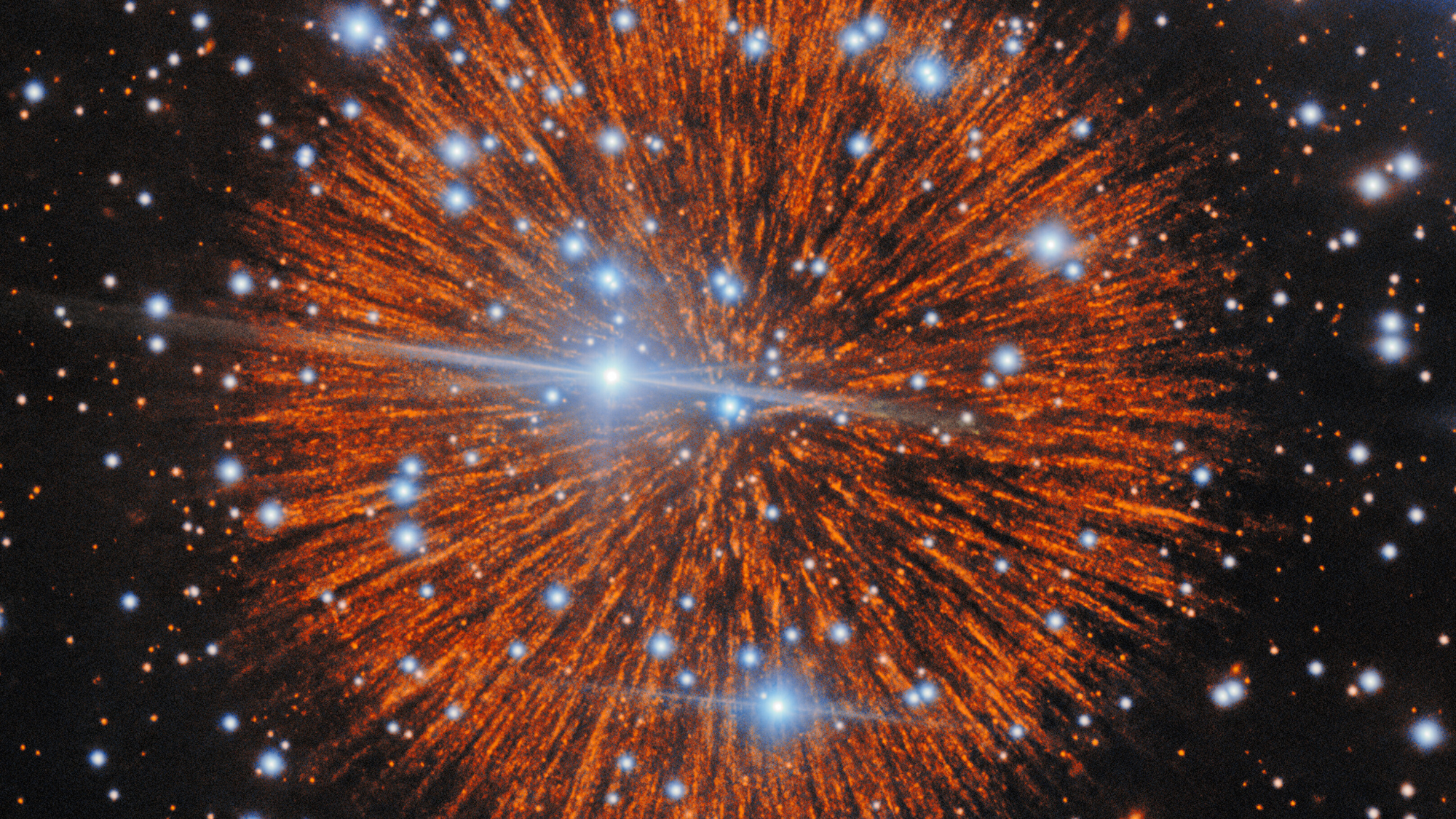
However, Type Iax supernovas represent a bizarre and far rarer variation of this process. In these incidents, the thermonuclear blast is somehow asymmetrical or less than total. While a tremendous amount of material is blasted violently into space, a battered remnant of the white dwarf survives the cataclysm. Astrophysicists colloquially refer to this battered survivor as a "zombie star"—a dead stellar corpse that continues to linger in the aftermath of its own destruction.
Pa 30 is presently the only known supernova remnant in the Milky Way where scientists can directly observe both the expanding debris field and the surviving zombie star resting at its epicentre. This proximity—sitting at a relatively close 7,500 light-years away compared to the galactic center’s 26,000-light-year distance—provides astronomers with a rare, high-resolution window into processes that are typically only studied as distant, unresolved points of light in external galaxies.
Solar System-Sized Pearls and Symmetrical Explosions
Using the Gemini North telescope, Dr. Caiazzo and her colleagues peered deep into the nebula to analyze the structural composition of the gas strands extending outward from the center. They discovered distinct, evenly spaced knots of material embedded along these filaments, earning the nebula its descriptive "string of pearls" moniker.
The scale of these cosmic pearls is difficult for the human mind to easily comprehend. Calculations reveal that each individual knot is immense enough to encompass the entire orbit of Neptune—the outermost major planet in our solar system—roughly ten times over.
"The planetary region of our solar system could fit in each knot about ten times with room to spare," Dr. Caiazzo explained. "The knots are quite strikingly uniform. We are excited to try to model them."
Beyond the sheer scale of the debris, the position of the zombie star yielded another major surprise. Standard physical models of stellar explosions dictate that asymmetric blasts should impart a powerful mechanical kick to any surviving stellar remnants or ejecta, hurling the surviving core away from the center of the blast at high speeds. Yet, precise astrometric measurements revealed that the zombie star of Pa 30 sits almost perfectly at the geometrical center of the nebula.
"Explosions conserve momentum. If the explosion itself was perfectly symmetric, the ejecta should also be symmetric, and the surviving star should not receive a substantial kick," said Dr. Caiazzo. "We were able to measure a precise upper limit of the remnant star’s transverse kick speed, showing that it was surprisingly small. We practically don’t see the star moving away at all."
This near-zero velocity indicates that the thermonuclear detonation that ripped through the system was remarkably uniform, challenging existing theoretical models of how white dwarfs detonate under partial accretion scenarios.
Broader Implications and Future Astronomical Surveys
The ongoing analysis of Pa 30 carries significant implications for stellar astrophysics. By establishing a detailed baseline for the physical characteristics, chemical distribution, and kinematics of a confirmed Type Iax remnant, researchers now possess a crucial template for identifying similar hidden objects across the cosmos.
While astronomers routinely detect the optical signatures of Type Iax supernovas in distant galaxies, resolving the physical remnants left behind by these blasts has historically proven nearly impossible due to distance limitations. The Milky Way and a handful of nearby galactic neighbors remain the only domains where such detailed structural mapping can occur.
Looking ahead, the research team aims to leverage the unique diagnostic properties discovered in Pa 30 to scan broader regions of the Milky Way. By searching for similar nebular structures, symmetric debris fields, and central white dwarf survivors, scientists hope to uncover a hidden population of historical stellar explosions that have escaped detection until now.
As technology advances and ground-based telescopes like Gemini North continue to probe the dark corners of our galaxy, ancient records written by medieval astronomers continue to guide modern science toward unraveling the most violent and fascinating mysteries of the universe.