Retro Revival: Why Classic 1980s SUVs Still Outshine Modern Designs in Aesthetic Appeal

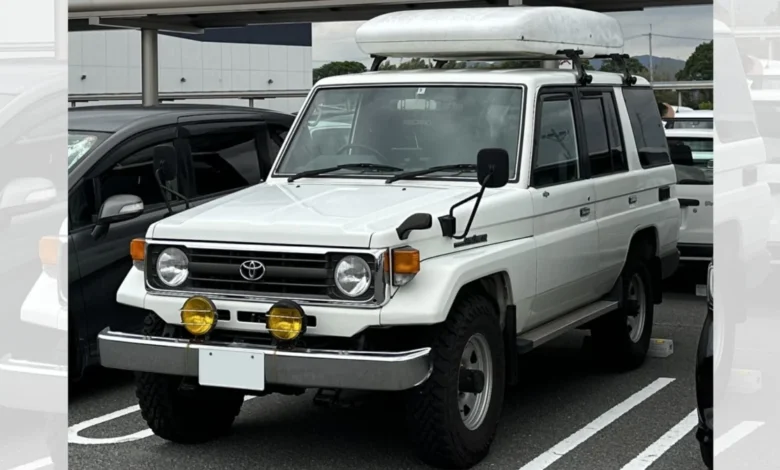
The automotive landscape of the 21st century is defined by the absolute dominance of the Sport Utility Vehicle (SUV). Data from recent industry reports indicate that SUVs now account for nearly 60% of all new vehicle sales in the United States, a shift that has forced manufacturers to prioritize these models in their production lineups. While modern engineering has ushered in an era of unprecedented safety features, fuel efficiency, and digital connectivity, a growing segment of the automotive community and design critics argue that these advancements have come at the cost of stylistic character. By analyzing iconic nameplates that have persisted through the decades, it becomes clear that the angular, purposeful design language of the 1980s continues to exert a profound influence on consumer preference, often eclipsing the homogenized, wind-tunnel-optimized silhouettes of today.
The Evolution of Utility: A Shift in Design Philosophy
The 1980s marked a pivotal transition for the SUV segment. During this decade, manufacturers moved away from strictly utilitarian, agricultural-adjacent platforms toward vehicles that bridged the gap between daily transportation and weekend adventure. The design language of that era—characterized by boxy proportions, upright greenhouses, and honest, functional exterior elements—was a direct response to the era’s off-road aspirations.
In contrast, modern SUV design is heavily dictated by stringent government fuel economy standards and pedestrian safety regulations. These requirements have necessitated the "crossover" shift, where manufacturers prioritize aerodynamics and weight reduction. The result is a fleet of vehicles that often share similar sloping rooflines and rounded fascias. While the modern versions are undeniably more sophisticated, the reduction in visual "toughness" has led to a sense of nostalgia for the rugged, modular aesthetic of the 1980s.
Toyota Land Cruiser: From Industrial Workhorse to Modern Luxury
The Toyota Land Cruiser remains the definitive benchmark for global off-road capability. The 1985 Land Cruiser J70 serves as the primary point of reference for enthusiasts. Its design was dictated by functionality: a rectangular grille, circular headlamps, and protruding turn signals were integrated to facilitate easy field repairs and maximize visibility. The J70’s aesthetic is one of industrial permanence.
Conversely, the current U.S.-market Land Cruiser (the J250 Prado) attempts to blend modern comfort with retro-inspired boxiness. While it successfully captures some of the J70’s charm, it remains a product of modern luxury constraints. Industry analysts note that while the J250 is a superior vehicle in terms of performance and ergonomics, it lacks the raw, unadulterated "all-business" presence that defined the 1980s iteration, highlighting the challenge manufacturers face when balancing modern consumer demands with heritage design.
The Toyota 4Runner N60 and the Concept of Modularity
When the Toyota 4Runner launched in 1984 as the N60, it was essentially a Hilux pickup truck with a fiberglass hardtop. This modularity was a key selling point, allowing users to transform the vehicle into an open-air convertible, directly competing with the Jeep Wrangler.
Today’s 4Runner, despite its immense popularity and 12 distinct trim levels, has evolved into a heavy, technology-laden platform. The modern design relies on exaggerated, "chunky" fender flares to suggest muscularity, whereas the N60 achieved a commanding presence through its balanced proportions and minimalist lines. The decline of the removable top in favor of structural rigidity and crash-test compliance marks the end of an era where "utility" in an SUV meant physical adaptability rather than just digital capability.
Jeep Cherokee XJ: The Benchmark for Proportion
The Jeep Cherokee XJ, which debuted for the 1984 model year, is frequently cited by automotive historians as one of the most significant designs in American history. Its unibody construction was revolutionary, yet its exterior remained strictly traditional, featuring sharp angles and a vertical stance. The XJ’s production run lasted until 2001, proving that a well-conceived design can transcend the typical five-year refresh cycle.
The modern Jeep Cherokee, by comparison, has struggled to find a design identity that resonates as strongly. Current models, influenced by corporate global platforms, often share visual cues with mainstream crossovers like the Honda CR-V or Toyota RAV4. The loss of the XJ’s distinct long hood and upright greenhouse has left a void in the market that Jeep has attempted to fill with other models, though the original XJ remains the aesthetic standard against which all successors are measured.
Nissan Pathfinder and the Loss of Off-Road Identity
The 1985 Nissan Pathfinder YD21 is a masterclass in honest design. With its high ground clearance and black plastic bumpers, it communicated an immediate readiness for the trail. As Nissan transitioned the Pathfinder through its generations, the vehicle evolved from a truck-based platform to a unibody crossover.
The 2026 Pathfinder, while undeniably more comfortable for a family of seven, has adopted a "bulbous" aesthetic that emphasizes aerodynamics over off-road capability. This shift highlights a common industry implication: as SUVs move from the trails to the suburban commute, their exterior design is softened to appeal to a broader demographic. For the enthusiast, this represents a move away from the "badge of honor" aesthetic—where scratches and dents are signs of use—toward a luxury-focused exterior that is often discouraged from leaving the pavement.
Chevrolet S-10 Blazer: The Utility Dilemma
The 1983 Chevrolet S-10 Blazer stands as a prime example of compact utility. Its design was simple, honest, and space-efficient. Modern iterations, such as the 2025 Blazer EV, represent a radical departure. By utilizing an electric architecture, the new Blazer adopts a sleek, hatchback-inspired profile that prioritizes drag coefficients.
Critics have noted that the naming of the modern Blazer has caused a degree of brand confusion. By applying the "Blazer" moniker to a large, sport-oriented crossover, General Motors has distanced the vehicle from its heritage as a rugged, body-on-frame utility vehicle. The implication is that the term "Sport Utility" has shifted from describing a vehicle’s capability to describing its market segment, often prioritizing aggressive styling—such as oversized grilles and faux cladding—to mask the vehicle’s actual size and lack of traditional off-road hardware.
Broader Industry Implications and Future Outlook
The enduring popularity of 1980s SUVs is not merely a matter of nostalgia; it is a critique of modern design homogeneity. As manufacturers continue to use global platforms to achieve economies of scale, vehicles are increasingly subjected to the same design software and wind-tunnel testing, resulting in a convergence of shapes.
Market data suggests that automakers are beginning to recognize this trend, with several brands—most notably Toyota and Ford—incorporating "retro-futuristic" elements into their new lineups. The challenge for these manufacturers lies in integrating these classic design cues while meeting the stringent safety and environmental regulations of the 2020s.
Ultimately, while the 1980s models were objectively inferior in terms of performance, reliability, and occupant safety, they offered a clarity of purpose that is increasingly rare. As the automotive industry shifts toward electrification and autonomous driving, the demand for vehicles with "personality"—vehicles that prioritize form as a reflection of function—will likely continue to influence design studios, ensuring that the legacy of the 1980s SUV remains a significant touchstone for decades to come.