The release of iOS 27 earlier this month marked a significant milestone for Apple, introducing Siri AI as a core component of the mobile operating system. While the integration of advanced large language models into the system-wide assistant has been heralded as a major leap forward, early adopters have noted a distinct lack of persistent, user-defined command structures. Enter QuillCue, a third-party application developed by Parker Ortolani, which addresses these limitations by introducing a specialized custom keyboard designed to facilitate the rapid deployment of complex prompts to Siri AI.
The Evolution of the Apple Assistant Ecosystem
To understand the utility of QuillCue, one must examine the progression of Apple’s voice assistant technology. Siri, originally launched in 2011, remained a task-oriented assistant for over a decade. With the introduction of iOS 27, Apple pivoted to a generative AI model capable of interpreting context, drafting content, and managing complex multi-step workflows.
However, the architecture of Siri AI in its current iteration is inherently ephemeral. Each interaction is treated as a discrete event, meaning the assistant does not inherently store "skills" or persistent user-defined routines that extend beyond basic Shortcuts. This creates a friction point for power users who rely on consistent, highly specific prompts to maximize the utility of the AI. Historical data from mobile productivity research suggests that users frequently repeat 60% to 70% of their complex queries, indicating a substantial need for macro-style functionality within mobile AI interfaces.
Chronology of the QuillCue Development
The development of QuillCue reflects the rapid reaction of the indie developer community to Apple’s major software cycles. Following the developer preview of iOS 27 in June 2026, many developers identified that the primary constraint of the new Siri AI was the input barrier—the physical act of typing or speaking long, repetitive instructions.
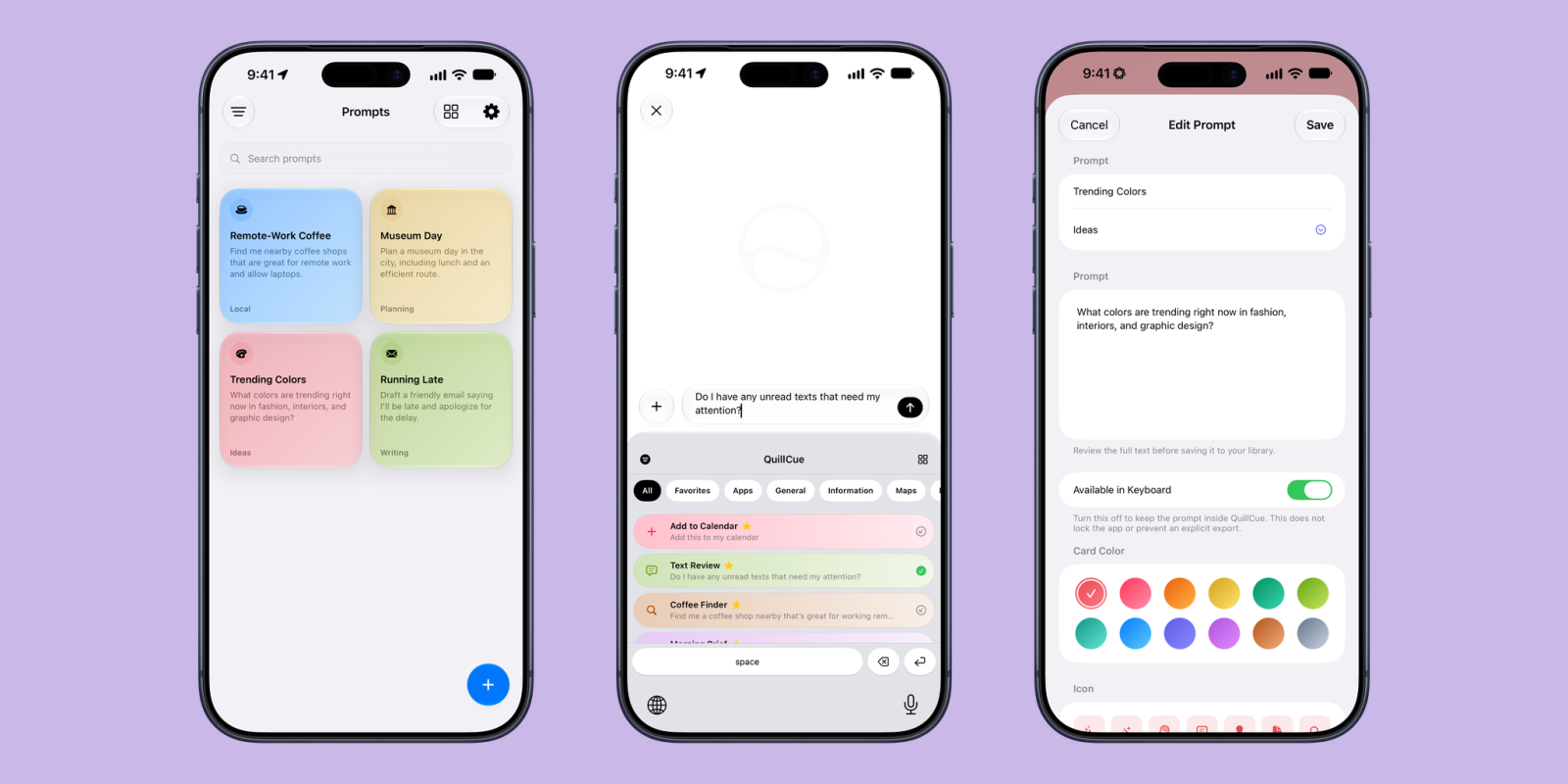
By early September 2026, as iOS 27 reached general availability, QuillCue emerged as a solution. By leveraging the custom keyboard API provided by iOS, Ortolani created a utility that functions entirely on-device, bypassing the need for cloud-based storage of user prompts. This ensures that the privacy-centric ethos of the Apple ecosystem is maintained while providing the functional customization that was absent from the native Siri implementation.
Technical Implementation and Functionality
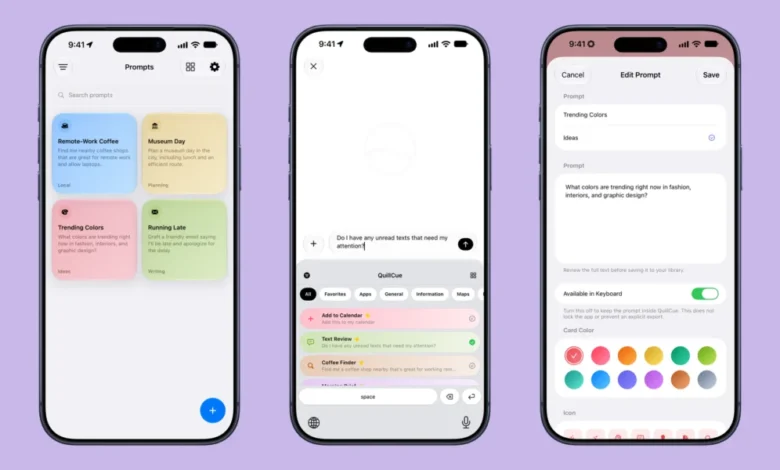
QuillCue operates by installing a system-wide custom keyboard. When a user is within an interface where they intend to interact with Siri AI, they can toggle to the QuillCue keyboard. This interface acts as a repository for pre-written, highly structured prompts.
Key technical features include:
- Prompt Library Management: Users can organize complex instructions into thematic folders, allowing for quick access to professional, creative, or utility-focused queries.
- Persistent Input: Unlike standard clipboard managers, QuillCue is architected specifically for AI prompting, allowing for multi-stage instructions that can be inserted into the text field with a single tap.
- Import/Export Protocols: The app allows users to share their prompt libraries via standardized files. This feature is particularly useful for enterprise environments or teams that wish to standardize how they query the AI for specific report generation or data synthesis.
From a technical standpoint, the app does not attempt to hook into the Siri backend directly, which would violate Apple’s strict security sandbox. Instead, it acts as a high-fidelity bridge, ensuring that the text generated by the user is passed directly to the system input field. This ensures compliance with Apple’s strict App Store guidelines regarding input method editors (IMEs).
Analyzing the Productivity Implications
The necessity for an app like QuillCue highlights a broader trend in AI adoption: the "Prompt Engineering Gap." As AI becomes more capable, the complexity of the queries required to yield high-quality results increases. For the average user, the time spent crafting a prompt that includes tone, specific formatting, and logical constraints can exceed the time saved by the AI output itself.

By offloading the "prompt creation" step to a stored library, QuillCue reduces the cognitive load on the user. For instance, a user requesting a summary of local business regulations or a complex itinerary for a business trip no longer needs to reconstruct the logic of the prompt. Instead, they access a stored, optimized template that has been refined through previous usage. This effectively mimics a "learning" or "skills" feature that Apple has yet to implement natively.
Market Response and Limitations
As of late September 2026, QuillCue is available exclusively in the United States, a limitation likely attributed to the phased regional rollout of specific Siri AI features. Apple’s AI capabilities are currently subject to local regulatory frameworks, and developers often restrict app availability to ensure that the app’s performance is consistent with the available backend infrastructure in those regions.
Industry analysts observe that while the app is a simple utility, it serves a critical role in the "Post-Siri" era. The current lack of a native "Prompt Manager" within iOS 27 creates a market opening for indie developers to provide "utility glue" that binds the powerful AI engine to the user’s daily workflow.
Privacy and Security Considerations
A primary concern with third-party keyboards is data harvesting. Parker Ortolani has stated that QuillCue functions with a "Privacy First" mandate. Because the keyboard is designed for local prompt storage, the app does not require network access to function, and it does not utilize server-side storage for the user’s prompt libraries.
For security-conscious users, the fact that the app is free of advertisements and in-app purchases is a positive indicator. By avoiding an ad-supported model, the developer eliminates the primary incentive for data collection. This aligns with the broader push toward local AI processing that Apple has championed throughout the rollout of the iPhone 18 and iOS 27.

Future Outlook for AI-Keyboard Integration
The emergence of QuillCue provides a blueprint for how third-party developers can augment the capabilities of operating system-level AI. As Apple continues to iterate on Siri AI, it is highly probable that future updates will include native features similar to those provided by QuillCue.
However, until such time as Apple integrates a comprehensive "Prompt Library" into the system settings, apps like QuillCue will remain essential for power users. The success of this app will likely be measured by its ability to maintain compatibility with future iOS 27.x updates and whether it can expand its feature set to include automated prompt generation based on user usage patterns—a logical next step for the platform.
For now, the tool represents a significant enhancement for the productivity-minded iPhone user. By closing the gap between the static nature of standard text input and the dynamic capabilities of the new Siri AI, QuillCue stands as a testament to the ongoing importance of the indie app ecosystem in refining the user experience of modern mobile operating systems. The software is currently available for download on the App Store, requiring an iPhone compatible with the full suite of iOS 27 features. Users interested in the development trajectory of the tool are encouraged to monitor official updates, as the integration of AI-driven mobile tools is expected to accelerate significantly over the coming fiscal year.