OpenAI and Defendants Challenge Apple’s Latest Evidence in High-Stakes Trade Secret Litigation

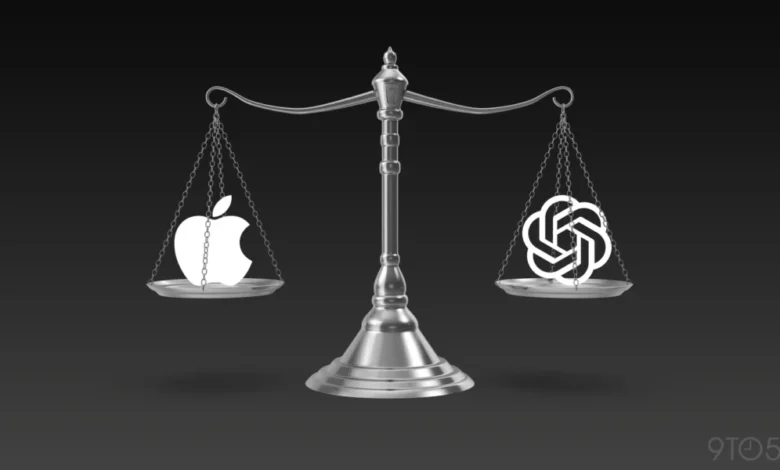
The legal battle between Apple Inc. and OpenAI has escalated significantly as the defendants formally requested that a federal court strike multiple expert declarations and discard supplemental evidence submitted by the iPhone maker. This development represents a critical juncture in a lawsuit that pits the world’s most valuable consumer electronics firm against the leading developer of generative artificial intelligence, centered on allegations of intellectual property theft involving former high-level Apple engineers.
The core of the dispute revolves around Apple’s claims that OpenAI, alongside Jony Ive’s venture io Products, misappropriated highly sensitive hardware trade secrets. Apple’s legal team contends that former employees Chang Liu and Tang Tan utilized their positions to siphon confidential engineering data, which they allegedly funneled into OpenAI’s burgeoning consumer hardware initiatives.
The Genesis of the Litigation
To understand the gravity of the current evidentiary dispute, it is necessary to examine the timeline of events that led to the present impasse. The conflict surfaced publicly in mid-2026, when Apple initiated a lawsuit against OpenAI, io Products, and the two former employees.
Apple’s complaint alleges a systematic breach of fiduciary duty and trade secret misappropriation. Specifically, Apple claims that Chang Liu retained and accessed proprietary engineering files following his departure from the company. Simultaneously, the lawsuit asserts that Tang Tan—a former executive involved in hardware product design—sought to influence Apple employees during their job interview processes to extract confidential technical details.
In response to these allegations, Apple petitioned the court for a preliminary injunction. The requested order aims to restrict OpenAI and the associated defendants from accessing, utilizing, or disclosing any information that Apple classifies as a trade secret. Apple argues that such an injunction is essential to prevent the "irreparable harm" of its proprietary technologies becoming permanently integrated into OpenAI’s future hardware roadmap.
The Evidentiary Tug-of-War
The most recent escalation began last week when Apple filed a comprehensive reply brief intended to bolster its motion for a preliminary injunction. This submission was not merely a procedural document; it included five expert declarations spanning 126 pages, accompanied by 13 distinct exhibits.
The experts enlisted by Apple—Daniel Roffman, James Pooley, Dr. Ayman Fayed, Dr. Paul Hatch, and Dr. Jude Runge—were tasked with providing technical and forensic validation of Apple’s claims. Their declarations covered a broad spectrum of sensitive topics, including:
- Forensic Analysis: Detailed scrutiny of electronic devices previously used by Chang Liu.
- Security Infrastructure: A rigorous evaluation of Apple’s internal security protocols and the measures taken to safeguard trade secrets.
- Technical Value: Substantiation of the economic and strategic value of Apple’s proprietary power-management technologies.
- Industrial Processes: Documentation regarding the secrecy and unique nature of Apple’s specialized metal-finishing processes.
By presenting this data, Apple sought to demonstrate that its claims were not merely speculative but were backed by forensic evidence and expert testimony, thereby reinforcing the necessity for a preliminary injunction.
The Defendants’ Motion to Strike
OpenAI and the co-defendants have responded with a forceful legal counter-offensive. In their latest filing, they contend that Apple has engaged in "procedural ambush" by using a reply brief to introduce significant new evidence that could have been presented at an earlier stage of the litigation.

The defendants argue that the inclusion of 126 pages of new expert testimony violates the spirit of fair litigation, as it leaves them without a sufficient window to conduct their own analysis or rebut the findings before the court makes a decision on the injunction.
From the defendants’ court filing: "Apple submitted with its reply brief five new expert declarations (including one entirely new expert), totaling 126 pages, as well as numerous new exhibits. These declarations go far outside the scope of Apple’s opening brief and Defendants’ opposition, and in any event do not save Apple’s deficient motion."
The defendants have specifically targeted the following elements for exclusion:
- Dr. Jude Runge: The defendants characterize her as an entirely new expert introduced to provide redundant support for claims that should have been fully substantiated in the initial motion.
- Dr. Ayman Fayed: The defense argues that Fayed’s opinions on power-management technology were untimely and could have been submitted during the initial discovery phase.
- James Pooley: The defendants challenge the validity of Pooley’s expert contribution, noting that it was based on an investigation conducted after the original lawsuit was filed, rendering it an improper "supplement" to an existing motion.
- Daniel Roffman: Beyond challenging his findings, the defendants argue that Roffman’s evidence, including five specific exhibits, was readily available to Apple before the initial filing. They further contend that Roffman presented certain communications from Chang Liu in a misleading or out-of-context manner.
In a tactical maneuver, the defendants have requested that if the court does choose to admit Roffman’s testimony, it must also accept a new declaration from Chang Liu. This declaration would provide a defense-side interpretation of the device activity and internal communications that Apple has flagged as evidence of wrongdoing.
Broader Implications and Industry Impact
The outcome of this motion to strike is of profound importance, not only for the parties involved but for the technology sector at large. The case highlights the escalating friction between legacy hardware manufacturers and the rapidly expanding AI sector. As companies like OpenAI move from software-centric models to physical hardware, the competition for specialized talent and proprietary engineering data has intensified.

The Value of Trade Secrets
At stake is the definition of "trade secret" in the era of high-mobility engineering talent. Apple’s aggressive stance underscores the company’s commitment to protecting its "moat"—the combination of bespoke metal-finishing, specialized power management, and proprietary manufacturing workflows that have historically allowed it to maintain superior margins and product quality.
Legal Precedent
If the court grants the defendants’ motion to strike, it will set a strict standard for how companies must present their evidence in injunction proceedings, potentially curbing the ability of plaintiffs to "load" reply briefs with new, damaging information. Conversely, if the court allows the evidence to stand, it may signal a more lenient approach toward late-stage evidentiary submissions in complex intellectual property cases.
Strategic Consequences
For OpenAI, the lawsuit poses a reputational and operational challenge. As the company seeks to build its own consumer hardware, any legal finding that its development was influenced by misappropriated Apple technology could necessitate a complete pivot in their hardware roadmap, costing the firm millions in development time and potentially delaying product launches.
Conclusion
As the litigation proceeds, the court must now weigh the procedural fairness of the proceedings against the need to uncover the truth regarding the alleged misappropriation. Apple continues to maintain that its security measures were robust and that its former employees breached a clear duty of confidentiality. Meanwhile, OpenAI and its co-defendants remain steadfast in their assertion that the legal action is an attempt to stifle competition through procedural maneuvering.
With the motion to strike now under judicial review, the case enters a phase of heightened scrutiny. The court’s decision on whether to admit the expert testimony of Roffman, Fayed, Pooley, and others will likely dictate the momentum of the case as it moves toward the preliminary injunction hearing. Observers in the legal and tech communities are closely watching the proceedings, recognizing that the outcome will serve as a bellwether for how intellectual property disputes will be litigated as the hardware and AI industries become increasingly intertwined.