NASA Expert Working Group Defines New Clinical Standards for Artemis Lunar Mission Crew Safety


The NASA Human Systems Standards Integrator, led by Kim Lowe, has released a comprehensive set of clinical and operational recommendations aimed at safeguarding astronaut health during the upcoming Artemis lunar missions. As NASA prepares to return humans to the lunar surface and establish a sustainable presence at the Moon’s South Pole, the agency is re-evaluating the physiological risks associated with deep-space extravehicular activity (EVA). The core of this initiative focuses on the mitigation of Decompression Sickness (DCS), Venous Thromboembolism (VTE), and the specific implications of Patent Foramen Ovale (PFO) in the unique, high-stakes environment of lunar exploration.
These recommendations represent a critical evolution in human spaceflight medicine, synthesizing years of data from the International Space Station (ISS) and advanced ground-based simulations. By integrating the findings from the September 2024 Assessment of PFO and the April 2026 Risk of Venous Thromboembolism in Spaceflight Working Group, NASA is codifying new medical standards in the latest revision of NASA-STD-3001, Volume 2, which governs human factors, habitability, and environmental health.
The Physiology of Risk: DCS, VTE, and PFO
The primary challenge for lunar surface operations is the transition between the pressurized environment of the lunar lander and the low-pressure environment of the EVA suit. Decompression sickness remains a persistent threat; it occurs when nitrogen bubbles form in the bloodstream or tissues due to a rapid reduction in ambient pressure. While modern EVA suits and prebreathe protocols—where astronauts breathe pure oxygen to purge nitrogen from their bodies—have largely mitigated this risk in low Earth orbit, the Artemis mission profiles introduce new variables, including longer mission durations, increased suit mobility requirements, and potential exposure to lunar dust.
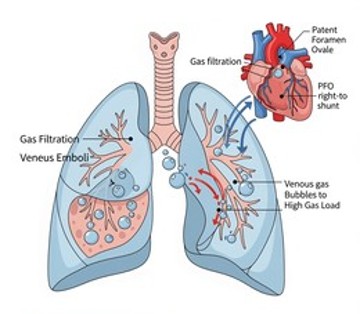
Patent Foramen Ovale (PFO) is a common congenital heart condition where a small flap-like opening remains between the left and right atria of the heart after birth. In terrestrial life, it is often asymptomatic. However, in the pressurized, high-stress, and oxygen-intensive environment of space, a PFO can act as a "shunting" pathway, allowing venous bubbles—which would normally be filtered by the lungs—to pass directly into the arterial circulation. This increases the risk of neurological decompression sickness or arterial gas embolisms.
Simultaneously, the risk of Venous Thromboembolism (VTE)—or blood clots—is heightened in the microgravity environment of transit. The shift in fluid dynamics, combined with the relative physical inactivity during long-duration transit, creates a hypercoagulable state. The integration of these risks into a single mission-readiness standard is a landmark shift for the Artemis program.
Chronology of Medical Risk Assessment
The path to these current recommendations began long before the recent publication. NASA’s medical community has been systematically reviewing flight data since the early days of the ISS program, but the shift toward lunar exploration necessitated a more aggressive risk-mitigation strategy.
- September 2024: NASA published the foundational "Assessment of Patent Foramen Ovale (PFO) as Related to Decompression Sickness (DCS) in the Spaceflight Environment." This document established the statistical correlation between PFO presence and the severity of DCS symptoms, effectively moving PFO from a "low concern" to a "mission-critical" medical screening requirement.
- August 2025: Following the 2024 report, the agency conducted a series of internal reviews to determine if current prebreathe protocols—the process of oxygen saturation prior to leaving the vehicle—would be sufficient for the more frequent and potentially more strenuous EVA requirements of Artemis III and beyond.
- April 2026: The NASA Risk of Venous Thromboembolism in Spaceflight Working Group released a comprehensive update (NASA/SP-20260005258/REV1). This document highlighted the intersection of space-induced blood stasis and the potential for life-threatening clots, leading to a revision of in-flight monitoring protocols.
- September 2026: The current working group, led by Kim Lowe, successfully synthesized the 2024 and 2026 reports into a cohesive framework, culminating in the release of the updated NASA-STD-3001, Volume 2, Revision F.
Data-Driven Interventions and Medical Standards
The recommendations provided by the working group emphasize a tiered approach to risk management. Rather than implementing a blanket ban on astronauts with certain conditions, the new standards utilize a risk-based assessment model. For instance, the intervention for PFO may now include proactive closure for high-risk crew members. While invasive, the procedure has a high success rate and would effectively neutralize the risk of arterial shunting during decompression events.
Supporting data provided by the working group indicates that the shift from the microgravity of the ISS to the varying gravity environments of the lunar surface presents a "gravity-transition hazard." As astronauts move from the weightless transit phase to the 1/6th-g environment of the Moon, their cardiovascular systems must adapt rapidly. The updated standard requires specific in-flight exercise regimens and pharmacological prophylactic measures to maintain vascular health, significantly reducing the probability of VTE events.
Furthermore, the revised standard mandates a "Pre-EVA Physiological Readiness Assessment." This check includes ultrasound monitoring of vascular health and bubble detection technology, which will be utilized during the prebreathe phase to ensure no asymptomatic gas formation has occurred before the astronaut exits the lander.
Institutional Responses and Medical Implications
While NASA has not released individual medical records, the agency’s spokesperson confirmed that the new standards are intended to provide a clear, objective pathway for mission selection and crew health maintenance. The medical community outside of NASA, including academic institutions specializing in aerospace medicine, has largely praised the shift toward transparency and rigorous evidence-based standards.
Dr. Elena Vance, an aerospace physiologist not involved in the study, noted: "The movement toward requiring definitive interventions like PFO closure for lunar crews is a sign that NASA is treating the lunar surface as a permanent destination rather than an exploratory ‘pop-in.’ When you are three days from Earth, your medical risk tolerance drops significantly. These standards reflect a maturation of the space program."
The implications of these standards extend beyond the Artemis program. As private sector entities and international partners like the European Space Agency (ESA) and Japan’s JAXA look to participate in lunar missions, they will likely adopt these NASA standards as the global benchmark for lunar human spaceflight. This creates a unified "standard of care" that simplifies mission planning and international collaboration.
Broader Impact: The Future of Lunar Presence
The adoption of the updated NASA-STD-3001 Volume 2 is more than a bureaucratic exercise; it is a fundamental shift in how the agency views the human body in deep space. By acknowledging and addressing the systemic risks of VTE and DCS, NASA is effectively extending the "mission clock."
Previously, mission lengths were capped not just by fuel or life support, but by the physiological degradation of the crew. By implementing these new medical protocols, the agency is expanding the window of opportunity for surface exploration. If the risks of decompression and thromboembolism can be effectively managed, mission designers can extend the duration of lunar surface stays, allowing for more ambitious geological sampling, resource utilization experiments, and construction of base-camp infrastructure.
However, the path forward is not without challenges. The implementation of these standards requires significant investment in onboard medical hardware, such as portable ultrasound units and advanced, automated health-monitoring wearables. NASA must also ensure that the psychological burden of these rigorous medical interventions does not negatively impact the crew’s performance.
Conclusion
As the Artemis program continues to advance, the work led by Kim Lowe and the Human Systems Standards Integrator provides the medical backbone necessary for sustained lunar operations. By addressing the physiological complexities of PFO, DCS, and VTE through standardized, evidence-based protocols, NASA is not only protecting its astronauts but also establishing a template for the future of human exploration in the solar system. The integration of these findings into the NASA-STD-3001 framework ensures that as we venture further from our home planet, we do so with a comprehensive understanding of the risks—and a clear, actionable plan to mitigate them. The next steps will involve the rigorous testing of these protocols in the upcoming Artemis missions, providing the final validation needed to turn these clinical recommendations into standard practice for all future lunar explorers.