The global race to revitalize supersonic commercial aviation has intensified this month, as China moves closer to a significant milestone in aerospace engineering. Officials confirmed that the TMS-10, an experimental supersonic demonstrator aircraft, has officially entered its final assembly phase. Developed through a collaborative partnership between the Tianmushan Laboratory and Beihang University, the project represents a strategic effort to overcome the longstanding technological barriers that have hampered supersonic travel since the retirement of the Concorde in 2003. With the assembly phase underway, the aircraft is currently on schedule to conduct its inaugural test flight before the end of the 2026 calendar year, setting the stage for a new era of high-speed passenger transit.
A Technological Evolution: From Prototype to Full-Scale Demonstrator
The current progress follows a successful series of validation tests conducted in June 2025, which utilized a 1:18-scale prototype. During those trials, the sub-scale model operated at speeds below Mach 0.2, providing researchers with critical data regarding low-speed takeoff performance, flight stability, and landing control systems. These preliminary tests served as a fundamental proof-of-concept for the aerodynamic configuration of the TMS-10.
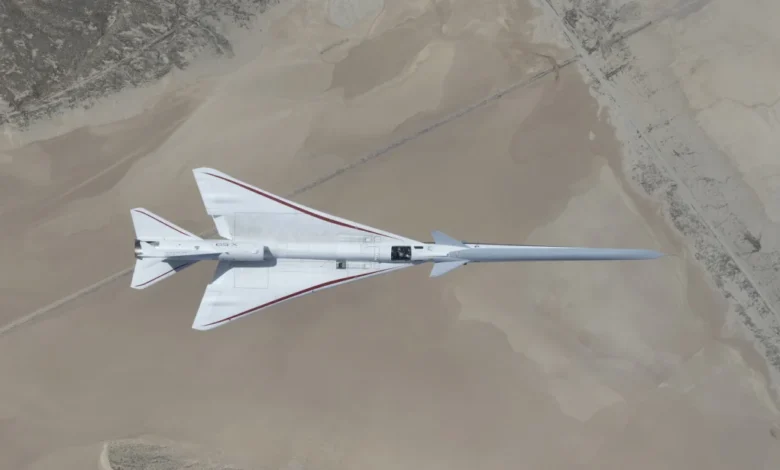
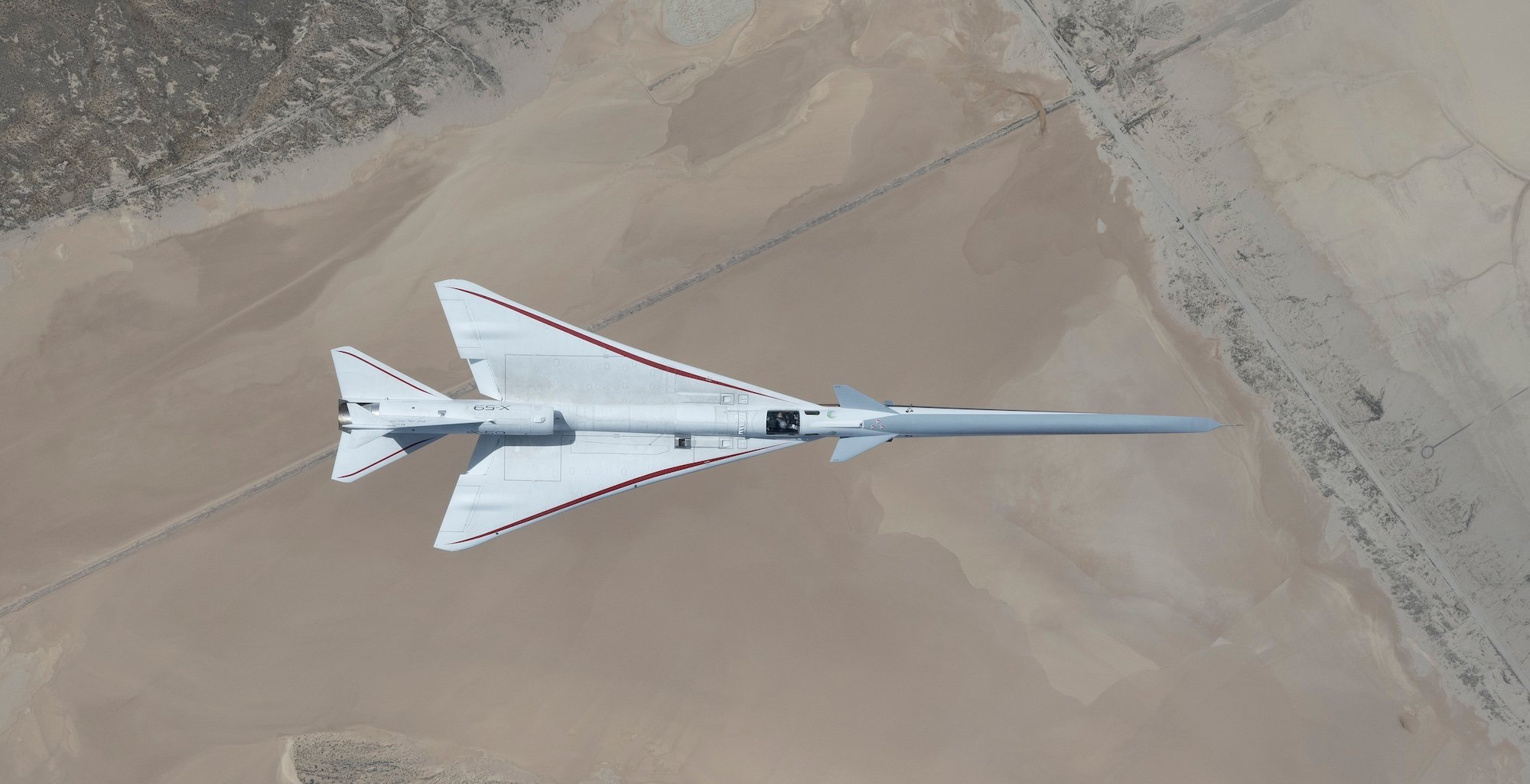
Unlike conventional aircraft, the TMS-10 features a distinct design philosophy aimed at mitigating the "sonic boom"—the explosive sound generated by shock waves when an object exceeds the speed of sound. While NASA’s X-59 utilizes a "Quiet SuperSonic Technology" (QueSST) approach, which aims to dampen the shock waves into a softer "thump," the TMS-10 employs a structural geometry strategy. By integrating a forward canard wing with a T-tail configuration, the aircraft is designed to prevent the shock waves generated at the nose and wings from coalescing into a singular, high-intensity pressure wave. This redirection of acoustic energy is intended to reduce the ground-level noise footprint, a requirement for any viable commercial supersonic aircraft operating over land.
Strategic Timeline and Operational Goals
The development timeline of the TMS-10 reflects a methodical approach to aerospace innovation. Following the 2025 prototype phase, engineers spent the last fifteen months refining the aircraft’s airframe and control software. The current assembly phase focuses on integrating the propulsion systems with the airframe, a process that remains one of the most complex challenges in supersonic design.
If the upcoming flight tests prove successful, the TMS-10 program intends to transition from an experimental platform to a commercial business-class jet capable of seating 10 to 15 passengers. Performance projections for the final production model suggest a cruising speed of Mach 2, or approximately 1,300 miles per hour. At such velocities, the current two-hour flight time between Beijing and Shanghai could theoretically be reduced to a 30-minute window. Furthermore, the aircraft is being engineered with a dual-mode capability, allowing it to transition efficiently into subsonic cruising at Mach 0.95 (roughly 730 mph) for segments of travel where supersonic flight is prohibited or impractical.
Engineering Challenges and Material Science
Designing a vehicle that can reliably sustain supersonic speeds while maintaining a commercial-grade level of passenger safety and comfort involves overcoming extreme thermal and structural stresses. At Mach 2, the friction between the air and the aircraft’s skin generates significant heat, requiring advanced alloys and carbon-fiber composites capable of maintaining structural integrity over thousands of flight cycles.
According to reports from the Global Times, the engineering team is currently prioritizing the validation of the aircraft’s engine core and the associated exhaust and inlet systems. These components are critical for maintaining efficient airflow at both subsonic and supersonic regimes. The inlet geometry must be precise to ensure that air entering the engine is slowed to subsonic speeds without creating excessive drag or instability. Further iterations of scale models are expected to continue in parallel with the assembly of the full-scale demonstrator to refine these systems, ensuring that the final design is both aerodynamically sound and thermally resilient.
Comparative Analysis: The X-59 and Global Competition
The emergence of the TMS-10 arrives at a time when NASA’s X-59 project has already begun yielding significant flight data. Earlier this year, the X-59 achieved a major milestone by successfully reaching supersonic speeds of Mach 1.5 at an altitude of 55,000 feet. The data gathered from these flights is being used to validate the predictive models of acoustic behavior that have been under development for over a decade.
While the X-59 and the TMS-10 share the common objective of quiet supersonic flight, their design paths reflect different engineering priorities. The X-59 is primarily a research platform intended to prove that supersonic flight over land can be achieved with minimal community disruption, thereby providing the regulatory evidence necessary for aviation authorities to eventually lift bans on overland supersonic transit. The TMS-10, by contrast, is positioned as a prototype for a compact commercial vehicle, focusing on the integration of passenger-carrying capacity within a low-boom airframe.
Implications for the Future of Global Aviation
The reintroduction of supersonic passenger travel carries profound implications for global commerce and logistics. The ability to traverse continents in a fraction of current transit times could fundamentally alter the landscape for international business, medical transport, and time-sensitive cargo. However, the path to commercial viability remains long. Aviation regulators, such as the Federal Aviation Administration (FAA) in the United States and the Civil Aviation Administration of China (CAAC), must establish entirely new safety and noise standards before any such aircraft can be certified for public passenger use.
The primary obstacle remains the "noise barrier." Public resistance to sonic booms was the decisive factor in the 1973 U.S. ban on commercial supersonic flight over land. Consequently, the commercial success of projects like the TMS-10 and the X-59 depends almost entirely on their ability to prove that they can operate without subjecting populations below their flight paths to harmful or startling noise.
Furthermore, economic factors must be addressed. Supersonic aircraft historically suffer from high fuel consumption and maintenance costs. For the TMS-10 to succeed as a business-class jet, the design must demonstrate not only acoustic feasibility but also operational efficiency. As engineers continue to iterate on the TMS-10’s airframe, the global aerospace community will be watching closely to see if China’s structural approach to boom mitigation can match or exceed the performance of the current international benchmarks.
Conclusion and Outlook
As the assembly of the TMS-10 nears completion, the project stands as a testament to the renewed global interest in high-speed aviation. The coming months will be critical, as the Tianmushan Laboratory and Beihang University transition from theoretical design to flight-test data collection. While the project is still in its experimental stages and faces significant hurdles regarding engine validation and regulatory approval, the progress reported in September 2026 underscores a determined effort to reclaim the supersonic speeds that once defined the pinnacle of 20th-century aviation. Whether the TMS-10 eventually carries passengers or serves primarily as a milestone in aerodynamic research, its development marks a pivotal chapter in the ongoing history of flight.