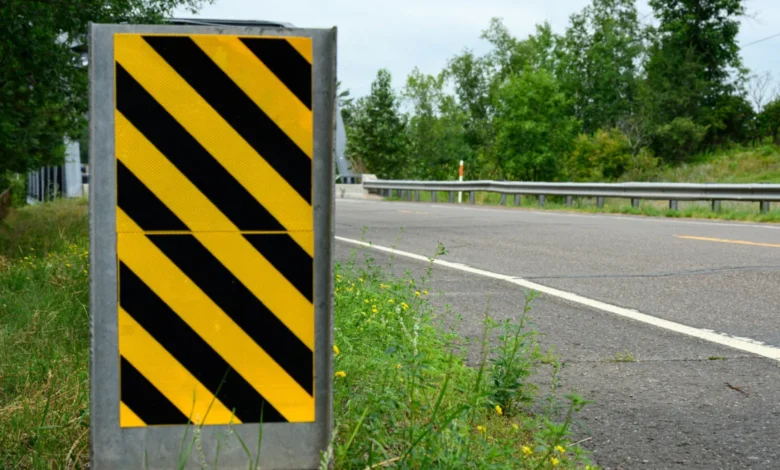
The modern roadway is a complex ecosystem of visual communication, designed to convey critical information to motorists in split seconds. While the standard red octagon of a stop sign or the stark white rectangle of a speed limit sign are deeply embedded in the collective consciousness of drivers, other forms of signage are frequently misunderstood. Among these are the diagonal yellow and black striped markers, formally known as object markers. While they may appear to be simple aesthetic additions to the landscape, these signs serve as vital safety infrastructure intended to prevent high-speed collisions with fixed, immovable obstacles.
The Technical Classification of Object Markers
Under the guidelines established by the Manual on Uniform Traffic Control Devices (MUTCD), published by the Federal Highway Administration (FHWA), object markers are categorized as a specific class of traffic control device. Unlike regulatory signs, which dictate legal requirements, or warning signs, which alert drivers to changing road conditions, object markers are specifically engineered to highlight hazards that exist within or immediately adjacent to the travel path.
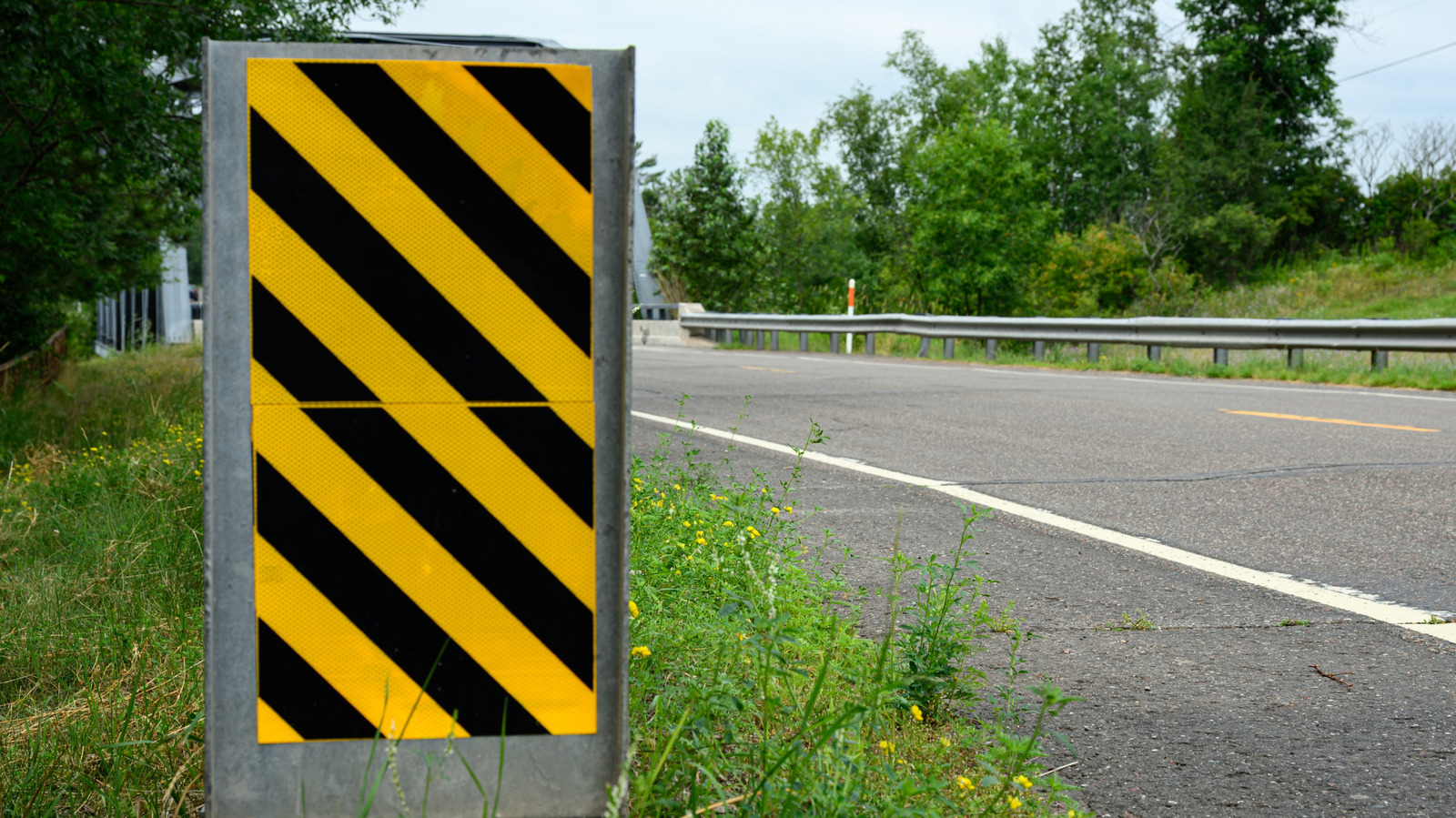
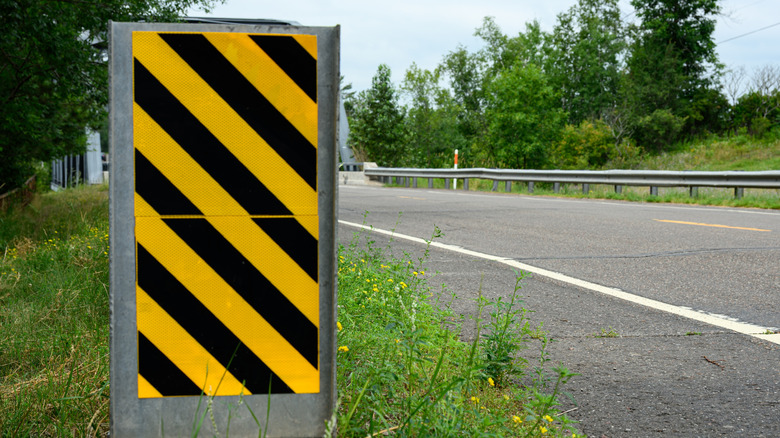
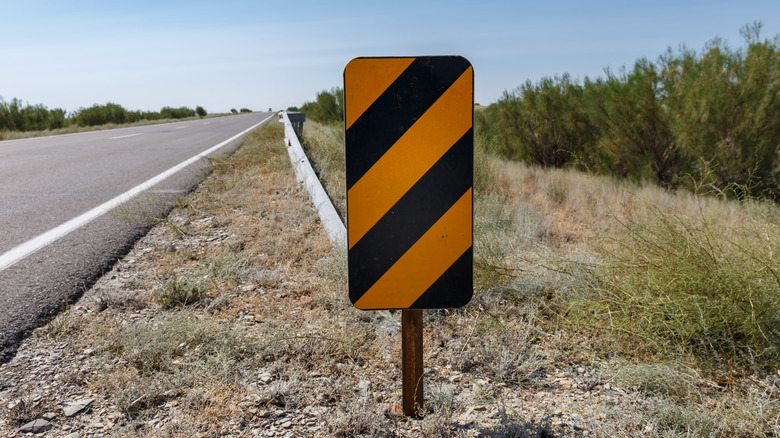
These markers are generally categorized into distinct types, each serving a specific geometric function. Type 1 markers are typically large, rectangular signs featuring yellow and black stripes, often placed in a chevron pattern or pointing downward. These are reserved for obstructions that require the driver to deviate from their path, such as bridge piers, median ends, or concrete abutments that jut into the flow of traffic. The diagonal stripes are not merely a stylistic choice; they are directional indicators. When stripes point downward to the left, they signify that the driver should pass to the left of the object. Conversely, stripes pointing downward to the right indicate that the motorist must navigate to the right of the obstruction.
Historical Context and Evolution of Roadway Safety
The standardization of these markers did not occur overnight. The history of American road signage dates back to the early 20th century, when the proliferation of the automobile necessitated a universal language for the road. In the 1920s, the first attempts at standardizing highway markers were made to combat the chaos of varying local and state-level signage.
By the time the first version of the MUTCD was published in 1935, the need for reflective, high-visibility hazard markings became apparent as nighttime driving increased in frequency. Engineers realized that passive, unlit hazards—such as bridge columns on unlit rural highways—were responsible for a disproportionate number of single-vehicle nighttime fatalities. Throughout the 1950s and 1960s, the adoption of retroreflective materials—beads or sheeting capable of reflecting headlights back to the driver—revolutionized the efficacy of these yellow and black stripes. This technological advancement ensured that even in adverse weather or total darkness, the hazard markers provided sufficient warning for a driver to adjust their steering and braking behavior.
Supporting Data on Traffic Safety
The implications of proper roadway delineation are backed by significant safety data. According to reports from the National Highway Traffic Safety Administration (NHTSA), a substantial percentage of severe traffic accidents occur when vehicles leave the roadway or strike fixed objects. Specifically, collision with fixed objects—such as guardrails, bridge abutments, and bridge piers—accounts for roughly 20% of all fatal traffic accidents in the United States annually.
Object markers are a primary line of defense in the "forgiving road" design philosophy. The goal of this engineering approach is to minimize the severity of accidents by ensuring that if a driver experiences a lapse in attention or is forced to maneuver suddenly, the environment itself provides the necessary cues to avoid a catastrophic impact. Studies conducted by the Insurance Institute for Highway Safety (IIHS) have shown that the consistent application of high-visibility, reflective object markers reduces the likelihood of "run-off-road" crashes by providing the driver with a visual "anchor" in the peripheral vision. In rural areas, where lighting is sparse, these markers act as the only warning system for abrupt changes in road width.
Official Guidelines and Regulatory Compliance
The placement of these markers is strictly governed by engineering standards. Engineers must evaluate the "clear zone," which is the unobstructed, traversable area provided beyond the edge of the through-traveled way for the recovery of errant vehicles. When an object—such as a concrete bridge railing—encroaches into this clear zone, the placement of an object marker becomes mandatory.
The FHWA dictates that these markers must be installed at a height that ensures they are within the direct line of sight of a driver’s headlights. The reflective properties of these signs are tested against strict retroreflectivity standards, ensuring that the yellow pigment maintains its chromaticity even after years of exposure to ultraviolet light, salt spray, and exhaust particulate. When a sign begins to fade, it is legally considered a "defective" traffic control device, and departments of transportation are generally required to replace them as part of their routine maintenance cycles to avoid liability.
Analysis of Human Factors and Driver Perception
From a human factors perspective, the yellow and black striped design is one of the most effective visual stimuli possible. The human brain is evolutionarily predisposed to notice high-contrast, non-natural patterns. In the natural environment, black and yellow combinations are frequently associated with danger or warning—a phenomenon known as aposematism in biology, often observed in stinging insects or venomous reptiles. Traffic engineers leverage this deep-seated psychological recognition.
However, the efficacy of these signs depends heavily on "expectancy." Drivers operate on a cycle of expectation; if they expect a road to continue straight, they are less likely to process peripheral stimuli. This is why the diagonal stripes are intentionally placed at 45-degree angles. This specific angle creates a "dynamic" visual effect, forcing the eye to track the slope of the line, which subtly directs the driver’s gaze toward the safe path of travel. Even if a driver cannot articulate the technical meaning of the sign, the brain subconsciously interprets the directionality of the stripes, prompting a slight adjustment in vehicle position.
Broader Implications for Autonomous Vehicles
The relevance of these signs is shifting as the automotive industry moves toward autonomous driving. Modern Advanced Driver Assistance Systems (ADAS) rely on cameras and LiDAR to interpret the road. Interestingly, while humans rely on the color contrast of these signs, autonomous sensors are programmed to identify the specific geometric patterns and retroreflective intensity of these markers.
As self-driving software matures, these "simple" striped signs are being mapped into high-definition digital atlases used by autonomous vehicles. The presence of a correctly placed object marker serves as a ground-truth verification for an onboard computer, confirming that a physical barrier exists at a specific coordinate. Thus, a sign designed in the 1930s remains a critical component of 21st-century artificial intelligence navigation.
Conclusion
The diagonal yellow and black striped sign is far more than a mere decoration on the side of the highway. It is a highly engineered piece of safety equipment that bridges the gap between human perception and roadway reality. By providing a clear, high-contrast, and directional warning, these markers serve to reduce the frequency of fatal collisions with fixed objects. As we continue to refine our transportation infrastructure, these markers stand as a testament to the effectiveness of simple, standardized communication in an increasingly complex world. Whether driving a manual vehicle or utilizing future autonomous systems, the directive remains the same: the stripes are there to guide the way, protecting the driver from the hazards that define the road’s edge.