Meta Unveils Muse: A Secure and Private Personal AI Agent Designed for Seamless Human-Machine Collaboration

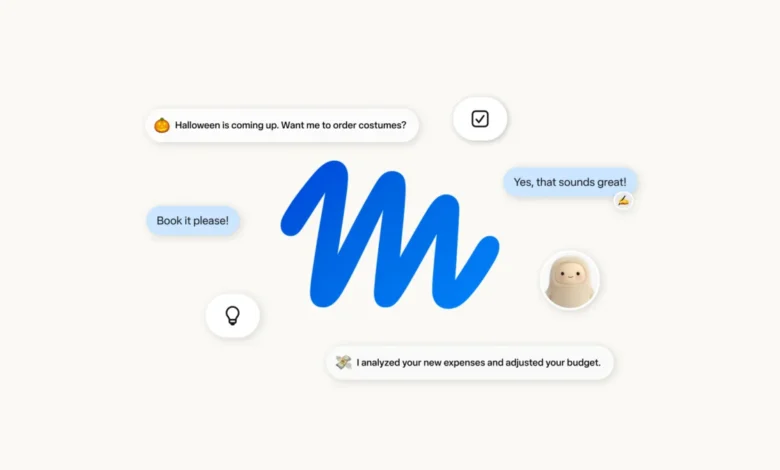
In a significant expansion of its artificial intelligence portfolio, Meta has officially launched Muse, a proactive personal AI agent engineered to manage complex, real-world tasks while prioritizing user privacy and data security. Unlike traditional AI chatbots that operate primarily as reactive conversational interfaces, Muse is designed to act as an autonomous digital assistant capable of coordinating time, resources, and logistics across a user’s digital life. By integrating directly into familiar communication platforms like WhatsApp and a dedicated standalone application, Meta aims to lower the barrier to entry for advanced agentic technology, positioning Muse as a practical utility rather than a theoretical research project.
The architecture powering this new capability is Muse Spark, Meta’s most advanced large language model to date. Specifically optimized for agentic workflows, Muse Spark allows the AI to navigate external software environments—opening browsers, populating online forms, and negotiating on behalf of the user. This transition from "chatbot" to "agent" represents a fundamental shift in how consumers interact with software, moving away from manual input toward goal-oriented delegation.
The Technological Infrastructure: The Muse Secure VM
The core challenge Meta faced in developing an autonomous agent was the inherent security risk associated with granting AI access to personal data, financial credentials, and web-based accounts. To mitigate these concerns, Meta has introduced the Muse Secure Virtual Machine (VM). This dedicated environment serves as a private, sandboxed container that houses both the agent’s logic and the user’s personal data.
By isolating the agent’s operations within this secure VM, Meta establishes a technical firewall between the user’s private information and the broader internet. This infrastructure is designed to be the foundational layer for future iterations, including the upcoming "Muse Confidential VM." The latter promises end-to-end encryption, where the virtual machine—and all its contents—is encrypted with a key held exclusively by the user. Under this model, even Meta would be technically barred from accessing the contents of a user’s conversations or the data stored within their agent’s workspace.
Chronology and Development Roadmap
The launch of Muse follows a multi-year trajectory of investment by Meta into generative AI and agentic research. Following the widespread success of the Llama series of open-weights models, the company pivoted toward functional application.
- Early 2023: Meta began aggressive R&D into autonomous agents, focusing on model reliability and task-completion accuracy.
- Late 2023: Internal testing began for "Muse Spark," the foundation model designed to bridge the gap between text generation and software navigation.
- Q1 2024: Integration tests were conducted with third-party payment providers, specifically focusing on the implementation of Stripe’s Link technology to ensure secure, one-time-use financial transactions.
- Present Day: The public rollout of Muse has commenced in the United States, targeting iOS and Android platforms, with plans for integration into Meta’s AI glasses hardware in the near future.
Practical Utility and User Experience
Meta’s design philosophy for Muse centers on the "no learning curve" principle. The agent is built to function within the existing communication habits of billions of people. By operating within WhatsApp, users can interact with Muse using natural language, asking it to perform tasks ranging from simple scheduling to complex multi-step procurement.
For instance, if a user tasks Muse with planning a travel itinerary, the agent does not merely suggest a list of hotels; it develops a comprehensive plan, coordinates flight and accommodation bookings, and manages the logistics of the trip. If the task requires long-term execution, the agent continues to function after the user closes the application, providing updates or requesting human approval only when necessary—such as finalizing a payment or selecting between two final options.
This functionality extends to predictive assistance. Muse utilizes long-term memory to recognize patterns in user behavior. If a user saves a recipe reel on Instagram, the agent can proactively generate a grocery list, identify dietary restrictions of dinner party guests, and draft invitations. This capability highlights the agent’s role as an anticipatory tool, reducing the "cognitive load" on the user by automating repetitive or administrative burdens.
Financial Security and Third-Party Integration
Recognizing that consumer trust is the primary hurdle for AI-driven commerce, Meta has partnered with Stripe to utilize the Link platform. Muse serves as the first AI agent to be explicitly covered by Link’s purchase protections, which include coverage for damaged or lost items, protection against price drops, and a streamlined, no-fee return policy.
The financial security model relies on tokenization. When Muse facilitates a transaction, it generates a one-time-use virtual card number. This ensures that the user’s primary financial credentials remain shielded from third-party vendors and the internet at large. Furthermore, Meta has indicated that support for "Shop Pay" and "1Password" integration is currently in development. This will allow the agent to securely leverage existing user credentials and payment profiles, further streamlining the user experience while maintaining security standards.
Market Implications and Competitive Landscape
The launch of Muse arrives at a pivotal moment in the AI industry. Major technology firms, including Google, Microsoft, and OpenAI, are all racing to deploy "agentic" capabilities. However, Meta’s strategy differs in its emphasis on social integration and hardware-agnostic availability.
Analysts note that by embedding the agent within the existing WhatsApp ecosystem, Meta is leveraging a massive, pre-existing user base, which provides an immediate competitive advantage. Moreover, the focus on the "Secure VM" framework serves as a strategic response to increasing regulatory scrutiny regarding data privacy and the potential for AI misuse. By marketing the "Confidential VM" feature, Meta is preemptively addressing concerns regarding data sovereignty and corporate overreach.
However, the transition to agentic AI is not without its risks. The potential for "hallucinations" in task execution—such as booking the wrong flight or misinterpreting a complex instruction—remains a significant challenge for all developers in this space. Meta’s reliance on human approval for high-stakes actions, such as financial transactions, acts as a critical fail-safe.
Broader Impact on Personal Productivity
The introduction of Muse reflects a broader industry trend: the shift from "AI as a tool" to "AI as a coworker." If successful, the widespread adoption of such agents could fundamentally change personal productivity. By delegating administrative tasks—adjusting training plans based on life changes, negotiating lower service bills, or managing complex social calendars—individuals may reclaim significant time.
The scalability of the project is also noteworthy. Meta has opted for a freemium model, providing the core agentic functionality for free, with subscription tiers available for users who require more intensive or frequent agentic operations. This tiered approach suggests that Meta views Muse as both a consumer-facing product and a long-term service ecosystem.
As the company prepares to integrate Muse into its AI-enabled wearable hardware, the vision for the future becomes clearer: a world where the AI agent is not confined to a smartphone screen but is an ambient, persistent assistant capable of navigating both the digital and physical worlds. Whether this vision resonates with the general public will depend heavily on the agent’s ability to remain reliable, transparent, and, above all, secure in its handling of the most sensitive aspects of human life.
For now, the launch of Muse serves as a litmus test for the industry’s ability to move beyond the novelty of conversational AI and into the era of practical, goal-oriented, and autonomous digital assistance. As the rollout continues across the United States, observers will be watching closely to see if the "Secure VM" architecture can effectively hold the line on privacy while delivering on the promise of a truly autonomous personal assistant.
Related posts: