Binary star systems, formed from the same monolithic cloud of molecular gas, are cosmologically tethered. In theory, these stellar siblings should mirror one another in elemental composition, serving as near-perfect chemical twins. However, astronomers have increasingly observed anomalous discrepancies in these pairings, sparking a rigorous debate: are these differences the remnants of original, inhomogeneous birth clouds, or are they the signatures of celestial violence—specifically, the consumption of rocky planets by their host stars? A groundbreaking study published in Astronomy and Astrophysics provides compelling evidence that the latter may be a widespread phenomenon, carrying profound implications for the rarity of habitable planetary systems.
A Stellar Mystery 180 Light Years Away
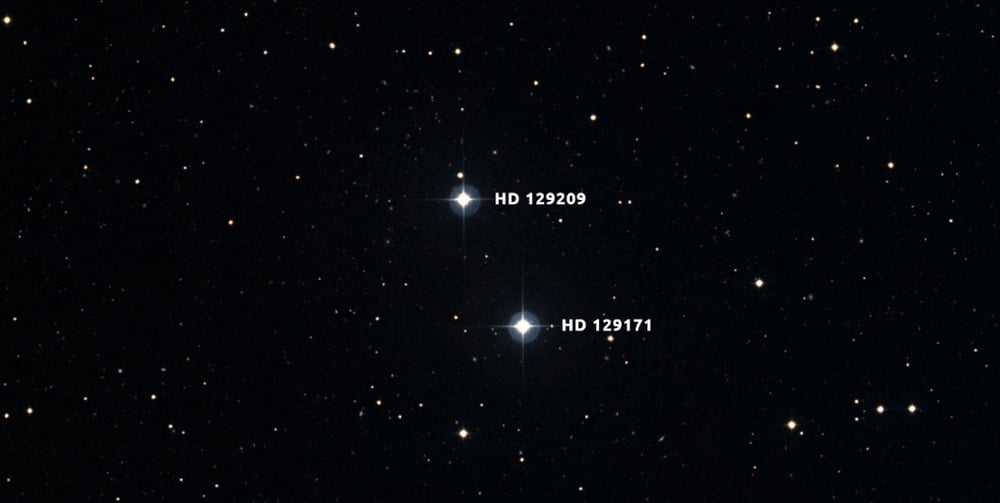
The study, led by Anne Rathsman, a doctoral candidate at the Institute of Astronomy, Geophysics, and Atmospheric Sciences in Brazil, focuses on the binary pair HD 129171 and HD 129209. Located approximately 180 light years from Earth, these two Sun-like stars share nearly identical physical attributes, including mass, age, and magnetic activity levels. Yet, despite their shared origin, their chemical "fingerprints" diverge.
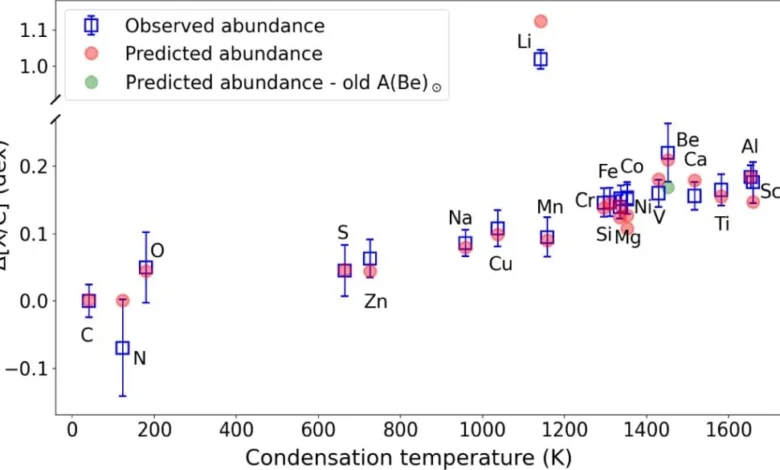
The researchers utilized high-resolution spectra obtained via the Ultraviolet and Visual Echelle Spectrograph (UVES) mounted on the Very Large Telescope (VLT) in Chile to perform precise differential abundance measurements. The data revealed that while the stars are similar in many respects, HD 129171 possesses a significantly higher concentration of refractory elements—materials that condense in solid form, such as iron, magnesium, silicon, calcium, and titanium—compared to its sibling, HD 129209.
Beryllium as the "Smoking Gun"
The core of the research team’s breakthrough lies in their focus on Beryllium (Be). Unlike other elements that can be generated through various stellar nucleosynthesis processes, Beryllium is a rare, delicate element. It is not produced within the cores of stars; rather, it is primarily forged through cosmic ray spallation—a process where high-energy particles shatter heavier nuclei in the interstellar medium. Because Beryllium is exceptionally rare in the universe—comprising only 0.0004% of the Earth’s crust—its presence in the photosphere of a mature star is a potent diagnostic tool.
For years, astronomers attempted to use Lithium as a tracer for planetary engulfment. Lithium, however, is notoriously unreliable. It is destroyed easily at low temperatures and is depleted during the standard evolution of Sun-like stars, leaving its abundance difficult to interpret with certainty. Beryllium, by contrast, is far more resilient. Its chemical signature remains stable over longer periods, allowing it to act as a more precise "record" of the material a star has ingested over its lifespan.

By comparing the Beryllium levels in the HD 129171/HD 129209 pair, the team concluded that the chemical anomaly in HD 129171 could not be attributed to primordial differences in their birth cloud. Instead, the evidence points toward a significant ingestion event. The team’s modeling suggests that HD 129171 absorbed approximately 11.2 Earth masses of rocky, planetary material. Whether this was a single, large terrestrial planet or a series of smaller bodies remains unknown, as the internal mixing processes of Sun-like stars effectively homogenize the ingested material over time, masking the specific history of the consumed objects.
Contextualizing the Solar System
The finding has ignited discussions regarding the uniqueness of our own Solar System. Current astrophysical models and exoplanetary observations suggest that stable, circular orbits—like those found in our neighborhood—may be the exception rather than the rule. In many observed planetary systems, the gravitational interplay between gas giants and smaller rocky worlds can lead to orbital instability, effectively ejecting inner planets or driving them into the host star.
If planet engulfment is a common occurrence, the implications for habitability are stark. Life, as we understand it, requires not only the presence of liquid water and the right chemical precursors but also an immense temporal window of stability. If a system is prone to "violent dynamic phases" where planets are regularly consumed, the probability of a world remaining in the "habitable zone" long enough for complex biological evolution to occur drops significantly.
Implications for Stellar Formation Theory
The research does more than just identify a stellar "cannibal." It challenges the long-standing assumption of chemical tagging, a technique used by astronomers to trace the history of stars by their elemental makeup. If stars regularly ingest rocky material, their surface chemistry no longer reflects their true, initial composition. This suggests that the "chemical clocks" used to map the evolution of our galaxy may require calibration to account for post-formation contamination.
"It is still unclear whether these anomalies originate from inhomogeneities of protostellar clouds, with important implications for chemical tagging and theories of star formation, or if they are caused by a planet engulfment event suffered by one binary component," the authors note in their paper. However, the sheer precision of the Beryllium signature in HD 129171 strongly favors the ingestion hypothesis.
Expert Perspectives and Future Research
The research team, including co-author Jorge Luis Melendez Moreno, emphasizes that this study is part of a broader, emerging consensus. When dynamical simulations of planet formation are cross-referenced with the scarcity of Jupiter-like giants in circular orbits and the chemical signatures observed in binary pairs, a clearer picture of the galaxy emerges. Many systems appear to have undergone chaotic histories that would have been fatal to any nascent life forms.
"When we bring together evidence from dynamical simulations, exoplanet observations, and chemical studies of binary stars, a consistent picture emerges, indicating that systems similar to the Solar System may be less common than we imagined," said Melendez Moreno.
The next phase of this research will likely involve expanding the sample size. By looking at a larger population of binary systems with high-resolution spectroscopy, astronomers hope to determine the statistical frequency of planet engulfment. If such events are found to be common across the Milky Way, it will force a reassessment of the Drake Equation and our current estimates of the number of habitable worlds.
Furthermore, the work provides a template for future missions, such as those utilizing the James Webb Space Telescope or next-generation ground-based facilities, to conduct similar chemical surveys. By identifying stars that have "swallowed" their planetary progeny, scientists can work backward to understand the architecture of the systems that once surrounded them, providing a posthumous glimpse into the evolution of planetary formation across the cosmos.
In conclusion, the study of HD 129171 and HD 129209 marks a significant step forward in stellar archaeology. By turning our gaze toward the chemical anomalies within binary systems, we are not just learning about the stars themselves; we are gaining an appreciation for the rarity and fragility of the stable, long-lived planetary systems that serve as the essential cradles for life. As our technology improves, the "hidden" history of these stars will continue to reveal the tumultuous reality of our galaxy, reminding us that the quiet stability of our own Solar System is a cosmic rarity to be protected and studied with renewed urgency.
Related posts: