Bulkhead CEO Joe Brammer Defends Studio Work Culture and Recruitment Practices Following Podcast Backlash

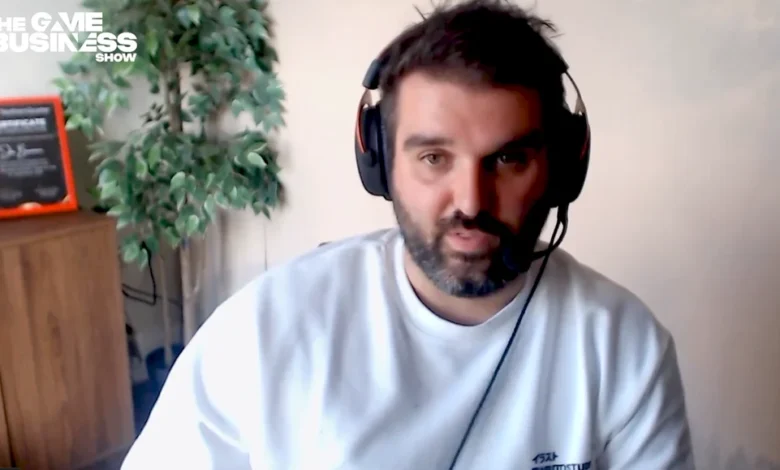
Bulkhead, the British video game development studio behind titles such as The Turing Test, Battalion 1944, and the recently launched commercial hit Wardogs, has found itself at the center of an industry-wide controversy. Joe Brammer, the studio’s chief executive officer, has faced intense public scrutiny following a frank and revealing interview on The Game Business podcast, hosted by Chris Dring. In the interview, Brammer discussed the operational philosophy of his studio, including its expectations regarding employee overtime, or "crunch," and unconventional hiring practices. The remarks have ignited a fierce debate across social media regarding labor practices, work-life balance, and recruitment ethics within the video game industry.
The Interview and the Core Controversy
The controversy began when Brammer appeared on The Game Business to discuss the business strategies behind running Bulkhead and the launch of Wardogs, which recently achieved significant commercial success by selling two million copies on Steam within its first five days of release. During the conversation, the topic shifted to corporate culture and the grueling demands often placed on developers. Brammer made no secret of the fact that Bulkhead expects its employees to work overtime when project milestones demand it.
"A lot of people who may have an issue with crunch—rightly so, I understand that issue, we always try and avoid it, but we don’t hide that this is going to happen at some point," Brammer told Dring. He explained that candidates who strongly oppose crunch "often don’t make it in the door" because the studio actively projects an identity centered on high-intensity labor. Furthermore, Brammer stated that the studio reviews the public social media profiles of prospective employees to screen out individuals who vocally oppose overtime, asserting that such workers would ultimately be unhappy in the company’s environment.
These comments immediately drew swift backlash from the broader gaming community, labor advocates, and industry journalists. Critics pointed out that explicitly screening candidates based on their public opposition to overtime could create a chilling effect on labor advocacy and potentially violate UK employment screening guidelines. Outlets such as PC Gamer highlighted the remarks, characterizing the studio’s stance as an embrace of mandatory overtime—a characterization that Brammer would later contest.
Chronology of Events and Public Responses
Following a day of intense debate on social media platforms, Brammer took to X (formerly Twitter) to address the growing controversy. He argued that several reports had taken his comments out of context, specifically pushing back against the use of the word "mandatory" to describe the studio’s overtime practices.
Brammer subsequently provided a formal clarifying statement to gaming publication Eurogamer. In his statement, he detailed a specific instance from June 2026 when the studio fell behind on the beta build for Wardogs. To resolve the delay, Brammer requested that staff work an extra two hours a day, Monday through Thursday, for a period of four weeks—totaling 16 working days. He noted that the overtime was explicitly framed as optional, and that four staff members opted out without facing any professional consequences.
"The reason it was 2 hours and not something else was build times," Brammer explained in his statement to Eurogamer. "Extending slightly meant we could get one more build per day, review it and get QA’s pass back on it, instead of waiting on the nightly build and picking it up the following morning."
In his defense, Brammer also emphasized the positive elements of Bulkhead’s corporate culture, pointing to past experiments such as a two-year trial of a four-day work week, comprehensive holiday policies including the month of December off for all staff, and an equity-sharing model where 80 percent of the studio’s shares are owned by 50 percent of its employees.
Regulatory Questions Regarding Social Media Screening
Beyond the discussions surrounding crunch, Brammer’s remarks regarding the monitoring of applicants’ social media accounts drew scrutiny from legal and compliance perspectives. Under UK employment standards, pre-employment vetting is strictly regulated.
According to the Information Commissioner’s Office (ICO)—the independent regulatory authority in the UK responsible for upholding information rights—pre-employment vetting and screening of candidate social media profiles should only take place under specific conditions. These include situations where an employer is under a legal obligation to perform checks, or where the employer can identify significant and particular risks to the business, clients, or customers. Furthermore, the ICO mandates that candidates must be informed in advance if such checks are being conducted.
When Eurogamer formally questioned Bulkhead regarding these regulations, Brammer issued a clarifying statement through the studio. He maintained that his initial podcast remarks were informal reflections on company culture rather than a description of formal human resources procedures.
"Where we do consider publicly available information as part of recruitment, it is done in line with applicable UK employment and data protection law," Brammer stated. "We don’t access private accounts or carry out covert or intrusive checks. My comments were really about being upfront about the kind of studio we are and making sure it’s the right fit for both sides."
Broader Industry Context: Crunch and Labor Rights
The debate surrounding Bulkhead’s operational methods highlights a persistent, systemic issue within the video game industry. For decades, crunch has been deeply normalized across major studios worldwide. High-profile investigations and industry reporting have repeatedly exposed labor exploitation and mandatory overtime at prominent developers, including CD Projekt Red, Rockstar Games, and Naughty Dog. While many of these companies have publicly pledged to eliminate or drastically reduce crunch following public scandals and unionization efforts, the practice remains a contentious point of friction between studio executives and rank-and-file developers.
Brammer also used the interview to express his frustrations with British HR laws, arguing that regulatory frameworks frequently create roadblocks for studios attempting to innovate with workplace benefits. He cited challenges encountered while attempting to implement flexible paternity leave policies and the four-day work week, noting that rigid interpretations of labor laws can penalize companies trying to introduce non-traditional solutions.
Despite the controversies, Bulkhead’s commercial trajectory remains robust. The massive success of Wardogs, which sold two million copies in its opening week on Steam, has provided significant financial upside for the company. Brammer noted that the studio’s profit-sharing model ensures that employees holding company shares will receive life-changing financial returns, framing the intense work culture as a high-stakes environment that yields direct material benefits for its workforce.
As the video game industry continues to grapple with labor standards, work-life balance, and recruitment ethics, the discourse sparked by Bulkhead’s leadership underscores the ongoing tension between commercial pressures and modern employee expectations.
Related posts: