Revolutionizing Mobility: How smartARM and Meta AI Are Redefining the Future of Bionic Prosthetics

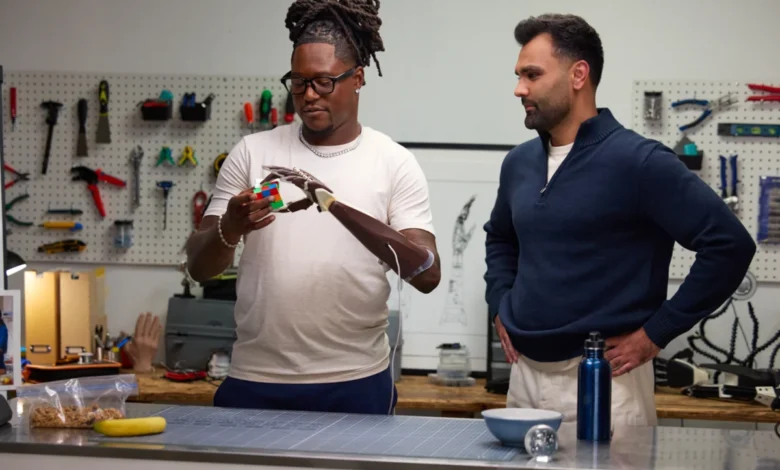
The landscape of assistive technology is undergoing a profound transformation as artificial intelligence shifts from a theoretical computational tool to a physical, life-altering reality. At the forefront of this evolution is Toronto-based startup smartARM, which has developed a sophisticated, vision-first bionic arm prototype designed to minimize the cognitive and physical burden traditionally associated with prosthetic use. By integrating open-source vision models and wearable hardware, the company is moving toward a future where prosthetics act as natural extensions of the body rather than cumbersome mechanical attachments.
The Problem with Traditional Prosthetics
For decades, individuals living with limb differences have relied on myoelectric prosthetics, which function by sensing electrical signals from residual muscles. While these devices have improved significantly in terms of mechanical dexterity, they suffer from a fundamental usability gap: the "control bottleneck." To switch between a power grip (for holding a hammer) and a precision pinch (for picking up a key), users typically must perform manual inputs, such as specific muscle contractions or physical toggles.
This process is inherently slow and mentally exhausting. Daily activities that neurotypical individuals take for granted—such as transitioning from holding a glass of water to picking up a spoon—often become a multi-step, deliberate process that requires constant focus. This friction often leads to high abandonment rates, as users find the cognitive load of operating the device outweighs the functional benefits. smartARM’s core mission is to eliminate this friction by shifting the intelligence from the user’s brain to the prosthetic itself.
Chronology of Innovation
The journey toward a more intuitive bionic limb has accelerated significantly over the last three years. In the early stages, smartARM focused on the mechanical engineering of a durable, dexterous hand. However, it quickly became clear that hardware alone would not solve the accessibility crisis.
- 2022–2023: The smartARM team focused on refining the palm-integrated camera system, realizing that local visual processing was essential for real-time responsiveness.
- Early 2024: The integration of Meta’s DINOv2 model marked a turning point. By leveraging this open-source vision transformer, the team enabled the arm to "see" and interpret its environment without requiring massive, bespoke datasets.
- Late 2024: The incorporation of the Meta Wearables Device Access Toolkit allowed the prosthetic to pair with smart glasses, creating an "egocentric" field of view that significantly improved object recognition accuracy.
- 2025–2026: Current efforts are centered on scaling the software ecosystem, allowing users to contribute to a shared library of object recognition data, effectively crowdsourcing the "learning" process for the community.
The Role of DINOv2 and Vision-First Architecture
The technological breakthrough at the heart of the smartARM device is its reliance on computer vision rather than traditional sensor-based pattern recognition. By embedding a camera in the palm of the prosthetic, the device captures high-resolution visual data of the object it is approaching.
The device utilizes DINOv2, an open-source vision model developed by Meta. DINOv2 is a "self-supervised" model, meaning it can learn features from images without needing human-labeled data for every single object. In the context of the smartARM, this allows the limb to identify an object—a coffee mug, a smartphone, or a set of keys—based on direct visual features.
Previously, teaching a prosthetic to recognize a new object was a process that could take weeks of data collection and specialized programming. With the current architecture, the arm can adapt to new objects after being shown only a few reference photos. This capability effectively democratizes the technology; a user can teach their prosthetic to recognize a specific tool or item from their daily life, and that learning can be shared or integrated into the device’s software in near real-time.
Enhancing Context with Smart Wearables
Beyond the palm-mounted camera, smartARM has pioneered a multimodal approach by incorporating Meta AI glasses. The glasses provide a broader field of view, functioning as an external sensor that feeds contextual data to the arm.
When a user looks at an object, the glasses identify the item and relay that information to the prosthetic, preparing the hand’s motor controllers for the appropriate grip before the user even reaches out. This "pre-shaping" of the hand is critical to human-like movement. By utilizing the Meta Wearables Device Access Toolkit, the smartARM system creates a seamless feedback loop between the user’s line of sight and the prosthetic’s motor functions. This reduces the latency between intention and action, bringing the experience closer to the biological fluidity of a natural hand.
Data-Driven Impact and User Perspectives
The impact of this technology is not merely technical; it is deeply human. For users like former NFL player Shaquem Griffin, who has been a vocal proponent of the technology, the value lies in the scalability of the solution.
"Of all the tech packed into it, scalability and accessibility matter most to me," Griffin noted in recent commentary. "This is the future of consumer prosthetics." His perspective highlights a critical shift in the industry: moving away from expensive, bespoke clinical solutions toward consumer-grade, scalable technology that can be easily updated via software.
From a data perspective, the implications are vast. Current industry estimates suggest that the global prosthetics market could see a significant uptick in adoption rates if the cognitive barrier to entry is lowered by 50% or more. By reducing the training time required for new users to near zero, smartARM is addressing one of the primary drivers of prosthetic non-use: the frustration of a steep learning curve.
Official Statements and Industry Outlook
Hamayal Choudhry, Founder and CEO of smartARM, emphasizes that the goal is to make the technology invisible. "Building a capable hand is only part of the challenge. Making it intuitive to use matters just as much," Choudhry stated. "By helping the arm recognize everyday objects and select a suitable grip, we’re working toward an experience where people can focus more on what they want to do and less on how to operate their prosthetic."
Industry analysts observe that this approach mirrors trends in the broader robotics field—the transition from rigid, programmed instructions to flexible, AI-driven adaptive behavior. By utilizing open-source models like DINOv2, smartARM is positioning itself within an ecosystem of rapid iteration. As vision models continue to improve in speed and accuracy, the prosthetic’s capabilities will naturally grow without requiring a total hardware overhaul.
Broader Implications for Assistive Tech
The collaboration between hardware startups and large-scale AI researchers represents a new model for assistive technology development. Traditionally, the medical device industry has been slow to adopt new technologies due to rigorous safety and regulatory standards. However, the use of established, open-source AI frameworks allows for a modular development cycle.
The implications for the wider disability community are significant. If this vision-first control logic can be adapted for other assistive devices—such as powered wheelchairs, speech-assistive hardware, or exoskeleton limbs—the potential for increased independence is immense.
Furthermore, the integration of community-based learning via phone apps suggests a future where the "community" of users acts as a decentralized research and development hub. When one user trains their device to recognize a specific type of kitchen utensil or professional tool, that knowledge can be optimized and pushed to other users via an update. This collaborative model is a stark departure from the siloed, proprietary systems of the past.
Conclusion: The Road Ahead
While the smartARM prototype is still in the refinement phase, its performance demonstrates that the fusion of computer vision and robotics is the most viable path toward naturalistic prosthetic control. The transition from "manual-input" prosthetics to "intelligent-sensing" prosthetics is not just a technological upgrade; it is a fundamental shift in the relationship between humans and their assistive tools.
As the industry watches, the success of the smartARM project will likely serve as a blueprint for the next generation of bionic limbs. By focusing on accessibility, intuitive interaction, and the power of open-source AI, the company is demonstrating that the future of prosthetics lies not in more complex mechanical parts, but in the software that allows those parts to act with purpose. For millions of people with limb differences, this means a future where the prosthetic is no longer a tool to be managed, but an extension of the self, ready to perform from the very first try.
Related posts: