Meta’s Persistent Pursuit of the Digital Assistant: A Decade-Long Quest Against Consumer Indifference


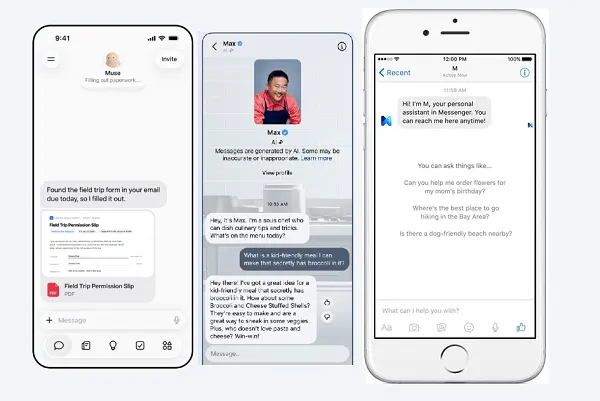
The technology sector has long been captivated by the promise of artificial intelligence as an invisible, omnipresent companion capable of seamlessly managing the complexities of daily human existence. At the forefront of this vision stands Meta Platforms CEO Mark Zuckerberg, whose unwavering dedication to the concept of personal digital assistants has persisted despite repeated market rejections. This week, Meta unveiled its latest iteration in this ongoing crusade: the Muse app and chatbot. Touted as the company’s most sophisticated artificial intelligence assistant to date, Muse allows users to customize their bot, assign asynchronous background tasks, and interact with a persistent personal helper. Zuckerberg views this launch not merely as a product release, but as a crucial milestone on the evolutionary pathway toward delivering personal superintelligence to the masses. Yet, a retrospective examination of Meta’s product history reveals a striking parallel to past ventures that ultimately failed to capture the public imagination, raising fundamental questions about whether the tech giant is chasing a consumer demand that simply does not exist.
A Historical Chronology of Meta’s AI Assistant Initiatives
To understand the weight and context of the Muse rollout, one must examine Meta’s extensive, decade-long history of attempting to integrate automated digital agents into its ecosystem. The company’s ambitions in this domain date back nearly ten years, long before the current generative AI boom reshaped the global technological landscape.
In August 2015, Facebook introduced "M," an ambitious personal assistant built directly into the Messenger platform. Much like the newly released Muse, M was designed to execute complex real-world tasks on behalf of users. According to statements made at the time by then-Messenger chief David Marcus, M possessed the capability to purchase items, coordinate and deliver gifts to loved ones, secure restaurant reservations, arrange travel itineraries, and schedule appointments. However, beneath the veneer of automated convenience, M relied heavily on a hybrid model involving both artificial intelligence and human contractors to fulfill requests. Despite the novelty, consumer adoption remained profoundly sluggish. The public proved largely uninterested in delegating everyday logistical chores to an algorithmic messenger interface, leading Meta to officially wind down and shutter the M project in January 2018, less than three years after its debut.
Undeterred by the failure of M, Meta continued to experiment with conversational agents across its family of apps. In 2016, the company launched the Messenger Bots platform, opening the application programming interface for businesses to deploy automated customer service agents. While developers explored the infrastructure, consumer enthusiasm remained muted. Years later, in late 2023, Meta pivoted toward personality-driven engagement by launching celebrity-themed chatbots on Messenger, Instagram, and WhatsApp. Featuring the likenesses and simulated personas of prominent cultural figures such as Snoop Dogg, Tom Brady, and Paris Hilton, these bots were backed by significant promotional campaigns and celebrity endorsements. Yet, despite heavy marketing, user engagement quickly plateaued, demonstrating that novelty alone was insufficient to sustain long-term behavioral changes.
The Muse Application and Zuckerberg’s Vision for Superintelligence
The debut of the Muse application represents a generational leap forward compared to the rudimentary capabilities of the 2015 M assistant. Powered by advanced large language models and robust generative AI architectures, Muse offers a vastly superior capacity for natural language understanding, contextual awareness, and complex task execution. Users are encouraged to personalize their experience by naming their bots and integrating them into their daily routines through background task delegation.
During a recent interview with industry publication Sources, Zuckerberg articulated his personal philosophy and use case for the Muse agent, shedding light on the internal motivations driving Meta’s heavy capital expenditure in this sector. "For me, when I’m using my Muse Agent, I kind of want it to help me be a better father and a better husband, and show up better for my friends," Zuckerberg stated. For the Meta leadership team, the ultimate objective of artificial intelligence is hyper-optimization—the systematic reduction of friction in decision-making and time management to theoretically elevate the quality of human life. This perspective aligns with Zuckerberg’s well-documented personal projects, including the custom-built, sci-fi-inspired home automation system he engineered to manage his own household operations.
The Fundamental Disconnect Between Optimization and Consumer Behavior
Despite the technological sophistication underpinning Muse, industry analysts point to a persistent perceptual misalignment between Meta’s executive leadership and the broader consumer base. While Zuckerberg and Silicon Valley technologists champion a worldview centered on efficiency, metric-driven optimization, and the elimination of redundant tasks, the average consumer frequently approaches life from an entirely different paradigm.
Data and consumer research indicate that many individuals derive satisfaction from the organic, friction-filled processes of daily existence. Activities such as product research, physical shopping, and spontaneous human communication are often viewed not as inefficiencies to be outsourced to an algorithm, but as core components of the human experience. Where technologists perceive wasted time, everyday users frequently experience living.
This philosophical divide helps explain why previous iterations like M and the celebrity chatbots failed to achieve mass adoption. People do not necessarily desire an omnipresent computational layer mediating their personal relationships and mundane choices. Consequently, Meta’s recurring attempts to institutionalize the digital assistant model face an uphill battle against deeply ingrained human preferences for authentic, unmediated interactions.
Broader Economic Implications and Financial Stakes for Meta
The launch of Muse arrives at a critical juncture for Meta, which has committed tens of billions of dollars toward artificial intelligence research, infrastructure, and hardware development. Wall Street and industry observers closely monitor these capital expenditures, looking for tangible returns on investment amidst soaring computing costs.
If consumer adoption of Muse mirrors the quiet obscurity of its predecessor, M, it could pose strategic challenges for Meta’s broader AI roadmap. The company’s grand vision of democratizing personal superintelligence relies heavily on user willingness to invite AI agents into the intimate spaces of their daily routines. A widespread rejection of the digital assistant concept forces Meta to evaluate whether its financial resources would be better allocated toward foundational infrastructure, enterprise-facing tools, or immersive metaverse technologies where market demand has proven more viable.
Furthermore, the competitive landscape has grown increasingly crowded. Competitors such as OpenAI, Google, and Apple are simultaneously racing to deploy advanced personal agents capable of operating across operating systems and hardware devices. Apple’s integration of Apple Intelligence across its massive global hardware footprint, for instance, positions context-aware personal assistants directly into the hands of hundreds of millions of users natively, potentially undercutting standalone applications like Muse.
Looking Ahead: Can Meta Bridge the Empathy Gap?
As Meta pushes forward with its promotional campaigns for Muse, the fundamental challenge facing the tech giant is less about technological capability and more about cultural resonance. The hardware and software frameworks required to run an advanced digital assistant are more powerful today than at any point in history. However, transforming raw computing power into a daily habit requires aligning product design with actual human desires rather than theoretical ideals of efficiency.
Whether Muse will break the historical curse of Meta’s past assistant failures remains to be seen. What is clear, however, is that Mark Zuckerberg’s vision of an AI-optimized society is running headfirst into a public that remains fiercely attached to the analog realities of human life. Unless Meta can successfully bridge the gap between algorithmic optimization and authentic human preference, the company risks repeating a costly cycle of innovation without adoption.
Related posts: