The Sideload 044: Analyzing the impact of Apple’s foldable market entry with Stephen Radochia


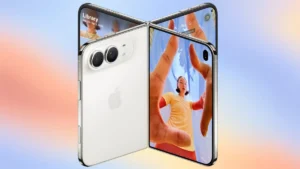
The mobile hardware landscape has shifted significantly following Apple’s long-anticipated entry into the foldable device market. This move, which signals a maturing of the category, has sparked intense debate regarding design philosophies, software optimization, and hardware durability. In the 44th episode of The Sideload, 9to5Google’s Will joined forces with Android Authority’s Stephen Radochia to dissect this development, exploring the strategic lessons that existing Android manufacturers should—and should not—draw from Cupertino’s latest hardware venture.
A Chronology of the Foldable Evolution
The foldable smartphone segment, while once considered a niche experimentation ground for early adopters, has evolved into a key battleground for premium hardware manufacturers. The journey began in earnest around 2019, when Samsung introduced the Galaxy Fold, an attempt to bridge the gap between smartphone portability and tablet-sized display real estate.
Following Samsung’s initial entry, the market saw a flurry of competition from Chinese manufacturers including Huawei, Xiaomi, and Oppo, as well as Google’s own foray with the Pixel Fold series. Each iteration focused on solving critical pain points: the crease in the middle of the display, hinge durability, and the cumbersome nature of bulky, thick devices. Apple’s recent entrance represents the final major holdout joining the fray, marking a point of validation for the form factor that industry analysts believe will lead to broader mainstream adoption.
The Apple Entry and Market Dynamics
Apple’s approach to the foldable market has been characterized by a “wait-and-see” strategy. While Android OEMs pushed multiple generations of hardware through rapid iterations, Apple maintained its focus on perfecting the user experience, software integration, and display technology. By entering the market only after the technology reached a certain threshold of reliability, Apple has effectively signaled that foldable devices are no longer "experimental," but a standard component of a high-end product roadmap.
The implications for Android brands are profound. For years, Android manufacturers have competed primarily on hardware specifications—thinner hinges, higher refresh rates, and more complex multi-window software capabilities. Apple’s arrival changes the metric of competition. The focus is shifting toward ecosystem integration and how a foldable device interacts with existing wearable and desktop infrastructure.
Lessons for Android Manufacturers
During the discussion on The Sideload, Radochia and Will emphasized that Android brands should avoid the trap of "feature creep." There is a temptation for Android manufacturers to continue stacking specifications to differentiate themselves from Apple. However, the panelists suggested that the true differentiator moving forward will be software refinement.

Historically, Android’s primary advantage in the foldable space has been the flexibility of the operating system. Features like split-screen multitasking, floating windows, and seamless hand-off between internal and external displays have been part of the Android experience for years. Yet, these features often lack the polish that consumers expect at a premium price point. The consensus is that Android brands should focus less on the novelty of the hardware and more on the consistency of the user experience.
Supporting Data and Market Trends
Industry data from late 2024 and early 2025 indicates that the global foldable smartphone market is projected to grow at a compound annual growth rate (CAGR) of over 20% through 2030. This growth is largely driven by the increasing availability of mid-range foldable options and the entry of major players like Apple, which brings significant brand loyalty to the form factor.
Consumer research suggests that while interest in foldables is high, the primary barrier to entry remains price and perceived durability. Android manufacturers have attempted to address price concerns by releasing "Flip" style devices that offer a lower entry point compared to the "Fold" style book-like devices. Apple’s entry is expected to further stabilize supply chains, potentially driving down component costs for display panels and hinge mechanisms, which currently account for the highest percentage of the bill of materials (BOM).
Comparative Hardware Philosophies
The divergence between Android and Apple’s design philosophies is most evident in the approach to the "crease." Android manufacturers have experimented with various hinge designs, such as water-drop hinges and teardrop structures, to minimize the visible fold. Apple’s design, characterized by a focus on structural integrity, prioritizes long-term hinge reliability over the absolute minimization of the crease.
Furthermore, software optimization remains a critical point of friction. Android’s open nature allows for highly customizable interfaces, but this can lead to fragmented experiences where third-party apps do not scale correctly across different aspect ratios. Apple’s approach, dictated by its "walled garden," ensures that developers have a more predictable environment, albeit with more restrictive design guidelines.
Broader Impact on the Industry
The entry of a major player like Apple acts as a catalyst for component standardization. As demand increases, suppliers are investing heavily in Ultra-Thin Glass (UTG) production and flexible OLED manufacturing, which will eventually lead to more robust and cost-effective solutions for all manufacturers.
Moreover, the enterprise sector is beginning to take notice. Businesses are evaluating whether the foldable form factor can replace the need for carrying both a phone and a tablet, potentially reducing IT overhead. This shift toward "mobile-first productivity" is where the next phase of competition will occur, as manufacturers race to provide the best security, management, and workflow integration for professional users.

Strategic Implications for the Future
As the market matures, the differentiation between devices will likely move away from the hardware itself and toward the AI-driven capabilities integrated into the software. Both Android and iOS are currently integrating generative AI into their mobile platforms. A foldable device, by nature of its larger screen real estate, serves as the ideal canvas for these AI tools.
Android brands have the advantage of being "first movers" in this space, having already integrated AI assistants that can manage complex tasks across multiple windows. However, Apple’s ability to leverage its custom silicon—the A-series and M-series chips—to handle on-device AI tasks more efficiently could set a new standard for performance.
Conclusion
The discussion between Will and Stephen Radochia serves as a microcosm of the broader conversation happening within the technology industry. The foldable market is no longer a niche; it is a vital evolution of the smartphone. For Android brands, the path forward is clear: move beyond the "spec wars" and focus on the refinement of the user experience, software stability, and ecosystem integration.
While Apple’s entry brings competition, it also brings market legitimacy. For the consumer, this translates to better hardware, more reliable software, and ultimately, a more mature product category. As the industry continues to evolve, the lessons learned from this early stage of foldable development will define the trajectory of personal computing for the next decade.
Listeners interested in the full analysis, including a detailed breakdown of specific design choices and upcoming market forecasts, can listen to episode 44 of The Sideload. The episode also explores the potential for future foldable form factors, such as rollable displays and multi-hinge devices, which may further challenge the status quo of modern mobile design.
For those seeking to delve deeper into the technical specifications and community-driven feedback, the 9to5Google forums provide a platform for ongoing discussion and real-world testing reports from users currently utilizing these devices in their daily workflows. The industry stands at an inflection point, and the coming months will likely see a surge in innovation as manufacturers respond to the shifting dynamics of a newly validated market.