WhatsApp Bolsters User Privacy with Advanced Security Upgrades and Expanded Passkey Integration

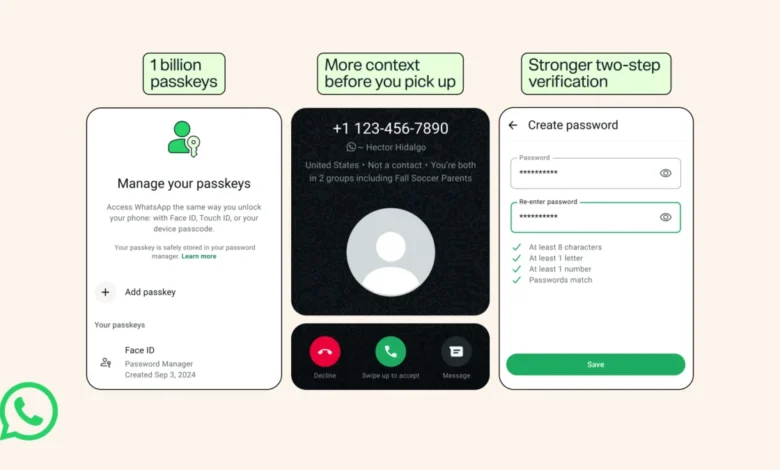
In an era where digital communication has become the bedrock of global connectivity, the preservation of personal data integrity has emerged as a paramount concern for both service providers and users. WhatsApp, the Meta-owned messaging platform boasting over two billion active users globally, has recently announced a significant suite of security enhancements designed to mitigate the risks of account hijacking, identity theft, and malicious solicitation. By transitioning its two-step verification protocols to more robust alphanumeric passwords and expanding the functionality of passkey authentication, the platform is addressing the evolving landscape of cyber threats that target private mobile accounts.
The Evolution of Account Security Protocols
The landscape of mobile security has shifted dramatically over the past decade. Initially, SMS-based one-time passwords (OTPs) were considered the gold standard for account recovery and verification. However, as "SIM swapping" and phishing attacks became more sophisticated, these six-digit numeric codes proved increasingly vulnerable. Cybercriminals have developed methods to intercept these codes or deceive users into surrendering them, leading to unauthorized account takeovers that can have devastating consequences for individuals and businesses alike.
WhatsApp’s move to mandate more complex authentication methods is a direct response to these industry-wide trends. By shifting away from simple six-digit PINs, the platform is aligning itself with contemporary cybersecurity best practices, which prioritize entropy—the measure of randomness and complexity—to thwart brute-force attacks. An alphanumeric password, especially one incorporating special characters, exponentially increases the time and computational power required for an attacker to crack the credentials, effectively rendering basic automated hacking tools obsolete.
Chronology of WhatsApp’s Security Advancements
The path to the current security framework has been a methodical, multi-year progression. Since the implementation of end-to-end encryption in 2016, which solidified the platform’s reputation for privacy, Meta has consistently rolled out iterative updates to address the "human element" of security.
In 2022, the platform began testing and subsequently deploying passkey technology, a standard backed by the FIDO Alliance and major tech conglomerates including Google, Apple, and Microsoft. The goal was to replace traditional passwords—which are often reused and easily forgotten—with biometric markers such as facial recognition or fingerprint scans.
In early 2023, WhatsApp introduced "Account Protect," a feature designed to verify the legitimacy of a user attempting to move an account to a new device. This was followed by the introduction of "Device Verification," a background process that authenticates the user’s device without requiring manual input. The recent announcement marks the latest phase in this trajectory, focusing on deeper layers of verification and improved user awareness regarding incoming communication from unrecognized entities.
Supporting Data and User Adoption Metrics
The scale of these security updates is underscored by the massive user base they protect. As of the most recent reporting cycle, more than one billion users have successfully configured passkeys on their WhatsApp accounts. This rapid adoption rate indicates a significant shift in user behavior; consumers are increasingly comfortable with biometric authentication over traditional memory-based passwords.
Data from cybersecurity firms suggests that the implementation of multi-factor authentication (MFA) reduces the risk of account compromise by over 99 percent. By allowing users to link multiple passkeys to a single account—enabling seamless transitions between Android and iOS ecosystems—WhatsApp is removing the friction that typically discourages users from adopting high-security settings. This "frictionless security" is essential for a platform that serves demographics ranging from tech-literate professionals to those in regions with varying levels of digital literacy.
Combatting Malicious Solicitation: The Contextual Call Feature
Beyond account-level security, WhatsApp is addressing the pervasive issue of spam and nuisance calls from unknown numbers. The introduction of contextual information for calls from non-contacts serves as a defensive layer against social engineering. When an incoming call originates from a number not saved in the user’s address book, the interface will now display additional metadata, such as the country of origin and any shared group memberships.
This feature is a response to the rise of "urgency-based" scams. Fraudsters often use spoofed numbers to create a sense of panic or immediate need, betting on the victim’s impulse to answer quickly. By providing a "pause" mechanism—a brief window where the user can process the provided context—the platform empowers users to identify potential red flags before engaging with the caller. This is particularly vital in emerging markets, where WhatsApp is often the primary vehicle for business transactions, government services, and social communication, making it a lucrative target for bad actors.
Official Stance and Technical Philosophy
Representatives from Meta have consistently framed these security features as an extension of the platform’s core promise: the privacy of the conversation belongs exclusively to the participants. The company’s engineering team maintains that security should not be a "pro-user" feature that requires advanced technical knowledge but rather a default state for every user.
"We are constantly evaluating the threat landscape," a spokesperson noted during the announcement. "Our priority is to ensure that while the platform remains open and accessible, it is also resilient against the most common vectors of attack, such as credential stuffing and social engineering."
From a technical perspective, the move to support multiple passkeys across different operating systems reflects a commitment to cross-platform interoperability. Historically, migrating between ecosystems often reset security preferences, but the current infrastructure allows for a synchronized security profile that follows the user, regardless of their device hardware.
Analysis: Broader Implications for Digital Communication
The implications of these updates extend well beyond the individual user. As Meta continues to integrate these features, it sets a standard that other messaging platforms are expected to follow. The normalization of passkeys, in particular, signals the beginning of the end for the traditional password era.
However, these security enhancements also place greater responsibility on the platform to manage the data associated with these new protocols. While passkeys are stored locally on the user’s device and the biometric data is never transmitted to WhatsApp’s servers, the reliance on cloud-based backups for these keys introduces a new area of focus for digital security audits.
Furthermore, the introduction of caller context metadata raises questions about how much information is exposed to the receiver. While the feature is designed for security, it necessitates a careful balance between user safety and the privacy of the caller. Meta has addressed this by ensuring that the metadata shared is limited to public-facing identifiers, thereby maintaining the platform’s commitment to end-to-end encryption.
Future Outlook and Strategic Direction
Looking ahead, it is clear that WhatsApp’s security strategy will continue to pivot toward proactive, rather than reactive, measures. As artificial intelligence is increasingly used to generate sophisticated phishing scripts and voice-spoofing attacks, the platform will likely need to implement AI-driven fraud detection that can identify malicious patterns in real-time.
For the average user, the takeaway is clear: the digital environment is becoming more hostile, but the tools provided to counter these threats are becoming more accessible. By adopting these new security settings—specifically, transitioning to alphanumeric passwords and utilizing biometric passkeys—users can significantly harden their digital footprint against unauthorized access.
As the platform matures, the interplay between convenience and security will remain the central tension in its development. For now, the rollout of these features demonstrates a clear intent to prioritize the protection of the user’s digital identity, ensuring that the platform remains a trusted space for billions of people to communicate without the looming fear of security breaches. The ongoing commitment to these updates suggests that, while the threat landscape will continue to evolve, the structural defenses of the world’s most popular messaging app are keeping pace with the demands of the modern digital age.
Related posts: